September 17th, 2017
By Anthony Tyler
Guest writer for Wake Up World
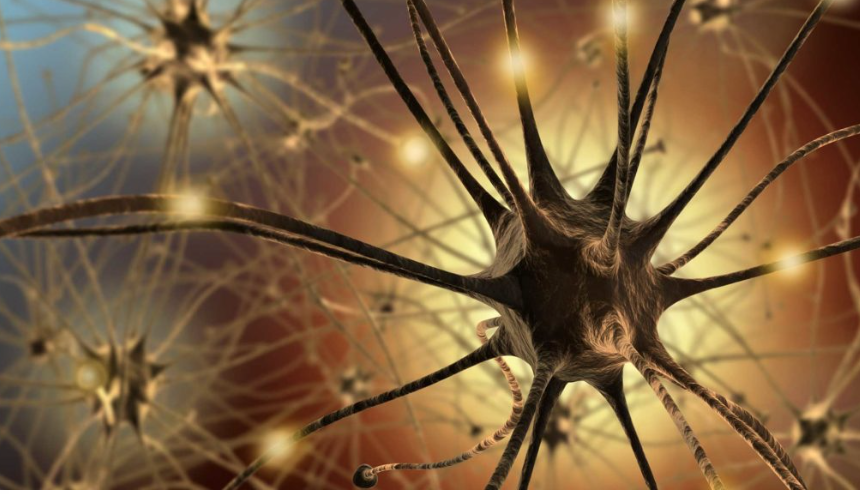
“Neurons that fire together, wire together,” Dr. Max Cynader puts it, and it’s difficult to come across a more pertinent adage in today’s era. Discussion of neurons firing and wiring draws implications so vast that it impacts everything from positive and negative emotional spectrums, to the difference between being handicapped, and a genius – or life and death. Modern science has now begun to steer away from the traditional ideology of fixated neurology and is instead coming to find that a person’s given neurological state can very largely be conceptualized as a transitory state that is dictated by a person’s subconscious drives and instincts.
The waking, alert thought-formations that people call “thoughts” are merely periods at the end of a sentence of cognitive process, and while it may be a tricky thing to pinpoint, understanding the full spectrum of thought process can often be the difference between a healthy and unhealthy outlook on life. After all, how can one operate a piece of machinery when they have not been taught how? They could try to deduce its proper usage, but this often will lead to steps missing and/or the overall process being poorly elaborated. Yet it could also lead to new and novel ways of using the machinery, given that the person has been meticulous and empirical enough to properly deduce the fundamental processes of the machinery. This difference between the two methods, which can be considered “Trauma” and “Transcendence,” is neuroplasticity.
Scientists are coming to find that neurological “thought complexes” (neuronal activity that assimilates a memory, or an idea, et cetera; the syntax of the neuron) that are configured by a child from their parent during its developmental years will play an instrumental role in their genetic expression throughout life. A field that attempts to study this is “epigenetics,” “epi” meaning “on top of,” implying that all genes must be allowed an activation protocol in order to express themselves. This activation protocol can be considered part of the thought-complex “sentence” that the waking-alert thought punctuates the end of.
From a philosophical perspective, life can very much be considered a hand of cards in poker, with each card being a neuron. The player only has what they’ve been given, but that doesn’t inhibit the variety of possibilities that they are able to produce with their cards at hand, nor does it inhibit the possibilities that the other players will unlock around them, or the original player’s potential to acquire new or different cards to utilize. In this regard, neuroplasticity is the representation of the Observer Effect within the physical state of a person’s own conscious experience. Without observation, the “particle” will continue to embody a waveform, and only when it is accentuated by intention/attention will it take its particle form. Similarly, when a thought-complex is not given any sort of intention/attention, it will continue to ripple outward and “wave” throughout the cognitive experience, until it is given its proper attention and guided in a direction intended by the user.
Not surprisingly, meditation has become known as the center point component in neuroplasticity. Other similar forms of cognitive therapy that help with neuroplasticity (that can all be considered different aspects of meditation) are BioFeedback, Hypnosis, Psychedelic therapy, empirical dream analysis, and even traditional psychotherapy. Scientists are also finding that mental discrepancies like Borderline Personality Disorder are due to a dysregulation of reward processes in the brain, resulting in more internal drive for reward, with too little control to actually handle it, thus resulting in the tumultuous imbalance of a person with BPD’s mental state at any given time.
This can be a perfect example of thought complexes running amuck that have not been given the proper attention, almost always to very little fault of the individual, because these thought complexes were often bestowed upon them at very early ages. However, if there is any objective truth to life, it is that with any past traumas in mind, the poor decisions of the individual, due to their own thought-complexes, fall squarely on their own shoulders. Following this thread of thought, in comparative ancient shamanism, it was typical for the shaman of the people to be a person that had survived a near-death experience as a child, or some type of illness. They had to experience a trauma that jostled them from their fixated mindset of waking life and cause them to activate fresh neuronal activity in order to survive.
Logistically speaking, when this fresh neuronal activity has been excavated, it often is considered “excess baggage” because it is something that has been incorporated into a person’s thought process without receiving some sort of diachronic cognitive attention from the individual. It’s an outlier plot point on the graph, so to speak. Invoking neuroplasticity however, through extensive cognitive therapies guided with intention and attention, can bring about the assimilation of these outlier thought-complexes, and thus the “excess baggage” becomes more “internal computing RAM” (random access memory; a computer term for those unaware.)
Through an elasticity of thought-complex, something that all humans have the capacity for whether it is utilized or not, it is quite possible and usual for someone to transcend the given thought-complexes of their personal traumas, and reconfigure them to their advantage. This was the way of the ancient shaman, and the true nature of ancient healing. Used in an anthropological context, the word “fetish” characterizes the idea of investing a certain amount of power into something through intention that would not otherwise have any power.
In ancient cultures, the people knew that a stick, a feather, some sinew and some beads were all respectively nothing particularly important, yet when a person utilized their intentions and attention to combine all these ingredients, it was suddenly agreed to be medicine. This is not to say that this definition of medicine was ill-founded either, but rather that these medicines were not of the body–they were of the mind. A true medicine man knows that he cannot fix the body until he fixes the mind, and because of this, the shaman is the man who understands the rehabilitative process of neuroplasticity. As he used this plasticity to regain his own health, so can he learn to understand the empirical process of the human brain, so as to catalyze these changes within the other individuals looking for it.
This is the true nature of theological “magick.” It is understanding the underlying mechanisms of the human brain through symbolism (something that the brain cannot form thoughts without), and it is understanding how this connects to the processes of neurological stasis. It is a fundamental axiom of life that one simply cannot begin to change their own thought process without a novel catalyst–something that is new, unfamiliar, and transitional to a new experience. The reason knowledge and wisdom are often equated with pain and trauma in this regard, is because the things that are new, unfamiliar, and that lead to change are more often than not considered with a degree of trauma. The ancient concept of magick is not the ability to fly on a broomstick or talk to forest spirits, but rather learning the fundamental processes of the deep chasms of human consciousness in order for one to find their own way out of the pit. This is so they can ultimately help others do the same. This is the nature of trauma to transcendence through neuroplasticity.
Dreamweaving
For anyone looking to evoke the therapeutic potentials of neuroplasticity in a way that doesn’t involve paying for therapies or any sort of conference with another person, the processes of Dream Incubation and Dream Analysis are highly recommended, and will be briefly described here. While there is no set classification of the method, this type of dream therapy could be considered “Dreamweaving.”
Dream Incubation is the concept of “incubating” a dream as an individual falls asleep. This typically will require sensory deprivation to gain the best results, which means no television or radio or music, but depending on the person and the thought, certain music or even online-lectures can be very beneficial to help “incubate.” The trick here is to focus on the thought from an objective perspective; if a person is trying to understand an event in their lives, it is suggested that they analyze the event from an omnipotent perspective, as if they themselves were another character as well. Doing so will lead to dreams on the subject, guaranteed. The only thing that cannot be guaranteed is whether the person will remember this dream at first, and so repetition is usually required. Continuation of this process will lead to definitive dream incubation.
Once a person can learn to incubate these concepts when they fall asleep, the next step will be upon waking up. It is important for anyone that is Dreamweaving to have a writing utensil and a notebook next to their bed, an electronic device will not do. There are certain things about the ritual of writing on paper, like one’s own handwriting, that will help a person connect with their thoughts much more effectively than any laptop or phone. After writing down the full dream sequence, the person should then make a list of all the nouns (people, places, things) in their dream, using personal discretion to gauge any detail’s relevancy. Once this list has been gathered, the person should take the first noun on the list, and follow these three steps:
1) Physical descriptive adjective, free word association. If the noun is a cat, then the person should open their brain to the first logical word they find in their thoughts that is associated with cat. This should not be given more than a 1.5 seconds of thought, because after this the spontaneity of the exercise is lost. Let’s say a person gets “yarn” from “cat.”
2) Emotional descriptive adjective, free word association. If the physical adjective from “cat” was “yarn,” the person then seeks to use the same process illustrated in Step 1, except this time searching for the first emotional description of “yarn” that comes to mind. Let’s say the person gets “tangled.”
3) From cat, the person can subjectively deduce, given the context of their own brain and the feeling of their dream, that on some level this cat represents a feeling of tangling, perhaps of emotional frustration that could be tied to a whole number of things; perhaps an owner of the cat that was dreamt of.
At its core, Dreamweaving is a Science of the Self, and the more it is practiced, the more accurate it will become for the individual. Furthermore, its efficacy and overall results can only be interpreted and represented by the individual because of this. Utilizing the process of Dreamweaving is an excellent way to begin observing one’s own thought-complexes, so as to begin the process of neuroplasticity.
Sources:
Also by Anthony Tyler:
Share this: Send the word out using these buttons!