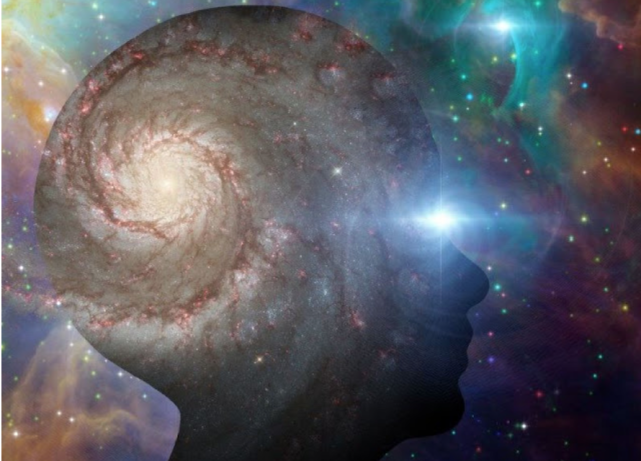
I rather like this particular article because it opens the door for many who are unaware and “not awake” of spiritual matters that do indeed place our control…within ourselves! When the concept of “we are all ONE’, or “everything is alive” causes many to shake their heads in disbelief, an article like this one explaining that scientists now believe that everything has consciousness comes in handy!
Pretty deep stuff here, but please check out this article from GalacticConsciousness.com, love the way science is now backing up spirituality, and…
InJoy!
by Core Spirit
Consciousness permeates reality. Rather than being just a unique feature of human subjective experience, it’s the foundation of the universe, present in every particle and all physical matter.
This sounds like easily-dismissible bunkum, but as traditional attempts to explain consciousness continue to fail, the “panpsychist” view is increasingly being taken seriously by credible philosophers, neuroscientists, and physicists, including figures such as neuroscientist Christof Koch and physicist Roger Penrose.
“Why should we think common sense is a good guide to what the universe is like?” says Philip Goff, a philosophy professor at Central European University in Budapest, Hungary. “Einstein tells us weird things about the nature of time that counters common sense; quantum mechanics runs counter to common sense. Our intuitive reaction isn’t necessarily a good guide to the nature of reality.”
David Chalmers, a philosophy of mind professor at New York University, laid out the “hard problem of consciousness” in 1995, demonstrating that there was still no answer to the question of what causes consciousness. Traditionally, two dominant perspectives, materialism and dualism, have provided a framework for solving this problem. Both lead to seemingly intractable complications.
“Physics is just structure. It can explain biology, but there’s a gap: Consciousness.”
The materialist viewpoint states that consciousness is derived entirely from physical matter. It’s unclear, though, exactly how this could work. “It’s very hard to get consciousness out of non-consciousness,” says Chalmers. “Physics is just structure. It can explain biology, but there’s a gap: Consciousness.” Dualism holds that consciousness is separate and distinct from physical matter—but that then raises the question of how consciousness interacts and has an effect on the physical world.
Panpsychism offers an attractive alternative solution: Consciousness is a fundamental feature of physical matter; every single particle in existence has an “unimaginably simple” form of consciousness, says Goff. These particles then come together to form more complex forms of consciousness, such as humans’ subjective experiences. This isn’t meant to imply that particles have a coherent worldview or actively think, merely that there’s some inherent subjective experience of consciousness in even the tiniest particle.
Panpsychism doesn’t necessarily imply that every inanimate object is conscious. “Panpsychists usually don’t take tables and other artifacts to be conscious as a whole,” writes Hedda Hassel Mørch, a philosophy researcher at New York University’s Center for Mind, Brain, and Consciousness, in an email. “Rather, the table could be understood as a collection of particles that each have their own very simple form of consciousness.”
But, then again, panpsychism could very well imply that conscious tables exist: One interpretation of the theory holds that “any system is conscious,” says Chalmers. “Rocks will be conscious, spoons will be conscious, the Earth will be conscious. Any kind of aggregation gives you consciousness.”
Interest in panpsychism has grown in part thanks to the increased academic focus on consciousness itself following on from Chalmers’ “hard problem” paper. Philosophers at NYU, home to one of the leading philosophy-of-mind departments, have made panpsychism a feature of serious study. There have been several credible academic books on the subject in recent years, and popular articles taking panpsychism seriously.
One of the most popular and credible contemporary neuroscience theories on consciousness, Giulio Tononi’s Integrated Information Theory, further lends credence to panpsychism. Tononi argues that something will have a form of “consciousness” if the information contained within the structure is sufficiently “integrated,” or unified, and so the whole is more than the sum of its parts. Because it applies to all structures—not just the human brain—Integrated Information Theory shares the panpsychist view that physical matter has innate conscious experience.
Goff, who has written an academic book on consciousness and is working on another that approaches the subject from a more popular-science perspective, notes that there were credible theories on the subject dating back to the 1920s. Thinkers including philosopher Bertrand Russell and physicist Arthur Eddington made a serious case for panpsychism, but the field lost momentum after World War II, when philosophy became largely focused on analytic philosophical questions of language and logic. Interest picked up again in the 2000s, thanks both to recognition of the “hard problem” and to increased adoption of the structural-realist approach in physics, explains Chalmers. This approach views physics as describing structure, and not the underlying nonstructural elements.
“Physical science tells us a lot less about the nature of matter than we tend to assume,” says Goff. “Eddington”—the English scientist who experimentally confirmed Einstein’s theory of general relativity in the early 20th century—“argued there’s a gap in our picture of the universe. We know what matter does but not what it is. We can put consciousness into this gap.”
“What is it that breathes fire into the equations and makes a universe for them to describe?”
In Eddington’s view, Goff writes in an email, it’s “”silly” to suppose that that underlying nature has nothing to do with consciousness and then to wonder where consciousness comes from.” Stephen Hawking has previously asked: “What is it that breathes fire into the equations and makes a universe for them to describe?” Goff adds: “The Russell-Eddington proposal is that it is consciousness that breathes fire into the equations.”
The biggest problem caused by panpsychism is known as the “combination problem”: Precisely how do small particles of consciousness collectively form more complex consciousness? Consciousness may exist in all particles, but that doesn’t answer the question of how these tiny fragments of physical consciousness come together to create the more complex experience of human consciousness.
Any theory that attempts to answer that question, would effectively determine which complex systems—from inanimate objects to plants to ants—count as conscious.
An alternative panpsychist perspective holds that, rather than individual particles holding consciousness and coming together, the universe as a whole is conscious. This, says Goff, isn’t the same as believing the universe is a unified divine being; it’s more like seeing it as a “cosmic mess.” Nevertheless, it does reflect a perspective that the world is a top-down creation, where every individual thing is derived from the universe, rather than a bottom-up version where objects are built from the smallest particles. Goff believes quantum entanglement—the finding that certain particles behave as a single unified system even when they’re separated by such immense distances there can’t be a causal signal between them—suggests the universe functions as a fundamental whole rather than a collection of discrete parts.
Such theories sound incredible, and perhaps they are. But then again, so is every other possible theory that explains consciousness. “The more I think about [any theory], the less plausible it becomes,” says Chalmers. “One starts as a materialist, then turns into a dualist, then a panpsychist, then an idealist,” he adds, echoing his paper on the subject. Idealism holds that conscious experience is the only thing that truly exists. From that perspective, panpsychism is quite moderate.
Chalmers quotes his colleague, the philosopher John Perry, who says: “If you think about consciousness long enough, you either become a panpsychist or you go into administration.”
Share this: Send the word out using these buttons!

 Rose Rambles...