A Zen Master Explains the Art of ‘Letting Go’, And It Isn’t What You Think ~ April 11, 2018


By Christina Sarich | Source Waking Times

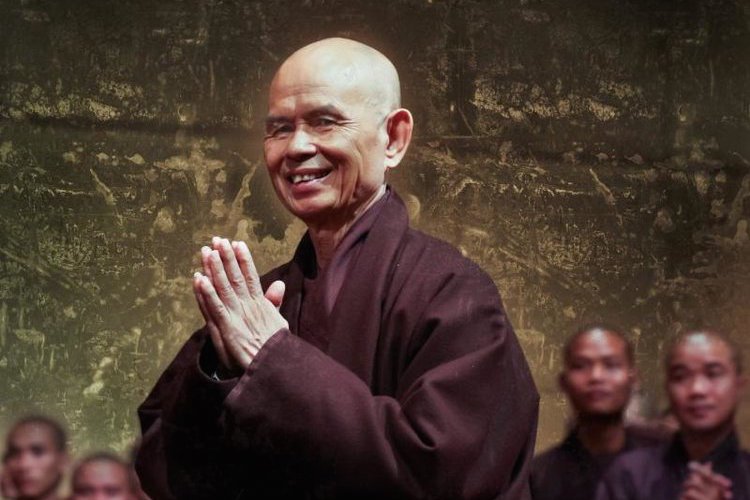
Thich Naht Hanh, the Zen Buddhist master, has some interesting advice about what it means to truly let go. Many people mistake detachment or non-clinging to be a form of aloofness, or emotional disconnect from others, but as Hanh explains, truly letting go often means loving someone more than you have ever loved them before.

The Buddha taught that detachment, one of the disciplines on the Noble Path, also called ariyasaavaka, is not a physical act of withdrawal or even a form of austerity. Though the Buddha teaches of a “non-action which is an integral part of the Right Way,” if it is taken out of context it can give the impression that we should develop a lack of concern for others, and that we should live without truly feeling or expressing our emotions – cutting ourselves off from life.

These type of misinterpretations are sadly common, since there are not always direct translations from the Paali language into English.

This form of “detachment” is an erroneous understanding of the Buddha’s message. Master Hanh states that to truly let go we must learn to love more completely. Non-attachment only happens when our love for another extends beyond our own personal expectations of gain, or our anticipation of a specific, desired outcome.

Hanh describes four forms of complete detachment, which surprisingly, aren’t about holing yourself up in a cave and ignoring everyone who has broken your heart, or ignoring your lust or desire for a romantic interest. This is not detachment. Letting go, means diving in. For example:

Maitri (Not the Love You Know)

Hanh describes the importance of Maitri, not love as we normally understand in a Westernized use of the word. He states,

“The first aspect of true love is maitri (metta, in Pali), the intention and capacity to offer joy and happiness. To develop that capacity, we have to practice looking and listening deeply so that we know what to do and what not to do to make others happy. If you offer your beloved something she does not need, that is not maitri. You have to see her real situation or what you offer might bring her unhappiness.”

In other words, your detachment may come in accepting that certain things you would normally do to make another person feel loved and appreciated may not be what the person you are actively loving now, needs. Instead of forcing that behavior on another person, with an egoic intent to “please” them, you simply detach from that need in yourself, and truly observe what makes another person feel comfortable, safe, and happy.

Hanh further explains,

We have to use language more carefully. “Love” is a beautiful word; we have to restore its meaning. The word “maitri” has roots in the word mitra which means friend. In Buddhism, the primary meaning of love is friendship.”

Karuna (Compassion)

The next form of true detachment is compassion. When we let go, we don’t stop offering a compassionate touch, word, or deed to help someone who is in pain. We also don’t expect to take their hurt or pain away. Compassion contains deep concern, though. It is not aloofness It is not isolation from others.

The Buddha smiles because he understands why pain and suffering exist, and because he also knows how to transform it. You become more deeply involved in life when you become detached form the outcome, but this does not mean you don’t participate fully – even in others’ pain.

Gratitude and Joy

In truly letting go you practice gratitude. Mudita, or joy arises when we are overcome with gratitude for all that we have, such that we no longer cling to some other longed-for result. The Buddha’s definition of joy is more like “Unselfish joy.” It means that we don’t only find happiness when something good happens to us, but when others find happiness.

If you’ve ever had to say goodbye to a love or friend so that they could continue on their life’s path – one that may not have continued to intertwine with your own – you may have felt pain when they found someone new to love, or made a new friend that seemed to take your place. This is not true detachment. Joy arises when you find happiness even when others find joy – and it has little or nothing to do with you.

Upeksha (Equanimity)

Master Hanh describes the final quality of true love which sheds inordinate light on the true process of letting go.

He states,

The fourth element of true love is upeksha, which means equanimity, non-attachment, nondiscrimination, even-mindedness, or letting go. Upa means “over,” and iksha means “to look.” You climb the mountain to be able to look over the whole situation, not bound by one side or the other. If your love has attachment, discrimination, prejudice, or clinging in it, it is not true love.

People who do not understand Buddhism sometimes think upeksha means indifference, but true equanimity is neither cold nor indifferent. If you have more than one child, they are all your children. Upeksha does not mean that you don’t love. You love in a way that all your children receive your love, without discrimination.”

Hanh explains that without this quality our love tends to become possessive – a stomping ground of the ego. We try to put our beloved in our pocket and carry them with us, when they are more like the wind, or a butterfly, or a stream, needing to move and flow, or risk dying. This is not love, this is destruction.

For love to be true love, it must have elements of compassion, joy, and equanimity – and thisis truly letting go.

The Art of Letting Go is Artless

The real secret is that letting go is not an art, it is an allowing, a being. A non-attached relationship is healthy, strong and filled with effortless love, kindness and compassion. It is completely selfless because your sense of ‘self’ is no longer asserted in every situation. If you want to truly let go, you’ve got to love more, not less. This is the most common misunderstanding about this priceless teaching of the Buddha.

Read more articles by Christina Sarich.

About the Author

Christina Sarich is a staff writer for Waking Times. She is a writer, musician, yogi, and humanitarian with an expansive repertoire. Her thousands of articles can be found all over the Internet, and her insights also appear in magazines as diverse as Weston A. PriceNexusAtlantis Rising, and the Cuyamungue Institute, among others. She was recently a featured author in the Journal, “Wise Traditions in Food, Farming, and Healing Arts,” and her commentary on healing, ascension, and human potential inform a large body of the alternative news lexicon. She has been invited to appear on numerous radio shows, including Health Conspiracy Radio, Dr. Gregory Smith’s Show, and dozens more. The second edition of her book, Pharma Sutra, will be released soon.

This article (A Zen Master Explains the Art of ‘Letting Go’, And It Isn’t What You Think) was originally created for The Mind Unleashed and is published here with permission. It may be re-posted freely with proper attribution and author bio.

RELATED POST: The Conflicting Message of “Let It Go”
A Zen Master Explains the Art of ‘Letting Go’, And It Isn’t What You Think ~ March 16, 2018


Many thanks to GalacticConnection.com for bringing us an article that answers the question many have. Just what is meant by the phrase we hear so often in spiritual circles…”Let it go”. Please read this article, learn more about “letting go”, and…

InJoy!

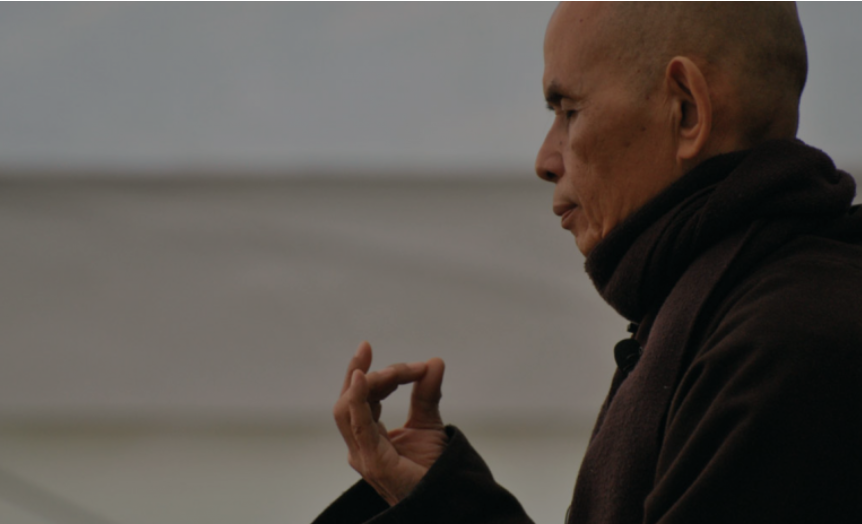
Thich Naht Hanh, the Zen Buddhist master, has some interesting advice about what it means to truly let go. Many people mistake detachment or non-clinging to be a form of aloofness, or emotional disconnect from others, but as Hanh explains, truly letting go often means loving someone more than you have ever loved them before.

The Buddha taught that detachment, one of the disciplines on the Noble Path, also called ariyasaavaka, is not a physical act of withdrawal or even a form of austerity. Though the Buddha teaches of a “non-action which is an integral part of the Right Way,” if it is taken out of context it can give the impression that we should develop a lack of concern for others, and that we should live without truly feeling or expressing our emotions – cutting ourselves off from life.

These type of misinterpretations are sadly common, since there are not always direct translations from the Paali language into English.

This form of “detachment” is an erroneous understanding of the Buddha’s message. Master Hanh states that to truly let go we must learn to love more completely. Non-attachment only happens when our love for another extends beyond our own personal expectations of gain, or our anticipation of a specific, desired outcome.

Hanh describes four forms of complete detachment, which surprisingly, aren’t about holing yourself up in a cave and ignoring everyone who has broken your heart, or ignoring your lust or desire for a romantic interest. This is not detachment. Letting go, means diving in. For example:

Maitri (Not the Love You Know)

Hanh describes the importance of Maitri, not love as we normally understand in a Westernized use of the word. He states,

“The first aspect of true love is maitri (metta, in Pali), the intention and capacity to offer joy and happiness. To develop that capacity, we have to practice looking and listening deeply so that we know what to do and what not to do to make others happy. If you offer your beloved something she does not need, that is not maitri. You have to see her real situation or what you offer might bring her unhappiness.”

In other words, your detachment may come in accepting that certain things you would normally do to make another person feel loved and appreciated may not be what the person you are actively loving now, needs. Instead of forcing that behavior on another person, with an egoic intent to “please” them, you simply detach from that need in yourself, and truly observe what makes another person feel comfortable, safe, and happy.

Hanh further explains,

We have to use language more carefully. “Love” is a beautiful word; we have to restore its meaning. The word “maitri” has roots in the word mitra which means friend. In Buddhism, the primary meaning of love is friendship.”

Karuna (Compassion)

The next form of true detachment is compassion. When we let go, we don’t stop offering a compassionate touch, word, or deed to help someone who is in pain. We also don’t expect to take their hurt or pain away. Compassion contains deep concern, though. It is not aloofness It is not isolation from others.

The Buddha smiles because he understands why pain and suffering exist, and because he also knows how to transform it. You become more deeply involved in life when you become detached form the outcome, but this does not mean you don’t participate fully – even in others’ pain.

Gratitude and Joy

In truly letting go you practice gratitude. Mudita, or joy arises when we are overcome with gratitude for all that we have, such that we no longer cling to some other longed-for result. The Buddha’s definition of joy is more like “Unselfish joy.” It means that we don’t only find happiness when something good happens to us, but when others find happiness.

If you’ve ever had to say goodbye to a love or friend so that they could continue on their life’s path – one that may not have continued to intertwine with your own – you may have felt pain when they found someone new to love, or made a new friend that seemed to take your place. This is not true detachment. Joy arises when you find happiness even when others find joy – and it has little or nothing to do with you.

Upeksha (Equanimity)

Master Hanh describes the final quality of true love which sheds inordinate light on the true process of letting go.

He states,

The fourth element of true love is upeksha, which means equanimity, non-attachment, nondiscrimination, even-mindedness, or letting go. Upa means “over,” and iksha means “to look.” You climb the mountain to be able to look over the whole situation, not bound by one side or the other. If your love has attachment, discrimination, prejudice, or clinging in it, it is not true love.

People who do not understand Buddhism sometimes think upeksha means indifference, but true equanimity is neither cold nor indifferent. If you have more than one child, they are all your children. Upeksha does not mean that you don’t love. You love in a way that all your children receive your love, without discrimination.”

Hanh explains that without this quality our love tends to become possessive – a stomping ground of the ego. We try to put our beloved in our pocket and carry them with us, when they are more like the wind, or a butterfly, or a stream, needing to move and flow, or risk dying. This is not love, this is destruction.

For love to be true love, it must have elements of compassion, joy, and equanimity – and this is truly letting go.

The Art of Letting Go is Artless

The real secret is that letting go is not an art, it is an allowing, a being. A non-attached relationship is healthy, strong and filled with effortless love, kindness and compassion. It is completely selfless because your sense of ‘self’ is no longer asserted in every situation. If you want to truly let go, you’ve got to love more, not less. This is the most common misunderstanding about this priceless teaching of the Buddha.

What Happens to Our Brain When We Experience Complete Silence ~ March 9, 2018


Do you remember the term, “Silence is Golden”? Many thanks to Deus Nexus for this article. Now we know why that saying is a truism! Please read this article, turn off the TV, get away from the sound of other’s, and…

InJoy!

By Christina Sarich | Source Waking Times

“Silence is the perfectest herault of joy. I were but little happy if I could say how much.” – Shakespeare

The word noise comes from a Latin root word meaning, “pain,” or “distress.” Noise is something we’ve become accustomed to, even if we are keenly aware of its ability to cause multiple forms of anguish. Even if we live in decibel hell,” we can find moments of silence to reduce our pain. We can intuitively observe that silence, in contrast, reboots our ability to think straight, and offers us a profound feeling of peace.

Silence also allows us to get to know our deepest truths in an undeniable way. It is in complete silence that the thoughts we shelter from others come to the surface.

But what else happens to us when we take a break from the deafening sounds of modern life? Aside from the metaphysical benefits of sitting in silence, there are staggering physiological changes which take place throughout the body: notably in the brain.

Scientists have studied the effects of silence on the brain for several decades, but a few studies are paramount in their importance if we are to understand just how vital silence is for a human being.

Silence Develops New Brain Cells

One study, published in the journal, Brain, Structure, and Function observed mice under the influence of noise and silence. The way the study was structured, silence was expected to be the control (identifiable or observable fact meant to minimize the effects of independent variables in a study). However, mice exposed to two hours of complete silence daily developed a peculiar side effect – they started to develop brand new cells in the hippocampus of the brain, the area which is associated with learning new things, retaining memory, and processing emotion. Though new brain cells don’t always directly translate into better health, one of the researchers, Imke Kirste, says that these new cells appeared to become functioning neurons.

“We saw that silence is really helping the new generated cells to differentiate into neurons and integrate into the system.”

Silence Heightens Sensitivity And Empathy

There are many brain areas associated with emotional sensitivity and empathy. Particularly, the right supramarginal gyrus, is an imperative brain region for the development of these traits.  If this brain region doesn’t function properly on a regular basis — or when we need to make particularly quick decisions — our ability to execute empathy is dramatically reduced.

Silence Fights Insomnia

One study, published in JAMA measured the effects of silence on sleep. Though it was used to test mindfulness meditation, the essence of the meditation is to observe the thoughts, silently. Those who spent just twenty minutes practicing “silence” had a measured increase in sound sleep and no longer suffered from insomnia.

The Brain Evaluates And Internalizes Information

“You throw thorns, in my silence they become flowers.” – Gautama Buddha

Another important study has found that the brain processes information very differently when we allow it to be in silence. When the brain is at rest, meaning, it is not exposed to new stimuli via sound, it can take both internal information (learned things) and integrate them more seamlessly with external information.

In other words, instead of reacting to external stimuli, including things that would normally trigger us to behave in a less-than-conscious way, we can quickly determine how to integrate experiences with people, circumstances, and more.

Although we can’t impose a quiet environment in our own minds, and always calm our personal thoughts, it seems that a quiet external environment allows the famous “gap” in our thinking which Daoists, Buddhists, and others have hinted at. This gap is a split second of calm which allows us to choose our reaction to the world, instead of acting out old habits.

As Nietzsche once said, “Silence is worse, all truths that are kept silent become poisonous.”What better way to see the world as it truly is, and not as we’ve erroneously imagined it, then by getting a daily dose of silence?

Silence Releases Tension From the Body and Brain

Even two minutes of silence can release built up tension in the brain and the body.

Multiple studies that measured changes in heart rate, respiratory rates, carbon dioxide levels, cerebral-artery flow, and other concrete physical changes, found that just a few moments of silence change how our bodies respond to the world.

Preliminary studies even indicate that silence can help us to overcome childhood trauma, PTSD, and other serious conditions of the heart and mind. The amygdala — associated with memory formation and emotion — is activated when we hear “noise” leading to the release of stress hormones. Conversely, silence activates the release of oxytocin, GABA, and serotonin – all hormones which reduce stress.

In closing..

Silence is much more important to our brains than we’ve previously thought. All profound internal progress – our a-ha moments – are preceded by silence.

Read more articles by Christina Sarich.

About the Author

Christina Sarich is a staff writer for Waking Times. She is a writer, musician, yogi, and humanitarian with an expansive repertoire. Her thousands of articles can be found all over the Internet, and her insights also appear in magazines as diverse as Weston A. PriceNexusAtlantis Rising, and the Cuyamungue Institute, among others. She was recently a featured author in the Journal, “Wise Traditions in Food, Farming, and Healing Arts,” and her commentary on healing, ascension, and human potential inform a large body of the alternative news lexicon. She has been invited to appear on numerous radio shows, including Health Conspiracy Radio, Dr. Gregory Smith’s Show, and dozens more. The second edition of her book, Pharma Sutra, will be released soon.

This article (What Happens to Our Brain When We Experience Complete Silence) was originally created for The Mind Unleashed and is published here with permission. It may be re-posted freely with proper attribution and author bio.