——————————————————————
Editor’s Note: Many thanks to reader J. for sending in this share!
How odd…since I decided on early retirement from the rat-race of western medicine (think about those words, folks?), I have never been busier!
Sure the constant drone of forced multi-tasking has ended, yet now…I willingly engage myself in tasks I want to achieve! Imagine this…all on a greatly reduced budget!
No traveling, no extraordinary shopping, no show or concerts, yet, I Am almost drooling with delight, and kinda, sorta coaching (via this blog) others how to find their Quantum selves and then BE in…
Quantum Joy!
——————————————————————-
Never a dull moment: the benefits of boredom
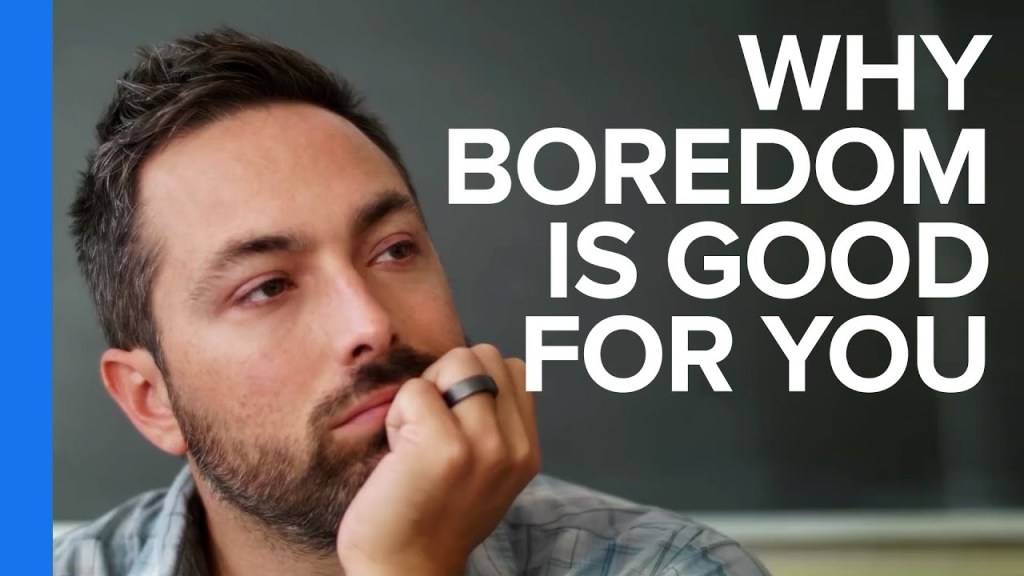
When was the last time you uttered the words, “I’m bored?” It’s actually pretty challenging to be bored in our fast-paced world, where even a modicum of downtime sends us scrolling through social media, texting a friend, or hitting the “Yes, I’m still watching” button on Netflix. However, if you’re looking for new ways to spur creativity, productivity, and motivation, science suggests that the answer might lie in a little tedium.
Harnessed in the right ways, boredom can push you to find greater meaning and creative inspiration – two key ingredients in living a longer, healthier life.

Idle minds, ingenious ideas
Contrary to popular belief, boredom is not the enemy of creativity; science says it might be a catalyst for it [1, 2]. In fact, many renowned individuals have credited boredom for their discoveries, including Maya Angelou, Albert Einstein, and Leonardo da Vinci (who was said to stare at stains on walls for inspiration). So if you want to become the next acclaimed author, physicist, or inventor, you might want to make time in your schedule for some boredom.
One study found that participants who had completed a boring writing task were more creative than those who participated in a more interesting task. Researchers suggested that boredom stemming from a mundane reading task led to more daydreaming, which fostered more creativity [3], while another study labeled boredom a “variety-seeking emotion,” driving us to pursue new and exciting—and creative—experiences.
When you’re spacing out or bored (think, folding laundry or standing in line), our brains switch into “default mode.” Dr. Zomorodi, author of Bored and Brilliant, explains that default mode (also referred to as the “imagination network”) is when our brains aren’t focused on a goal-oriented task and are then better able to process information and problem-solve.
So if we want to boost our creativity, the answer might not lie in creating a mood board or diving into that next podcast episode but rather in doing simple, mundane tasks like cleaning out our inbox or eating dinner. After all, don’t your a-ha moments happen less when you’re forcing it and more when you’re simply standing in the shower?

Do nothing to do more: how boredom boosts productivity
Boredom gets a pretty bad rap. An astonishing 67% of men and 25% of women would prefer self-administered electric shocks over 15 minutes alone with their thoughts [4]; however, research reveals that we might be harming productivity with our own busyness.
One study found that the brains of heavy multitaskers contain less gray matter density in the anterior cingulate cortex (ACC), a region responsible for focus and concentration (interestingly, meditation increases gray matter density in the ACC) [5]. The good news is that boredom has been shown to boost individual productivity, particularly when it comes to idea generation [6], which is certainly a whole lot more pleasant than electric shocks.

Our minds: wandering, but never lost
How often does your mind wander from one thought to the next? You might not think anything of it, but letting your mind wander could do wonders for your brain. After all, when we’re bored, our brains are more receptive to new information, making it easier for us to absorb and retain information [7]. One study found that students with higher working memory reported letting their minds wander more during the task. So the next time your mind starts wandering, for the sake of your working memory, it might be better to lean into it than try to fight it.

Motivation favors the bored
Research has shown that boredom can motivate us to make changes by encouraging goal-directed behaviors [2, 8]. It may be that boredom gives us time to reflect on what we actually want in our lives, so we can focus our attention on how to pursue the activities and goals that feel more satisfying. But what happens when inevitably we’re faced with a pursuit or task that feels boring? Tapping into our intrinsic motivation may help.
A perfect example comes from the book Out of My Skull, about astronauts Valentine Lebedev and Chris Hadfield. After just one week into a seven-month space mission, Lebedev had had enough of the busy work (”the drab routine has begun,” he wrote) [9]. Lebedev was bored; however, Hadfield found purpose in even the most tedious of tasks. While he admits that he never gets bored, the book’s author, Dr. Danckert, says that intrinsic motivation also plays a role in how Hadfield—and all of us—can handle even the most mundane activities. And research supports that when intrinsically motivated, the feelings of purpose and excitement associated with it cancel out anxiety or boredom [10].
So while boredom is something we’ll all experience, whether at work, school, or home life, when you feel you’re being called to a greater purpose, your internal motivation can fuel you to keep going even when the going gets boring.
——————————————————————


When I retired, I would be asked by others “Are you bored yet”? I responded “who has time for boredom”? I’ve always enjoyed washing dishes by hand because it brought me into a place of Zen, meditation at its core.
LikeLike
Yes, yes, yes! Mindless actions. I get the same thing by driving long distances…well, when possible…? 💕🌹😊
LikeLike