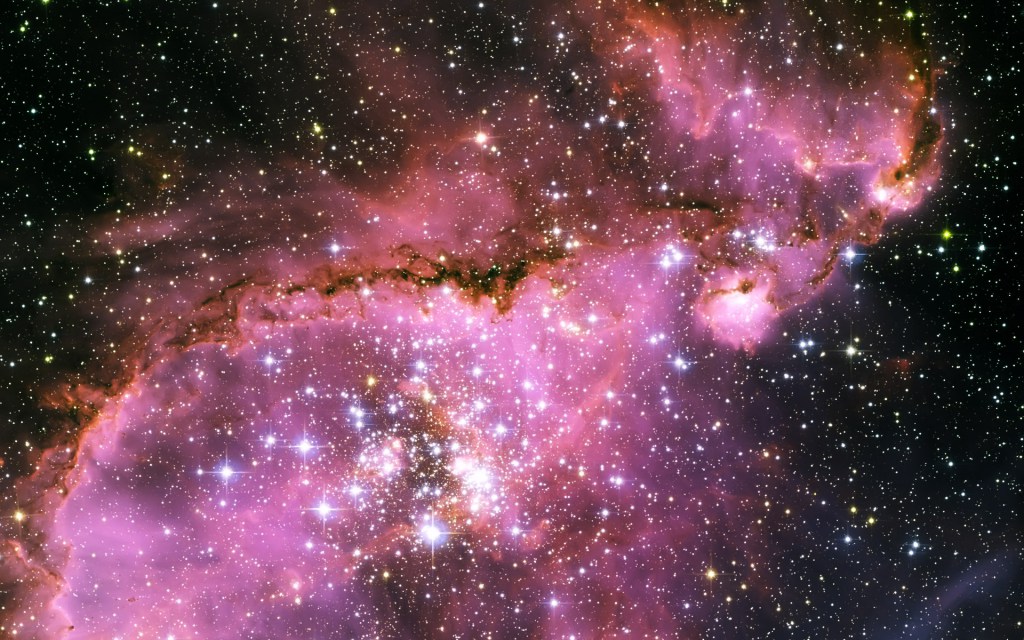
This article published on GalacticConnections.com is pretty spooky to read and requires much thought. It presents some very interesting concepts for comprehension. In my spiritual studies, I AM dancing with the observation of our world being, in reality, a virtual kind of hologram. The purpose of this hologram is/has a spiritual purpose, we are to learn to love! That is…to learn and BE love by means of “living” in this world with all of it’s “drama”!
The negative aspects of this “life”…war, pain, turmoil, dis-ease are all part of the learning process that we are encouraged to overcome by learning to think and feel positive vibrations. Please remember that the highest vibration is that of…Love! Many, myself sometimes included, may think this to be a harsh learning curve. I mean, really, to experience any kind of emotional pain to goad our BEings into love?
I’ve gone way past examining this as a tool to be used on Earth for controlling the masses, i.e. Matrix. Perhaps there has to be a better answer to the meaning of life, so…please read this article, determine what you think about life as global and galactic issues move us forward, and…
InJoy!
truthstreammedia.com
Editor’s Note: How very interesting it all is… the gamemakers are claiming dominion over our perceptions, our thoughts, our experiences, emotions, etc. Are we still operating within the bounds of reality? There are forward thinking men like Philip K. Dick, who have some sort of inside knowledge about what is being done, and an understanding for what it means, who have questioned this reality in all seriousness and with a straight face. Perhaps it is a predictable side effect of artificial reality, synthetic thought and too much leverage over the controls… that it would attempted, contemplated or reinforced and construction, beyond all our wildest dreams only a few decades ago.
The truth is edited out, and all the cosmetic photoshop and image enhancement degrades the authenticity, and the sincerity of life. Then again, most are walking around in a daze already, following patterns and behaviors and of role models they saw on TV, in magazines and on-stage. Now, all that could amplify – quick.
Mark Zuckerberg is in the news with a room full of zombies-in-waiting, consumer-minded people who are plunging headlong into the world of virtual reality – edited reality by the social media and search engine giants who already scrub posts, comments, websites and content in favor of streamlined and corporate approved news and information search results.
In the virtual and digital world we are entering, the platform becomes the State, and their tyrannies big and small the injustices of a thought- and speech-driven world that has been put under a yoke.
———————–
by Jake Anderson
The Anti-Media.org
In June, a team of programmers will release a ground-breaking new video game called No Man’s Sky, which uses artificial intelligence and procedural generation to self-create an entire cosmos full of planets. Running off 600,000 lines of code, the game creates an artificial galaxy populated by 18,446,744,073,709,551,616 unique planets that you can travel to and explore.
Though this artificial universe is realistic down to the dimensions of a blade of grass, faster than light-speed travel is available in order for players to bridge the unfathomable distances between stars.
Chief architect Sean Murray says No Man’s Sky is different than most games because the landscapes and distances aren’t faked. While most space-based games utilize a skybox that simply rotates between different modalities, No Man’s Sky is virtually limitless and employs real physics.
“With [our game],” Murray said in an interview with The Atlantic, “when you’re on a planet, you can see as far as the curvature of that planet. If you walked for years, you could walk all the way around it, arriving back exactly where you started. Our day to night cycle is happening because the planet is rotating on its axis as it spins around the sun. There is real physics to that. We have people that will fly down from a space station onto a planet and when they fly back up, the station isn’t there anymore; the planet has rotated. People have filed that as a bug.”
Even the animals on the game’s planets have unique behavioral profiles, created with a“procedural distortion of archetypes” that requires a sequence of algorithms categorized as a “computerized pseudo-randomness generator.”
The game’s Artificial Intelligence programmer, Charlie Tangora, says,
“Certain animals have an affinity for some objects over others which is part of giving them personality and individual style. They have friends and best friends too. It’s just a label on a bit of code—but another creature of the same type nearby is potentially their friend. They ask their friends telepathically where they’re going so they can coordinate.”
Playable characters include astronauts separated from each other by millions of light years. According to The Guardian:
“The overarching goal for players is to head toward the centre of the universe. This common destination will increase the chance that people will encounter one another on their journey (even if the game sells millions of copies, when your playground consists of 18 quintillion planets, a single encounter is statistically unlikely).”
This presents a degree of existentialism to the game, as it does not shy away from the mind-numbing vastness. Rather, it embodies and celebrates the wonders of the universe, even imitating fractal geometry in an homage to the repeating patterns found at every level of existence.
“If you look at a leaf very closely,” Murray explained, “there is a main stock running through the center with little tributaries radiating out. Farther away, you’ll see a similar pattern in the branches of the trees. You’ll see it if you look at the landscape, as streams feed into larger rivers. And, farther still—there are similar patterns in a galaxy.”
The similarities between the real cosmos and the game cosmos presented by No Man’s Skyhave actually provoked philosophers and scientists to ask whether a simulation like this, or perhaps one even more vast, could also be a repeating pattern in the universe.
To discuss this as it relates to the game, writer Roc Morin interviewed philosopher Nick Bostrom, the Director of the Future of Humanity Institute and the author of the now legendary “Simulation Argument,” a controversial paper that has garnered a cult following in the last several decades. The Simulation Argument hypothesizes that since advanced civilizations throughout the universe are almost certain to have created vast numbers of cosmic simulations, statistically speaking it is quite possible that we are living in one — that in fact, our universe and our reality exist within a computer simulation created by an extraterrestrial or future humans (or posthuman AI).
Bostrom’s paper starts with the following abstract:
“This paper argues that at least one of the following propositions is true: (1) the human species is very likely to go extinct before reaching a “posthuman” stage; (2) any civilization is extremely unlikely to run a significant number of simulations of their evolutionary history (or variations thereof); (3) we are almost certainly living in a computer simulation. It follows that the belief that there is a significant chance that we `will one day become posthumans who run ancestor-simulations is false, unless we are currently living in a simulation.”
In other words, the Matrix.

