Schumann Resonance Today – Update ~ October 23, 2019


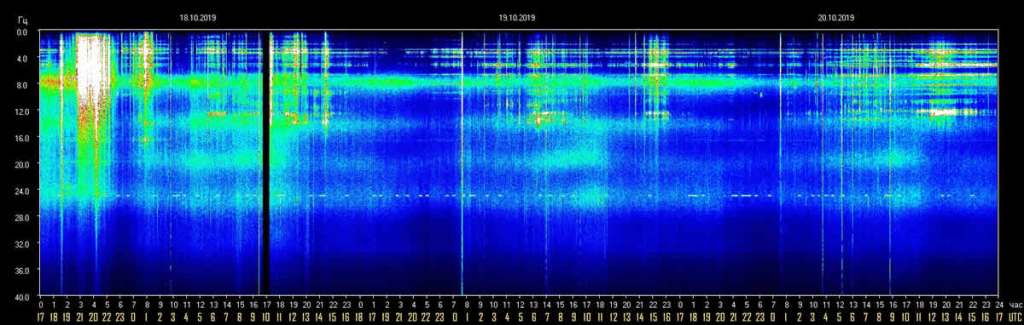
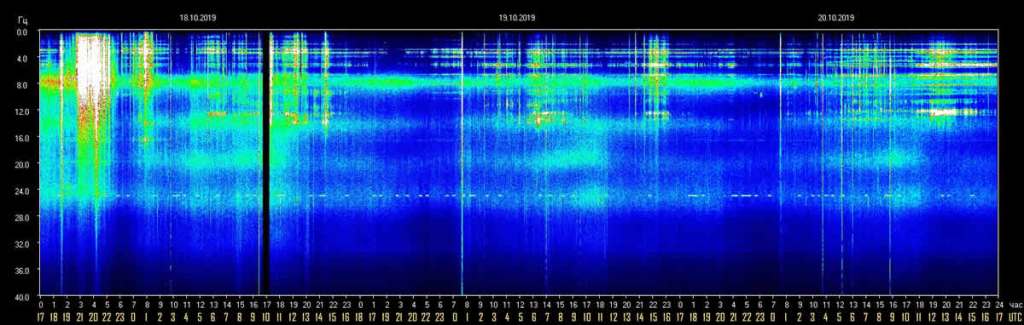
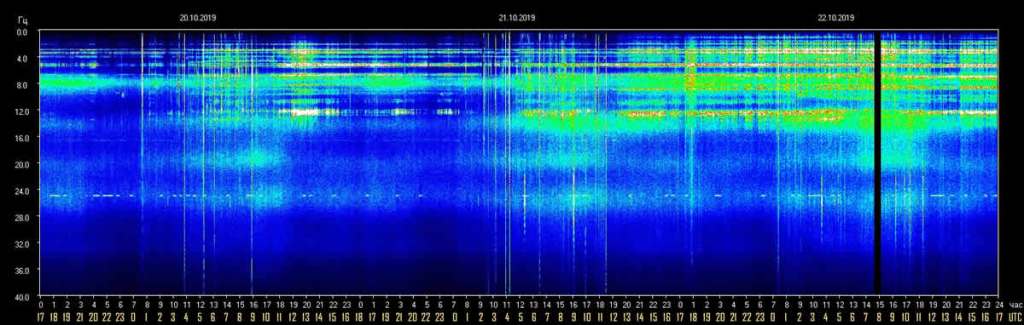
Editor’s Note: The Schumann Resonance graph is still not showing any appreciable amount for the release of these energies. It’s good to stay aware of both energetic and Geo-political events while Being…

InJoy!

___________________________________________________________________________________________

8

Schumann Resonance Today. We will try to keep you updated about the variations of the Resonance with this page. The great variations that nobody can explain but that give us a clear sign that the planet is changing. The Earth is vibration higher and higher, just like us!

The Chart time is based on Tomsk – Russia – UTC (Universal Time Coordinated) +7 Source

RS Base Frequency 7.83 Hz.

Schumann Resonance Today Peaks:

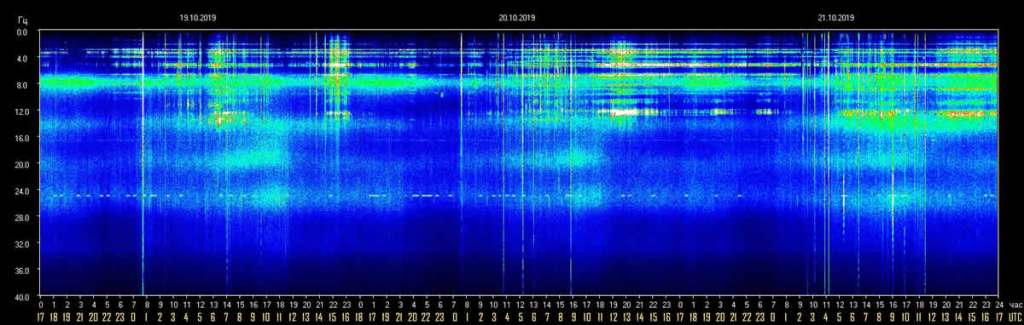
  • 10/21 17:00 UTC – In today’s amplitude graph we can see a very slight and constantly increasing variation that began on the night between 20 and 21 October, it seems a sort of increasing vibration, as it is an amplitude it could be compared to an Om which from nothing increases, little by little but constantly. Now we are around Power 8.
  • 10/21 17:00 UTC – Another day of light activity, the only significant movement reached 11 at 11 chart local time, corresponding to 4 UTC.
  • 10/20 17:00 UTC – Very light activity, Power 10.
  • 10/20 10:00 UTC – Not much to report, the most relevant movement reached an amplitude of Power 16 just before 9 am UTC.
  • 10/19 17:00 UTC – Calm.
  • 10/18 17:00 UTC – The only significant activity of today has been reported previously, we are now in a situation of calm.
  • 10/18 10:00 UTC – A light activity continued after the previous series of peaks, the average has been around Power 20 from 18 to 22 UTC. Is seems the functionality on the TSU is still not fully recovered.
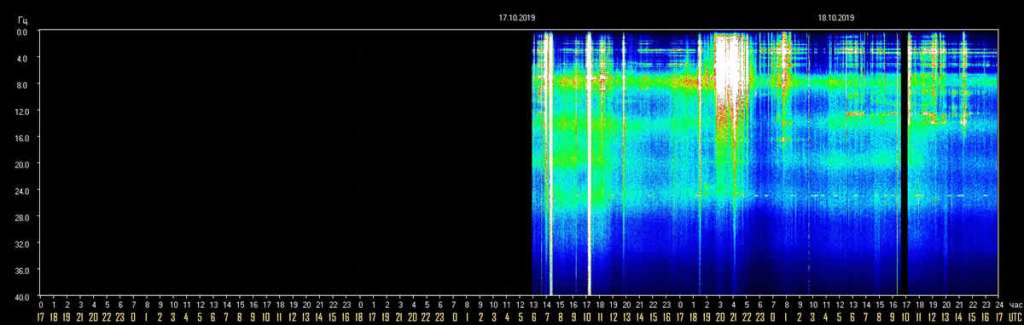
  • 10/17 17:00 UTC – In the part of the graph available for today we note 3 peaks one of Power 53, reported previously, the second of Power 57 at 10:15 UTC and the last minor at 25 at 12:40 UTC.
  • 10/17 08:30 UTC – From 6 UTC the data are available again and, like every self-respecting 17 in this last period, even today we have our peak with a power of 53 at 7:20 UTC. We hope that the problem has been solved and we can return to a normal flow of data.
  • 10/16 17:00 UTC – Still frozen at yesterday’s image, other sources report peaks for today at 20.
  • 10/15 17:00 UTC – Pitch black.
  • 10/15 10:00 UTC – This is the little we have for the last few days, lack of data. Other stations with different measurement report calm.
  • 10/14 17:00 UTC – For the little we can see the situation remained calm.
  • 10/14 09:30 UTC – The TSU site is back live but the interruption data is not available as seen from the large blank space in the chart. Looking for information on the web it seems that during this “void” period the situation remained almost calm. Currently we see very light movements at about 10 Hz.
  • 10/13 22:00 UTC – TSU website still down.
  • 10/12 17:00 UTC – TSU website is down, we will post an update as soon as it will return live.
  • 10/11 17:00 UTC – After several days of calm, from yesterday at 7:30 UTC, we are seeing a medium activity which, despite being uninterrupted, generated peaks of average amplitude. From 12 UTC today, a period of more significant movements began which reached the maximum peak at 59 Hz shortly after 15 UTC.
  • 10/10 17:00 UTC – Today the activity has returned more significantly since 1 UTC. The first significant variation started at 7:30 UTC and within few hours reached the maximum of 42 Hz at 9:45 UTC. The movements are continuing.
  • 10/9 17:00 UTC – The light activity continues, the peak of today has reached 13 Hz shortly after 9 UTC. A black vertical line is visible in the chart, it’s due to missing data.
  • 10/8 17:00 UTC – Almost calm, maximum 13 Hz at 10 UTC.
  • 10/7 17:00 UTC – Even today very light activity, the maximum of 17 Hz was reached shortly after 4 UTC. This slight activity however lasted from midnight to 15 UTC.
  • 10/6 17:00 UTC – Calm.
  • 10/5 17:00 UTC – Calm.
  • 10/4 17:00 UTC – Practically calm, peak at 13 Hz at 11 UTC.
  • 10/3 17:00 UTC – The pattern of slight daily increase, seems to be underway again, the activity saw a first isolated peak at 1 UTC which reached 17 CC and later, during a more relevant phase, 22 CC at 6:30 UTC.
  • 10/2 17:00 UTC – Slight activity limited to a period of about 10 hours, from 1 to 11 UTC, the maximum peak at 9 to 14 CC.
  • 10/1 17:00 UTC – Very light activity during the central part of the day, the only significant peak reached 26 Hz at 4 UTC.

Frequency means how many wave cycle happen in a second, 1 Hz. means 1 cycle per second, 40 Hz. means 40 cycles per second, Amplitude is the size of the vibration, how big is the wave, the chart shows the frequency variation in Hz and the amplitude using the white color.

Note

The Ancient Indian Rishis called 7.83 Hz the frequency of OM. It also happens to be Mother Earth’s natural heartbeat rhythm Schumann resonances are named after professor Schumann who was involved in early German secret space program and was later paper-clipped into the United States. The frequencies of Schumann resonances are fairly stable and are mainly defined by the physical size of the ionospheric cavity.   The amplitude of Schumann resonances does change and is bigger when ionospheric plasma gets excited. Ionospheric plasma excitation happens because of solar activity, thunderstorms, use of scalar plasma weapons and HAARP and lately also when the Light forces are clearing the plasma anomaly.

Dependencies Amplitudes Schumann Resonance 31-12-2018

Dependencies of Amplitudes Schumann Resonance October 22 2019

Dependencies of Quality Schumann Resonance

Dependencies of Quality Schumann Resonance October 22 2019

Dependencies of Quality Schumann Resonance

Dependencies of Frequency Schumann Resonance October 22 2019

Schumann Resonance Differential Peaks

Read

Schumann Resonance PDF Archives

Read and Download

Images Archive

All the SR daily images in one single pageSee the Images

Web Hosting
Explanation of The Chart

The Schumann Resonance Spectrogram Chart

The Schumann Resonance Chart displays data from the magnetic field detector to monitor the resonances occurring in the plasma waves constantly circling the earth in the ionosphere. These three days spectrograms show the activity occurring at the various resonant frequencies from 1 to 40 Hz. Within the spectrogram, the power, or intensity level of each frequency is displayed as a color, with white being the most intense. The Schumann Resonances appear as the horizontal lines at 0.0, 4.0, 8.0, 12.0, 16.0, 20.0, 24.0, 28.0, 32.0, 36.0 & 40.0 Hz. This chart is based on Tomsk, Russia, time UTC +7 (UTC = Universal Time Coordinated).

What is a Spectrogram?

The Spectrogram Calendar is a visual representation of the range of frequencies in the magnetic field at a given location. Similar to how an equalizer displays the frequency content of music played on your stereo, the spectrogram calendar displays the frequency content of a magnetic field. Instead of showing a brief snapshot, it shows changes over a period of time, in this case 3 days.

The local magnetic field is a dynamic field that changes constantly because of variations in the ionosphere and sun and many other influences not yet fully understood. The range of variation displayed in the spectrogram chart is from 0 to 40 cycles per second. The vertical axis is frequency and the horizontal axis is time. The amplitude of a particular frequency at a specific time is represented by the intensity of color (green, yellow, white) of each point in the image.
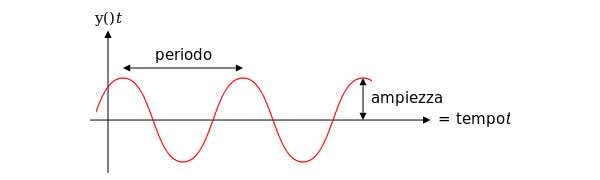
Ampiezza e Periodo

What is the Schumann Resonance?

The Herathbeat of Planet EarthRead

🙂

Clicks on the Ads Keep Us Alive

Pills Disclosure News Italia

No Enclosures

I was born on the prairies where the wind blew free and there was nothing to break the light of the sun. I was born where there were no enclosures.

Geronimo
Schumann Resonance Today – Update ~ October 22, 2019


Editor’s Note: Wow…another day of relative “silence” in terms of the Schumann Resonance. Let’s think about this a bit. Either (a) this influence of the Schumann Resonance frequency is no longer needed on Earth (wonder what the reading is today?), or…just another break in the energies coming to Earth which are responsible for generating Schumann Resonance energies. You choose? 🙂

At any rate, reports of “enough” of the human collective to be able to trigger the Ascension of humanity may have an impact on the Schumann Resonance energies. So…read here, know that Ascension is here, and BE…

InJoy!

___________________________________________________________________________________________

Schumann Resonance Today. We will try to keep you updated about the variations of the Resonance with this page. The great variations that nobody can explain but that give us a clear sign that the planet is changing. The Earth is vibration higher and higher, just like us!

The Chart time is based on Tomsk – Russia – UTC (Universal Time Coordinated) +7 Source

RS Base Frequency 7.83 Hz.

Schumann Resonance Today Peaks:

  • 10/21 17:00 UTC – Another day of light activity, the only significant movement reached 11 at 11 chart local time, corresponding to 4 UTC.
  • 10/20 17:00 UTC – Very light activity, Power 10.
  • 10/20 10:00 UTC – Not much to report, the most relevant movement reached an amplitude of Power 16 just before 9 am UTC.
  • 10/19 17:00 UTC – Calm.
  • 10/18 17:00 UTC – The only significant activity of today has been reported previously, we are now in a situation of calm.
  • 10/18 10:00 UTC – A light activity continued after the previous series of peaks, the average has been around Power 20 from 18 to 22 UTC. Is seems the functionality on the TSU is still not fully recovered.
  • 10/17 17:00 UTC – In the part of the graph available for today we note 3 peaks one of Power 53, reported previously, the second of Power 57 at 10:15 UTC and the last minor at 25 at 12:40 UTC.
  • 10/17 08:30 UTC – From 6 UTC the data are available again and, like every self-respecting 17 in this last period, even today we have our peak with a power of 53 at 7:20 UTC. We hope that the problem has been solved and we can return to a normal flow of data.
  • 10/16 17:00 UTC – Still frozen at yesterday’s image, other sources report peaks for today at 20.
  • 10/15 17:00 UTC – Pitch black.
  • 10/15 10:00 UTC – This is the little we have for the last few days, lack of data. Other stations with different measurement report calm.
  • 10/14 17:00 UTC – For the little we can see the situation remained calm.
  • 10/14 09:30 UTC – The TSU site is back live but the interruption data is not available as seen from the large blank space in the chart. Looking for information on the web it seems that during this “void” period the situation remained almost calm. Currently we see very light movements at about 10 Hz.
  • 10/13 22:00 UTC – TSU website still down.
  • 10/12 17:00 UTC – TSU website is down, we will post an update as soon as it will return live.
  • 10/11 17:00 UTC – After several days of calm, from yesterday at 7:30 UTC, we are seeing a medium activity which, despite being uninterrupted, generated peaks of average amplitude. From 12 UTC today, a period of more significant movements began which reached the maximum peak at 59 Hz shortly after 15 UTC.
  • 10/10 17:00 UTC – Today the activity has returned more significantly since 1 UTC. The first significant variation started at 7:30 UTC and within few hours reached the maximum of 42 Hz at 9:45 UTC. The movements are continuing.
  • 10/9 17:00 UTC – The light activity continues, the peak of today has reached 13 Hz shortly after 9 UTC. A black vertical line is visible in the chart, it’s due to missing data.
  • 10/8 17:00 UTC – Almost calm, maximum 13 Hz at 10 UTC.
  • 10/7 17:00 UTC – Even today very light activity, the maximum of 17 Hz was reached shortly after 4 UTC. This slight activity however lasted from midnight to 15 UTC.
  • 10/6 17:00 UTC – Calm.
  • 10/5 17:00 UTC – Calm.
  • 10/4 17:00 UTC – Practically calm, peak at 13 Hz at 11 UTC.
  • 10/3 17:00 UTC – The pattern of slight daily increase, seems to be underway again, the activity saw a first isolated peak at 1 UTC which reached 17 CC and later, during a more relevant phase, 22 CC at 6:30 UTC.
  • 10/2 17:00 UTC – Slight activity limited to a period of about 10 hours, from 1 to 11 UTC, the maximum peak at 9 to 14 CC.
  • 10/1 17:00 UTC – Very light activity during the central part of the day, the only significant peak reached 26 Hz at 4 UTC.

Frequency means how many wave cycle happen in a second, 1 Hz. means 1 cycle per second, 40 Hz. means 40 cycles per second, Amplitude is the size of the vibration, how big is the wave, the chart shows the frequency variation in Hz and the amplitude using the white color.

Note

The Ancient Indian Rishis called 7.83 Hz the frequency of OM. It also happens to be Mother Earth’s natural heartbeat rhythm Schumann resonances are named after professor Schumann who was involved in early German secret space program and was later paper-clipped into the United States. The frequencies of Schumann resonances are fairly stable and are mainly defined by the physical size of the ionospheric cavity.   The amplitude of Schumann resonances does change and is bigger when ionospheric plasma gets excited. Ionospheric plasma excitation happens because of solar activity, thunderstorms, use of scalar plasma weapons and HAARP and lately also when the Light forces are clearing the plasma anomaly.

Dependencies Amplitudes Schumann Resonance 31-12-2018

Dependencies of Amplitudes Schumann Resonance October 21 2019

Dependencies of Quality Schumann Resonance

Dependencies of Quality Schumann Resonance October 21 2019

Dependencies of Quality Schumann Resonance

Dependencies of Frequency Schumann Resonance October 21 2019

Schumann Resonance Differential Peaks

Read

Schumann Resonance PDF Archives

Read and Download

Images Archive

All the SR daily images in one single pageSee the Images

Web Hosting
Explanation of The Chart

The Schumann Resonance Spectrogram Chart

The Schumann Resonance Chart displays data from the magnetic field detector to monitor the resonances occurring in the plasma waves constantly circling the earth in the ionosphere. These three days spectrograms show the activity occurring at the various resonant frequencies from 1 to 40 Hz. Within the spectrogram, the power, or intensity level of each frequency is displayed as a color, with white being the most intense. The Schumann Resonances appear as the horizontal lines at 0.0, 4.0, 8.0, 12.0, 16.0, 20.0, 24.0, 28.0, 32.0, 36.0 & 40.0 Hz. This chart is based on Tomsk, Russia, time UTC +7 (UTC = Universal Time Coordinated).

What is a Spectrogram?

The Spectrogram Calendar is a visual representation of the range of frequencies in the magnetic field at a given location. Similar to how an equalizer displays the frequency content of music played on your stereo, the spectrogram calendar displays the frequency content of a magnetic field. Instead of showing a brief snapshot, it shows changes over a period of time, in this case 3 days.

The local magnetic field is a dynamic field that changes constantly because of variations in the ionosphere and sun and many other influences not yet fully understood. The range of variation displayed in the spectrogram chart is from 0 to 40 cycles per second. The vertical axis is frequency and the horizontal axis is time. The amplitude of a particular frequency at a specific time is represented by the intensity of color (green, yellow, white) of each point in the image.

Ampiezza e Periodo

What is the Schumann Resonance?

The Herathbeat of Planet EarthRead

🙂

Clicks on the Ads Keep Us Alive

Pills Disclosure News Italia

Violence

Violence is the last refuge of the incompetent.

Isaac Asimov

Schumann Resonance Today – Update ~ October 21, 2019


Editor’s Note: This is a repeat of the same graph as yesterday on 10/20. It is very likely that transmissions from the site monitoring Schumann Resonance energies have been compromised in some way.

Stay tuned…the best is yet to be, and more importantly, BE…

InJoy!

___________________________________________________________________________________________

16

Schumann Resonance Today. We will try to keep you updated about the variations of the Resonance with this page. The great variations that nobody can explain but that give us a clear sign that the planet is changing. The Earth is vibration higher and higher, just like us!

The Chart time is based on Tomsk – Russia – UTC (Universal Time Coordinated) +7 Source

RS Base Frequency 7.83 Hz.

Schumann Resonance Today Peaks:

  • 10/20 17:00 UTC – Very light activity, Power 10.
  • 10/20 10:00 UTC – Not much to report, the most relevant movement reached an amplitude of Power 16 just before 9 am UTC..
  • 10/19 17:00 UTC – Calm.
  • 10/18 17:00 UTC – The only significant activity of today has been reported previously, we are now in a situation of calm.
  • 10/18 10:00 UTC – A light activity continued after the previous series of peaks, the average has been around Power 20 from 18 to 22 UTC. Is seems the functionality on the TSU is still not fully recovered.
  • 10/17 17:00 UTC – In the part of the graph available for today we note 3 peaks one of Power 53, reported previously, the second of Power 57 at 10:15 UTC and the last minor at 25 at 12:40 UTC.
  • 10/17 08:30 UTC – From 6 UTC the data are available again and, like every self-respecting 17 in this last period, even today we have our peak with a power of 53 at 7:20 UTC. We hope that the problem has been solved and we can return to a normal flow of data.
  • 10/16 17:00 UTC – Still frozen at yesterday’s image, other sources report peaks for today at 20.
  • 10/15 17:00 UTC – Pitch black.
  • 10/15 10:00 UTC – This is the little we have for the last few days, lack of data. Other stations with different measurement report calm.
  • 10/14 17:00 UTC – For the little we can see the situation remained calm.
  • 10/14 09:30 UTC – The TSU site is back live but the interruption data is not available as seen from the large blank space in the chart. Looking for information on the web it seems that during this “void” period the situation remained almost calm. Currently we see very light movements at about 10 Hz.
  • 10/13 22:00 UTC – TSU website still down.
  • 10/12 17:00 UTC – TSU website is down, we will post an update as soon as it will return live.
  • 10/11 17:00 UTC – After several days of calm, from yesterday at 7:30 UTC, we are seeing a medium activity which, despite being uninterrupted, generated peaks of average amplitude. From 12 UTC today, a period of more significant movements began which reached the maximum peak at 59 Hz shortly after 15 UTC.
  • 10/10 17:00 UTC – Today the activity has returned more significantly since 1 UTC. The first significant variation started at 7:30 UTC and within few hours reached the maximum of 42 Hz at 9:45 UTC. The movements are continuing.
  • 10/9 17:00 UTC – The light activity continues, the peak of today has reached 13 Hz shortly after 9 UTC. A black vertical line is visible in the chart, it’s due to missing data.
  • 10/8 17:00 UTC – Almost calm, maximum 13 Hz at 10 UTC.
  • 10/7 17:00 UTC – Even today very light activity, the maximum of 17 Hz was reached shortly after 4 UTC. This slight activity however lasted from midnight to 15 UTC.
  • 10/6 17:00 UTC – Calm.
  • 10/5 17:00 UTC – Calm.
  • 10/4 17:00 UTC – Practically calm, peak at 13 Hz at 11 UTC.
  • 10/3 17:00 UTC – The pattern of slight daily increase, seems to be underway again, the activity saw a first isolated peak at 1 UTC which reached 17 CC and later, during a more relevant phase, 22 CC at 6:30 UTC.
  • 10/2 17:00 UTC – Slight activity limited to a period of about 10 hours, from 1 to 11 UTC, the maximum peak at 9 to 14 CC.
  • 10/1 17:00 UTC – Very light activity during the central part of the day, the only significant peak reached 26 Hz at 4 UTC.

Frequency means how many wave cycle happen in a second, 1 Hz. means 1 cycle per second, 40 Hz. means 40 cycles per second, Amplitude is the size of the vibration, how big is the wave, the chart shows the frequency variation in Hz and the amplitude using the white color.

Note

The Ancient Indian Rishis called 7.83 Hz the frequency of OM. It also happens to be Mother Earth’s natural heartbeat rhythm Schumann resonances are named after professor Schumann who was involved in early German secret space program and was later paper-clipped into the United States. The frequencies of Schumann resonances are fairly stable and are mainly defined by the physical size of the ionospheric cavity.   The amplitude of Schumann resonances does change and is bigger when ionospheric plasma gets excited. Ionospheric plasma excitation happens because of solar activity, thunderstorms, use of scalar plasma weapons and HAARP and lately also when the Light forces are clearing the plasma anomaly.

Dependencies Amplitudes Schumann Resonance 31-12-2018

Dependencies of Amplitudes Schumann Resonance October 20 2019

Dependencies of Quality Schumann Resonance

Dependencies of Quality Schumann Resonance October 20 2019

Dependencies of Quality Schumann Resonance

Dependencies of Frequency Schumann Resonance October 20 2019

Schumann Resonance Differential Peaks

Read

Schumann Resonance PDF Archives

Read and Download

Images Archive

All the SR daily images in one single pageSee the Images

Web Hosting
Explanation of The Chart

The Schumann Resonance Spectrogram Chart

The Schumann Resonance Chart displays data from the magnetic field detector to monitor the resonances occurring in the plasma waves constantly circling the earth in the ionosphere. These three days spectrograms show the activity occurring at the various resonant frequencies from 1 to 40 Hz. Within the spectrogram, the power, or intensity level of each frequency is displayed as a color, with white being the most intense. The Schumann Resonances appear as the horizontal lines at 0.0, 4.0, 8.0, 12.0, 16.0, 20.0, 24.0, 28.0, 32.0, 36.0 & 40.0 Hz. This chart is based on Tomsk, Russia, time UTC +7 (UTC = Universal Time Coordinated).

What is a Spectrogram?

The Spectrogram Calendar is a visual representation of the range of frequencies in the magnetic field at a given location. Similar to how an equalizer displays the frequency content of music played on your stereo, the spectrogram calendar displays the frequency content of a magnetic field. Instead of showing a brief snapshot, it shows changes over a period of time, in this case 3 days.

The local magnetic field is a dynamic field that changes constantly because of variations in the ionosphere and sun and many other influences not yet fully understood. The range of variation displayed in the spectrogram chart is from 0 to 40 cycles per second. The vertical axis is frequency and the horizontal axis is time. The amplitude of a particular frequency at a specific time is represented by the intensity of color (green, yellow, white) of each point in the image.

Ampiezza e Periodo

What is the Schumann Resonance?

The Herathbeat of Planet EarthRead

🙂

Clicks on the Ads Keep Us Alive

Pills Disclosure News Italia

Flies

Flies never rest, because there’s so much shit.

Alda Merini

Schumann Resonance Today – Update ~ October 20, 2019


Editor’s Note: The graph above shows a largely quiet rest for the emergence of Schumann’s Resonance energies. No doubt about it though…the “energies” are a rompin and rarin our there.

Remember, the energies coming to Earth (and changing our DNA) are of various frequencies, wavelengths, and intensities. Various types of energy will have varying effects on various people. “One size fits all” energies are joined by a specific wavelength customized to your needs!

Can you feel yourself changing spiritually? I can, and watch many around me changing as well. Please read this article , know your own value from the effect of receiving your own on-going energies, and BE…

InJoy!

___________________________________________________________________________________________

16

Schumann Resonance Today. We will try to keep you updated about the variations of the Resonance with this page. The great variations that nobody can explain but that give us a clear sign that the planet is changing. The Earth is vibration higher and higher, just like us!

The Chart time is based on Tomsk – Russia – UTC (Universal Time Coordinated) +7 Source

RS Base Frequency 7.83 Hz.

Schumann Resonance Today Peaks:

  • 10/20 17:00 UTC – Very light activity, Power 10.
  • 10/20 10:00 UTC – Not much to report, the most relevant movement reached an amplitude of Power 16 just before 9 am UTC..
  • 10/19 17:00 UTC – Calm.
  • 10/18 17:00 UTC – The only significant activity of today has been reported previously, we are now in a situation of calm.
  • 10/18 10:00 UTC – A light activity continued after the previous series of peaks, the average has been around Power 20 from 18 to 22 UTC. Is seems the functionality on the TSU is still not fully recovered.
  • 10/17 17:00 UTC – In the part of the graph available for today we note 3 peaks one of Power 53, reported previously, the second of Power 57 at 10:15 UTC and the last minor at 25 at 12:40 UTC.
  • 10/17 08:30 UTC – From 6 UTC the data are available again and, like every self-respecting 17 in this last period, even today we have our peak with a power of 53 at 7:20 UTC. We hope that the problem has been solved and we can return to a normal flow of data.
  • 10/16 17:00 UTC – Still frozen at yesterday’s image, other sources report peaks for today at 20.
  • 10/15 17:00 UTC – Pitch black.
  • 10/15 10:00 UTC – This is the little we have for the last few days, lack of data. Other stations with different measurement report calm.
  • 10/14 17:00 UTC – For the little we can see the situation remained calm.
  • 10/14 09:30 UTC – The TSU site is back live but the interruption data is not available as seen from the large blank space in the chart. Looking for information on the web it seems that during this “void” period the situation remained almost calm. Currently we see very light movements at about 10 Hz.
  • 10/13 22:00 UTC – TSU website still down.
  • 10/12 17:00 UTC – TSU website is down, we will post an update as soon as it will return live.
  • 10/11 17:00 UTC – After several days of calm, from yesterday at 7:30 UTC, we are seeing a medium activity which, despite being uninterrupted, generated peaks of average amplitude. From 12 UTC today, a period of more significant movements began which reached the maximum peak at 59 Hz shortly after 15 UTC.
  • 10/10 17:00 UTC – Today the activity has returned more significantly since 1 UTC. The first significant variation started at 7:30 UTC and within few hours reached the maximum of 42 Hz at 9:45 UTC. The movements are continuing.
  • 10/9 17:00 UTC – The light activity continues, the peak of today has reached 13 Hz shortly after 9 UTC. A black vertical line is visible in the chart, it’s due to missing data.
  • 10/8 17:00 UTC – Almost calm, maximum 13 Hz at 10 UTC.
  • 10/7 17:00 UTC – Even today very light activity, the maximum of 17 Hz was reached shortly after 4 UTC. This slight activity however lasted from midnight to 15 UTC.
  • 10/6 17:00 UTC – Calm.
  • 10/5 17:00 UTC – Calm.
  • 10/4 17:00 UTC – Practically calm, peak at 13 Hz at 11 UTC.
  • 10/3 17:00 UTC – The pattern of slight daily increase, seems to be underway again, the activity saw a first isolated peak at 1 UTC which reached 17 CC and later, during a more relevant phase, 22 CC at 6:30 UTC.
  • 10/2 17:00 UTC – Slight activity limited to a period of about 10 hours, from 1 to 11 UTC, the maximum peak at 9 to 14 CC.
  • 10/1 17:00 UTC – Very light activity during the central part of the day, the only significant peak reached 26 Hz at 4 UTC.

Frequency means how many wave cycle happen in a second, 1 Hz. means 1 cycle per second, 40 Hz. means 40 cycles per second, Amplitude is the size of the vibration, how big is the wave, the chart shows the frequency variation in Hz and the amplitude using the white color.

Note

The Ancient Indian Rishis called 7.83 Hz the frequency of OM. It also happens to be Mother Earth’s natural heartbeat rhythm Schumann resonances are named after professor Schumann who was involved in early German secret space program and was later paper-clipped into the United States. The frequencies of Schumann resonances are fairly stable and are mainly defined by the physical size of the ionospheric cavity.   The amplitude of Schumann resonances does change and is bigger when ionospheric plasma gets excited. Ionospheric plasma excitation happens because of solar activity, thunderstorms, use of scalar plasma weapons and HAARP and lately also when the Light forces are clearing the plasma anomaly.

Dependencies Amplitudes Schumann Resonance 31-12-2018

Dependencies of Amplitudes Schumann Resonance October 20 2019

Dependencies of Quality Schumann Resonance

Dependencies of Quality Schumann Resonance October 20 2019

Dependencies of Quality Schumann Resonance

Dependencies of Frequency Schumann Resonance October 20 2019

Schumann Resonance Differential Peaks

Read

Schumann Resonance PDF Archives

Read and Download

Images Archive

All the SR daily images in one single pageSee the Images

Web Hosting
Explanation of The Chart

The Schumann Resonance Spectrogram Chart

The Schumann Resonance Chart displays data from the magnetic field detector to monitor the resonances occurring in the plasma waves constantly circling the earth in the ionosphere. These three days spectrograms show the activity occurring at the various resonant frequencies from 1 to 40 Hz. Within the spectrogram, the power, or intensity level of each frequency is displayed as a color, with white being the most intense. The Schumann Resonances appear as the horizontal lines at 0.0, 4.0, 8.0, 12.0, 16.0, 20.0, 24.0, 28.0, 32.0, 36.0 & 40.0 Hz. This chart is based on Tomsk, Russia, time UTC +7 (UTC = Universal Time Coordinated).

What is a Spectrogram?

The Spectrogram Calendar is a visual representation of the range of frequencies in the magnetic field at a given location. Similar to how an equalizer displays the frequency content of music played on your stereo, the spectrogram calendar displays the frequency content of a magnetic field. Instead of showing a brief snapshot, it shows changes over a period of time, in this case 3 days.

The local magnetic field is a dynamic field that changes constantly because of variations in the ionosphere and sun and many other influences not yet fully understood. The range of variation displayed in the spectrogram chart is from 0 to 40 cycles per second. The vertical axis is frequency and the horizontal axis is time. The amplitude of a particular frequency at a specific time is represented by the intensity of color (green, yellow, white) of each point in the image.

Ampiezza e Periodo

What is the Schumann Resonance?

The Herathbeat of Planet EarthRead

🙂

Clicks on the Ads Keep Us Alive

Pills Disclosure News Italia

Future

I look forward to a great future for America – a future in which our country will match its military strength with our moral restraint, its wealth with our wisdom, its power with our purpose.

John F. Kennedy

Schumann Resonance Today – Update ~ October 18, 2019


Editor’s Note: Yes! Transmissions for the daily Schumann Resonance energies have resumed from the site in Tomsk, Russia. From the graph above, we can see significant readings through most of the day on Thursday, October 17 followed by lighter activity today on October 18.

I felt the Schumann Resonance energies yesterday, or perhaps the cosmic energies to which the Earth responded by “ringing like a bell”. Just sayin…

So…gauge your own reaction to in-coming energies, know these energies are here to literally change our lives, and BE…

InJoy!

___________________________________________________________________________________________

21

Schumann Resonance Today. We will try to keep you updated about the variations of the Resonance with this page. The great variations that nobody can explain but that give us a clear sign that the planet is changing. The Earth is vibration higher and higher, just like us!

The Chart time is based on Tomsk – Russia – UTC (Universal Time Coordinated) +7 Source

RS Base Frequency 7.83 Hz.

Schumann Resonance Today Peaks:

  • 10/18 17:00 UTC – The only significant activity of today has been reported previously, we are now in a situation of calm.
  • 10/18 10:00 UTC – A light activity continued after the previous series of peaks, the average has been around Power 20 from 18 to 22 UTC. Is seems the functionality on the TSU is still not fully recovered.
  • 10/17 17:00 UTC – In the part of the graph available for today we note 3 peaks one of Power 53, reported previously, the second of Power 57 at 10:15 UTC and the last minor at 25 at 12:40 UTC.
  • 10/17 08:30 UTC – From 6 UTC the data are available again and, like every self-respecting 17 in this last period, even today we have our peak with a power of 53 at 7:20 UTC. We hope that the problem has been solved and we can return to a normal flow of data.
  • 10/16 17:00 UTC – Still frozen at yesterday’s image, other sources report peaks for today at 20.
  • 10/15 17:00 UTC – Pitch black.
  • 10/15 10:00 UTC – This is the little we have for the last few days, lack of data. Other stations with different measurement report calm.
  • 10/14 17:00 UTC – For the little we can see the situation remained calm.
  • 10/14 09:30 UTC – The TSU site is back live but the interruption data is not available as seen from the large blank space in the chart. Looking for information on the web it seems that during this “void” period the situation remained almost calm. Currently we see very light movements at about 10 Hz.
  • 10/13 22:00 UTC – TSU website still down.
  • 10/12 17:00 UTC – TSU website is down, we will post an update as soon as it will return live.
  • 10/11 17:00 UTC – After several days of calm, from yesterday at 7:30 UTC, we are seeing a medium activity which, despite being uninterrupted, generated peaks of average amplitude. From 12 UTC today, a period of more significant movements began which reached the maximum peak at 59 Hz shortly after 15 UTC.
  • 10/10 17:00 UTC – Today the activity has returned more significantly since 1 UTC. The first significant variation started at 7:30 UTC and within few hours reached the maximum of 42 Hz at 9:45 UTC. The movements are continuing.
  • 10/9 17:00 UTC – The light activity continues, the peak of today has reached 13 Hz shortly after 9 UTC. A black vertical line is visible in the chart, it’s due to missing data.
  • 10/8 17:00 UTC – Almost calm, maximum 13 Hz at 10 UTC.
  • 10/7 17:00 UTC – Even today very light activity, the maximum of 17 Hz was reached shortly after 4 UTC. This slight activity however lasted from midnight to 15 UTC.
  • 10/6 17:00 UTC – Calm.
  • 10/5 17:00 UTC – Calm.
  • 10/4 17:00 UTC – Practically calm, peak at 13 Hz at 11 UTC.
  • 10/3 17:00 UTC – The pattern of slight daily increase, seems to be underway again, the activity saw a first isolated peak at 1 UTC which reached 17 CC and later, during a more relevant phase, 22 CC at 6:30 UTC.
  • 10/2 17:00 UTC – Slight activity limited to a period of about 10 hours, from 1 to 11 UTC, the maximum peak at 9 to 14 CC.
  • 10/1 17:00 UTC – Very light activity during the central part of the day, the only significant peak reached 26 Hz at 4 UTC.

Frequency means how many wave cycle happen in a second, 1 Hz. means 1 cycle per second, 40 Hz. means 40 cycles per second, Amplitude is the size of the vibration, how big is the wave, the chart shows the frequency variation in Hz and the amplitude using the white color.

Note

The Ancient Indian Rishis called 7.83 Hz the frequency of OM. It also happens to be Mother Earth’s natural heartbeat rhythm Schumann resonances are named after professor Schumann who was involved in early German secret space program and was later paper-clipped into the United States. The frequencies of Schumann resonances are fairly stable and are mainly defined by the physical size of the ionospheric cavity.   The amplitude of Schumann resonances does change and is bigger when ionospheric plasma gets excited. Ionospheric plasma excitation happens because of solar activity, thunderstorms, use of scalar plasma weapons and HAARP and lately also when the Light forces are clearing the plasma anomaly.

Dependencies Amplitudes Schumann Resonance 31-12-2018

Dependencies of Amplitudes Schumann Resonance October 18 2019

Dependencies of Quality Schumann Resonance

Dependencies of Quality Schumann Resonance October 18 2019

Dependencies of Quality Schumann Resonance

Dependencies of Frequency Schumann Resonance October 18 2019

Schumann Resonance Differential Peaks

Read

Schumann Resonance PDF Archives

Read and Download

Images Archive

All the SR daily images in one single pageSee the Images

Web Hosting
Explanation of The Chart

The Schumann Resonance Spectrogram Chart

The Schumann Resonance Chart displays data from the magnetic field detector to monitor the resonances occurring in the plasma waves constantly circling the earth in the ionosphere. These three days spectrograms show the activity occurring at the various resonant frequencies from 1 to 40 Hz. Within the spectrogram, the power, or intensity level of each frequency is displayed as a color, with white being the most intense. The Schumann Resonances appear as the horizontal lines at 0.0, 4.0, 8.0, 12.0, 16.0, 20.0, 24.0, 28.0, 32.0, 36.0 & 40.0 Hz. This chart is based on Tomsk, Russia, time UTC +7 (UTC = Universal Time Coordinated).

What is a Spectrogram?

The Spectrogram Calendar is a visual representation of the range of frequencies in the magnetic field at a given location. Similar to how an equalizer displays the frequency content of music played on your stereo, the spectrogram calendar displays the frequency content of a magnetic field. Instead of showing a brief snapshot, it shows changes over a period of time, in this case 3 days.

The local magnetic field is a dynamic field that changes constantly because of variations in the ionosphere and sun and many other influences not yet fully understood. The range of variation displayed in the spectrogram chart is from 0 to 40 cycles per second. The vertical axis is frequency and the horizontal axis is time. The amplitude of a particular frequency at a specific time is represented by the intensity of color (green, yellow, white) of each point in the image.

Ampiezza e Periodo

What is the Schumann Resonance?

The Herathbeat of Planet EarthRead

🙂

Clicks on the Ads Keep Us Alive

Pills Disclosure News Italia

All Together

And all together, all the voices, all the goals, all the wishes, all the pains, all the joy, all the good and the evil, all together was the world.
All together was the river of the becoming, it was the music of life.

Hermann Hesse