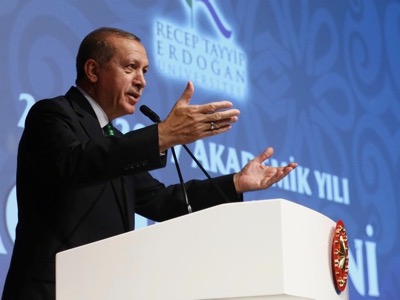
The Turkish invasion of Rojava ~ October 21, 2019


Editor’s Note: (Thanks to my ex for sending this.) Well, well, well…looky here, peace is at hand! Not quite sure how this slid under the radar of MSM, but here it is…a cessation of violence in the Mid-East combined with bringing US troops home from Syria…which has happened!

Quite interesting, is it not, so suddenly see world powers all working together to stop warring on the other. These times are golden my friends, soon to reach a bank near you! (Just sayin…:)

So, please read this report, join me in a real delight at seeing war end on Earth in a”tough” neighborhood ( the Middle East), and BE…

InJoy!

___________________________________________________________________________________________

While the international community publicly fears the brutality of the Turkish intervention in northern Syria, it unofficially welcomes this intervention as the one and only solution to bring peace to the region. The war against Syria ends with one more crime. The fate of Idleb’s foreign mercenaries, the rabid jihadists during eight years of a particularly savage and cruel war, has yet to be determined. Voltaire Network | Damascus (Syria) | 21 October 2019 françaisTürkçeDeutschPortuguêsελληνικάitalianoromânăEspañol

+
JPEG - 57.5 kb
On October 15, 2016, President Erdoğan solemnly announced that his country would carry out the national oath of Mustafa Kemal Atatürk. Turkey, which already militarily occupies part of Cyprus and Iraq, claims part of Syria and Greece. Its army is preparing.

In 2011, Turkey organized, as requested, the migration of 3 million Syrians in order to weaken the country. Subsequently, it supported the Muslim Brotherhood and their jihadist groups, including Daesh. It looted Aleppo’s machine tools and set up counterfeit factories in the Islamic Emirate.

Intoxicated by its victories in Libya and Syria, Turkey has become the Protector of the Muslim Brotherhood, has moved closer to Iran and has challenged Saudi Arabia. It deployed military bases all around the Wahhabi Kingdom in Qatar, Kuwait and Sudan, then hired Western public relations firms and destroyed the image of Prince Mohamed Ben Salmane, particularly with the Kashoggi case[1]. Gradually, it considered expanding its power and aspired to become the 14th Mongolian empire. Misinterpreting this development as being the work of Recep Tayyip Erdoğan alone, the CIA made several attempts to assassinate him, even provoking the failed coup d’état in July 2016. Three years of uncertainty followed, ending in July 2019 when President Erdoğan decided to favour nationalism over Islamism[2]. Today, Turkey, although still a member of NATO, transports Russian gas into the European Union and buys S-400s in Moscow[3]. It watches over its minorities, including Kurds, and no longer demands they be Sunni Muslim, but only loyal to its homeland.

-
-
-
-

 During the summer, President Donald Trump announced his intention to withdraw his troops from all of Syria, starting with the Rojava (already formulated on December 17, 2018), on the express condition of cutting the line of communication between Iran and Lebanon (which is new). Turkey entered into this commitment in exchange for a military occupation of the Syrian border strip from which terrorist artillery could bombard it.
 Russia has indicated that it does not support YPG criminals against humanity and would accept Turkish intervention if the Christian population were allowed to return to its land. This is what Turkey has committed itself to.
 Syria has indicated that it would not repel a Turkish invasion in the immediate future if it could liberate an equivalent territory in the Idleb governorate. Turkey has accepted this.
 Iran has indicated that, although it disapproves of Turkish intervention, it will intervene only for the benefit of the Shiites and is not interested in the fate of the Rojava. Turkey has taken note of this.
JPEG - 29.5 kb

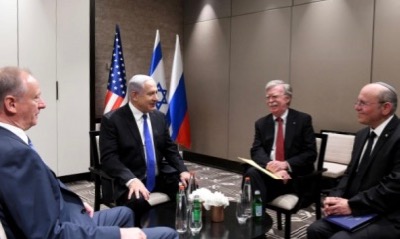
The principle of the end of the Rojava was endorsed at the US/Russia summits held in Tel Aviv and Geneva in June and August 2019.

Several international summits have been held to examine the consequences of these positions and identify subordinate points (for example, oil from the Syrian border strip will not be exploited by the Turkish army, but by a US company). The first summits brought together American and Russian security advisors. The second, the Russian, Turkish and Iranian heads of state.

-
-
-
-
-
-
-
-
-
-
-

 On July 22, 2019, Turkey announced the suspension of its migration agreement with the European Union[4].
 On August 3, President Erdoğan appointed new senior officers, including Kurds, and ordered the preparation of the invasion of Rojava[5].
 He also ordered the Turkish army to withdraw before the Syrian Arab army in the governorate of Idleb, so that it could liberate a territory equivalent to the one that would be invaded in the East.
 On August 23, the Pentagon ordered the dismantling of the YPG fortifications so that the Turkish army could conduct a lightning offensive[6].
 On August 31, in support of the Syrian Arab army, the Pentagon bombed a meeting of Al Qaeda leaders in Idleb with Turkish intelligence[7].
 On September 18, President Trump changed his security advisor and appointed Robert O’Brien. This discreet man knows President Erdoğan well with whom he settled the consequences of the failed coup d’état of July 2016[8].
 On October 1, President Erdoğan announced the imminent relocation of 2 million Syrian refugees to the Rojava territory[9].
 On October 5, the United States asked members of the International Coalition to recover their jihadist nationals from Rojava. The United Kingdom requested their transfer to Iraq, while France and Germany refused[10].
 On October 6, the United States declared that it was no longer responsible for the jihadists held prisoner in Rojava, which was to be transferred to Turkish custody.
 On October 7, US Special Forces began their withdrawal from Rojava.
 On October 9, the Turkish army – led by Kurdish officers in particular – and Turkmen militiamen who had recovered the flag of the Free Syrian Army invaded the 32-kilometre deep strip of Syrian territory occupied by the YPG.

Operation “Source of Peace” is perfectly legal under international law if it is limited to the 32-kilometre border strip and does not give rise to an indefinite Turkish occupation[11]. That is why the Turkish army uses Syrian Turkmen militias to hunt down the YPG in the rest of Rojava.

JPEG - 34.2 kb

Operation Source of Peace coordination meeting in the White Palace Command Bunker in Ankara.

The international press, which has not followed the events on the ground and has been satisfied with the contradictory official statements of recent months, is astounded. All states in unison denounce the Turkish operation, including the United States, Russia, Israel, Iran and Syria, although they have all negotiated and validated it. Those who threaten Turkey must consider the possible migration of their experienced Idleb jihadist nationals.

The Security Council is meeting urgently at the request of President Macron and Chancellor Merkel. To avoid showing that no one really opposes Turkish intervention, not even France, the meeting is held in camera and is not the subject of a statement by the President of the Council.

It is unlikely that Syria, bloodless, can immediately recover this strip of territory, while Iraq has failed to liberate Baachiqa (110 km deep) and the European Union itself has failed to liberate a third of Cyprus, occupied since 1974.

JPEG - 36.4 kb

On October 11, Jens Stoltenberg came to Turkey to bring NATO’s blessing.

Despite requests from France and Germany, the Atlantic Council did not meet. On October 11, NATO Secretary General Jens Stoltenberg came to Ankara to ensure that the operation was working. He celebrated the greatness of Turkey, thus shutting the beaks of the Germans and the French[12].

On October 13, in the midst of a debacle, the management of the YPG was changed. On Russian advice, the Kurdish leaders, who have always been in negotiations with the Syrian Arab Republic, came to express their allegiance to it on the Russian base of Hmeimim[13]. However, some members of the YPG management contest the renunciation of Rojava.

On October 14, President Donald Trump imposed sanctions against Turkey. They are purely symbolic and allow Ankara to continue its attack without paying attention to criticism[14].

President Donald Trump has thus succeeded in putting an end to the Rojava issue. The Russian army has invaded the US bases, abandoned by the GIs, demonstrating the place that Moscow now occupies in the region as a replacement for Washington. Syria, while denouncing the Turkish intervention, has liberated a quarter of its territory. Turkey is resolving the issue of Kurdish terrorism and is considering resolving the issue of Syrian refugees. The temptation will be great for her not to stop there.Thierry Meyssan

Translation
Roger Lagassé
A New Middle East Thanks to Putin ~ October 20, 2019


Editor’s Note: My ex sent me this article focusing on Putin/ Middle East issues explaining what MSM may not be telling us. Our Alt Media? Consumed (as it should be) with…the transition of USA into “America”. I view this as just another way peace IS happening on our world! Please read, know the end game IS in site, and BE…

InJoy!

___________________________________________________________________________________________

Date: October 19, 2019

Author: Tom Luongo0 CommentsTweet

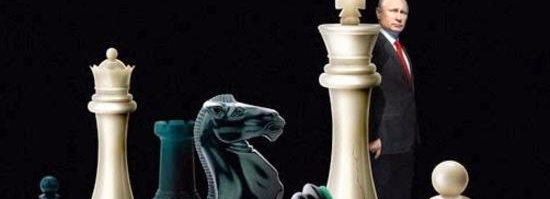
Peace in the Middle East is coming at us fast and we’re going to have Russian President Vladimir Putin to thank for it.

The howls of agony coming from U.S. and European foreign policy centers are deafening. Pat Buchanan lists them in his latest article which asks if Putin is now the new king of the Middle East.

“Donald Trump Has Handed Putin the Middle East on a Plate” was the title of a Telegraph column. “Putin Seizes on Trump’s Syria Retreat to Cement Middle East Role,” said the Financial Times.

The U.S. press parroted the British: Putin is now the new master of the Mideast. And woe is us.

Remember that the epicenter of virulent anti-Russian, pro-Israeli sentiment doesn’t begin with the Neocons along K-Street. It begins with the remnants of the British imperial class which still holds tremendous sway over British politics.

Think I’m wrong about that. Just look at Brexit.

As I pointed out the minute Trump defended his initial pullout of 50 U.S. troops to allow Turkey to cross into northern Syria, Putin has the situation mostly under control by laying the groundwork to craft win/win/win/win possibilities for everyone in the region.

Buchanan remains skeptical of this, saying that if Putin is the new king of the Middle East, will the crown lie heavy on his head?

It’s a fair question but I think it betrays Pat’s biases as an old Cold Warrior.

Pat makes a series of comparisons between Russia’s military presence in the region and the size of the economies backing them to make his point. I think, frankly, that’s outdated analysis.

It is based on the premise that Russia has imperial aspirations in the region, similar to that of the U.S. At his core, Buchanan is still a ‘great powers theory’ kind of guy.

From the moment Putin began his intervention into Syria the U.S.’s punditocracy said he would get bogged down in a quagmire. That he couldn’t afford the coming war with entrenched ISIS fighters.

This was based on the fact that the U.S. couldn’t defeat ISIS. But that logic only held if you believed the U.S. was actually fighting ISIS which I never did. Once Russia moved into Syria it exposed the lie of ISIS’s strength.

Within days of Russian air operations beginning the Syrian Arab Army began taking large chunks of territory from U.S. and Turkish-backed rebels and from ISIS.

The turnaround was striking. And the U.S. was stunned into fumbling silence, complaining that Putin was bombing the wrong people. The efficiency of the Russian air crews was off the charts and the results on the ground spoke for themselves.

This isn’t revisionist history or Putin shilling here. These are facts. The Russians were turning their planes over three to four times a day at that point.

It’s clear from the way that Putin has built Russia’s military that it is designed around defense of Russia’s borders not invading or maintaining an Empire.

And that’s why Buchanan’s criticisms of Putin’s victories here ring hollow. Pat rightly points out that if Putin does craft a network of deals that bring regional peace he deserves the Nobel Peace Prize.

But I suspect Pat doesn’t believe that to be happening.

My read, however, is the opposite. Peace is exactly what is happening.

From the beginning of my return to blogging in 2017 I speculated about the Grand Bargain in the Middle East built around Putin guaranteeing the behavior of his allies — Israel, Hezbollah, Syria, Iraqi Shi’ites — and President Trump guaranteeing the good behavior of his — Israel, the Saudis and the rest of the Gulf Cooperation Council.

That vision of the Grand Bargain never materialized because the influence of those allies within Trump’s government were too strong for him to resist politically.

Putin was smart to remain skeptical of Trump’s ability to deliver on his promises. And Trump, for his part, was sent down a path which would define his first term as a shambolic mess thanks to his inability to grasp the enormity of the problem confronting him.

He pushed U.S. policy too far in the pro-Israel, pro-Saudi direction to sell his version of Middle East peace, lobbied for intensely by Benjamin Netanyahu, Jared Kushner and their backers who helped install arch neocons around Trump like John Bolton, Mike Pompeo, Fiona Hill and Gina Haspel.

These folks were put in place to keep Trump ignorant of the dangers of his policy while Secretary of State James Mattis was there to stoke the hard-line militarily on Iran. Add to that General Joseph Dunford’s role as Chairman of the Joint Chiefs of Staff to suppress strategic conclusions about our operations in Iraq and Afghanistan.

Now with the passing of the Dunford regime as Joint Chief in September, General Milley steps in, with significant changes to public policy already on display. For example, Milley’s commissioned study of the Iraq war — long awaited and delayed by military pressure to prevent release of a largely negative report — was publicly released by Milley in January of 2019. The report states, “that coalition warfare (in Iraq) was ‘largely unsuccessful’ for several reasons, that failing to account for a lack of understanding of the inner workings of Iraqi politics and group struggles’ in part led to failure there. That’s an account that Dunford was unlikely to approve, and may have caused him to delay. So, with the departure of Dunford and Mattis as we shall see, the way forward for US disengagement from Syria’s northeast was made possible.

I don’t think U.S. disengagement is just possible. I think it’s happening right in front of our eyes.

Any thought that Putin is not up to the task here isn’t reading the tea leaves.

Everyone who has been fronting strength has been bluffing. Hard.

Israel is weak. Saudi Arabia weak. Turkey weak.

The U.S. weaker than anyone wants to admit.

Pat’s right that Russia isn’t strong, but no one here is. Everyone’s been drained by the refusal to give up the dream of atomizing the region in the service of the outdated Brzezinski/Wolfowitz doctrine of sowing discord in Central Asia.

The EU has drained itself in the service of a political union no one except The Davos Crowd wants. The U.K. is drained from decades of the EU vacuuming their wealth from the core economy, hollowing it out to a financial shell centered around City of London.

The Russia/China/Iran axis has simply played the ultimate game of attrition, reading the economic and political tea leaves perfectly while executing a pan-Eurasian strategy of integration through disengagement from U.S. and U.K. financial institutions.

Russia is the only country with the unique mix of resources, geography and financial stability, thanks to its policy of de-dollarization and prudent fiscal management, that can make good on any of the promises it makes to its potential partners on the other side of the negotiating table.

Trump is following Putin’s lead in his dealings with Turkey. By leaving places like Manbij to the Syrians and the Russians it makes it clear to all that this is a bargain that can work for everyone directly involved.

Syria gets its territory back, Turkey gets the Kurdish SDF off its border in an important town and the U.S. alerts the world that the old game is over and a new one is starting.

Both of them made moves to stabilize Saudi Arabia — Trump with troops to keep Iran honest and Putin with major deals to assist the Saudi financial position through investment. Trump has worked with Pakistani Prime Minister Imran Khan to act as his proxy in Saudi/Iranian peace talks.

Putin is limiting Turkey’s Erdogan’s adventurism in Syria by fully supporting Assad and the restoration of Syrian territorial integrity through diplomacy with the YPG Kurds.

Putin and Trump are both waiting to see who takes power in Israel. But at this point it’s clear that whoever does will finally be order-takers and no longer order-makers unless Trump is impeached and convicted.

At this point that’s the biggest wild card. And regardless of that outcome, the rest of Putin’s deft use of diplomacy and his efficient military have created a different reality for Israel, that even with a full neocon restoration post-Trump, won’t be favorable to them.

And yes, you can thank Vladimir Putin for that.