——————————————————————
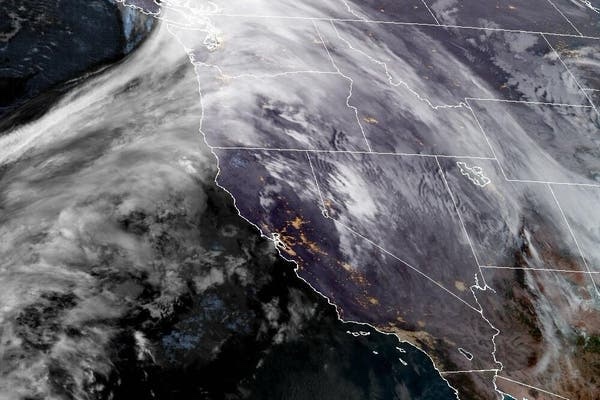
Back-to-back storms fueled by atmospheric rivers were expected to move over the northwestern United States this week, bringing heavy rains and snow and raising concerns about flooding, forecasters said.
After a brief break between atmospheric rivers on Sunday evening, another was expected on Monday, with the heaviest rainfall likely to occur in western Washington State.
The forecast came as snow had already blanketed mountain areas of Washington State with as much 40 inches since Thursday, according to the National Weather Service office in Seattle.
Through Monday evening, three to seven inches of rain could drench areas of western Washington and Oregon, forecasters said.
The Weather Service said there were “moderate-to-high chances” of more than 12 inches of snow falling in the higher terrain of central Idaho, the Tetons in western Wyoming, the Colorado Rockies and the Wasatch mountain range in Utah.
The Weather Service in Cheyenne, Wyo., also warned of strong gusts on Sunday and Monday, with winds as strong as 60 miles per hour.
Atmospheric river storms get their namesfrom the long, narrow shape and the prodigious amount of water they carry. They form when winds over the Pacific draw a filament of moisture from the band of warm, moist air over the tropics and channel it toward the West Coast.
The Weather Prediction Center said there was a “slight risk” of river flooding and flash flooding for the Oregon coast and the Cascade Range in both Oregon and southern Washington. Rain “will fall heavily in areas” that have fresh snowpacks, such as in western Oregon, the Weather Service said.
The Weather Service said there were “moderate-to-high chances” of more than 12 inches of snow falling in the higher terrain of central Idaho, the Tetons in western Wyoming, the Colorado Rockies and the Wasatch mountain range in Utah.
The Weather Service in Cheyenne, Wyo., also warned of strong gusts on Sunday and Monday, with winds as strong as 60 miles per hour.
Atmospheric river storms get their namesfrom the long, narrow shape and the prodigious amount of water they carry. They form when winds over the Pacific draw a filament of moisture from the band of warm, moist air over the tropics and channel it toward the West Coast.
The Weather Prediction Center said there was a “slight risk” of river flooding and flash flooding for the Oregon coast and the Cascade Range in both Oregon and southern Washington. Rain “will fall heavily in areas” that have fresh snowpacks, such as in western Oregon, the Weather Service said.
——————————————————————

