______________________________________________________________________________________________
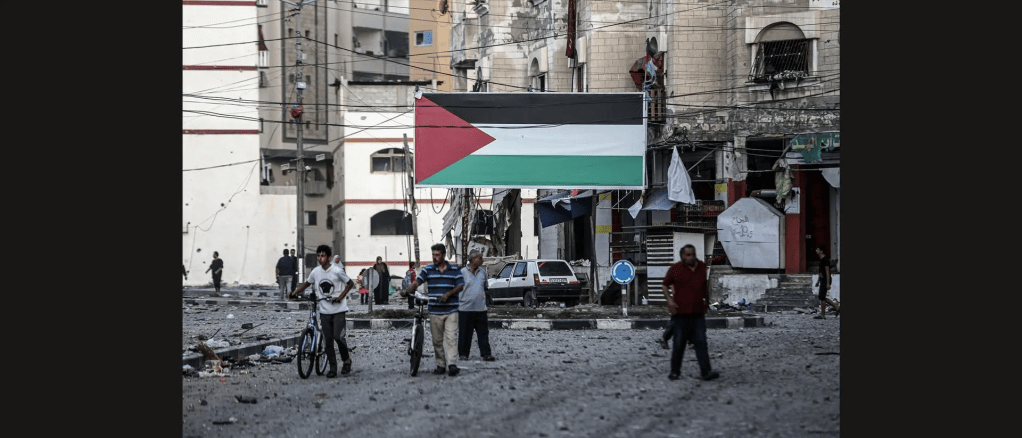
As they grapple with keeping their businesses afloat, Palestinian founders are grieving the loss of life and community in Gaza, with many currently unable to reach friends, family and colleagues.
By Sarah Emerson and Alex Konrad, Forbes Staff
Palestinian founder Ram Mere was pitching his startup, Olivery, to Boost Without Borders last year, an initiative backed by Meta to support and train local entrepreneurs. One of 10 finalists, Mere took home second place and a $15,000 check. Olivery now provides logistics solutions to 100 clients in seven countries and mostly hires Palestinians, he told Forbes on Saturday from Ramallah, in the West Bank.
But amid the chaos of war, Mere has no idea whether all of his Gazan employees are safe. He recalled one person who continued to work for two days after the fighting began. “Now nothing,” he said. “They have no internet, and I am not sure if he is alive or not.”
Like other Palestinian startups, Olivery has served as a bright spot for a growing local tech scene, with pockets of young companies, incubators and accelerators across Gaza and the West Bank. While small, that tech ecosystem has been viewed as an important part of Palestinians’ economic future, Palestinian founders and investors said. But in the face of renewed tragedy and war, it’s one that also seems increasingly fragile.
After Hamas terrorists attacked Israel and killed 1,300 Israelis last week, kidnapping nearly 200 others, the Israeli government responded with aerial strikes that killed at least 3,000 Palestinians, per local officials, and an evacuation order for 1.1 million Gazan civilians to relocate ahead of an expected ground invasion. Israel has cut off access to water, food and electricity for civilians and the evacuation has been called a “crime against humanity” by the U.N. “It’s impossible to deliver help or anything to support my employees in Gaza,” Palestinian founder Mo Jebrini, told Forbes on Friday from Ramallah; 30% of his Palestinian team is based in the enclave.
Now, what was once a tenuous path to economic advancement in one of the poorest places in the world could vanish entirely.
“Tech was actually the last resort they could escape to from the prison,” said Mere, referring to Gaza’s description by some human rights groups as an open-air prison. “Now, even that is gone.”
In Israel, founders and tech employees are mourning killed relatives and grappling with their colleagues getting called up to Israel’s military reserves. More than 500 venture capital firms signed a public statement in support of Israel and its tech community last week.
The country’s technology sector, which represents 18% of GDP, raised nearly $10 billion in funding in 2021, and $1.4 billion in the last quarter alone, according to data from startup funding tracker Crunchbase. By comparison, the Palestinian startup community has received a tiny amount of funding: $9.5 million for all of 2021, at a combined valuation of $66 million, according to Fast Company Middle East.
“I’m trying to stay focused on the tech sector and build it in a way that keeps everyone safe and free.”Ibraham Housheya, founder of Endeavor Technology
I’m trying to stay focused on the tech sector and build it in a way that keeps everyone safe and freeI’m trying to stay focused on the tech sector and build it in a way that keeps everyone safe and free.”But despite its small size, the Palestinian startup landscape represents a unique chance at economic development and sustainability. (Forbes attended a joint Israeli and Palestinian startup pitch competition just last year.) And it’s been growing: The West Bank’s and Gaza’s $493 million information technology sector doubled between 2008 and 2018, with an estimated 2,500 graduating with tech degrees from Palestinian universities annually (though just 10% find jobs in the sector immediately out of school). In Gaza, where the unemployment rate hovers at nearly 50%, the most common tech jobs for trained residents are in online IT freelancing, with outsourcing amounting to approximately 80% of the Palestinian tech sector.
It’s unclear how the war will affect this momentum; some of the community’s infrastructure is already gone.
“The lack of basic necessities has made it nearly impossible for anyone to continue their work, and believe me, work is not a priority for them at the moment with everything they are facing,” Leen Abubaker, programs manager at Flow Accelerator and cofounder of social impact startup Sawaed19. Many of the buildings that Gaza’s IT freelancers used to conduct work for international companies, including offices and coworking spaces, have been destroyed, she said.
That appears to include the headquarters of Gaza Sky Geeks, a tech hub founded in 2011 with support from Google parent Alphabet and non-profit organization Mercy Corp. According to TechCrunch, at least 5,000 coders and developers in the West Bank and Gaza have graduated from the group’s tech programs, which include a coding academy and startup accelerator. Named for the satellite internet access that provided many Gazans with an “open gate to the world,” said Dalia Shurrab, a former communication and social media coordinator for the group, Gaza Sky Geeks was a valuable source of training for residents unable to leave to pursue their education.
On Wednesday, Shurrab shared footage on LinkedIn of the Mercy Corps building where Gaza Sky Geeks had rented an office floor. Most of its windows appear blown out and ash covers the street. Mercy Corps regional director for the Middle East, Arnaud Quemin, said its team members are taking shelter and Gaza Sky Geeks is “not currently able to safely operate in Gaza.”
In the West Bank, which is home to most of the Palestinian startup scene and its only venture capital firm, Ibtikar Fund (which has backed startups like Olivery), tech companies are looking to maintain as normal operations as possible.
Endeavor Technology founder Ibraham Housheya, who employs more than 20 people in an office in Nablus, said his company has completed digital transformation projects for the likes of Walmart and Kroger. His Palestinian staff’s technical talent is no different from that of their colleagues in the company’s U.S. or Turkey offices, added Housheya — but they work using 3G wireless connections, not 4G or 5G. Colleagues are still able to connect on a daily basis via Gmail and Google Meet, said Housheya, who grew up in the West Bank and spoke to Forbes from Turkey on Saturday.
“The most important thing right now is to help to keep the business running,” Housheya said. “There is a difference between Hamas and Palestinians,” with Hamas “only a part of a diverse Palestinian nation,” he added. “I’m trying to stay focused on the tech sector and build it in a way that keeps everyone safe and free.”

