______________________________________________________________________________________________
Better question: Why did the war-torn country adopt bitcoin as legal tender in the first place?
In May 2022, the Central African Republic’s President Faustin-Archange Touadéra published a cryptic tweet referencing bitcoin while invoking the Latin motto “vires in numeris,” or “strength in numbers” – which any bitcoin maximalist knows is one of the taglines of bitcoin, the world’s largest cryptocurrency. Outsiders looked at this relatively obscure tweet as a signal that the African country was embracing bitcoin.
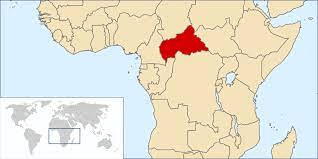
In April 2022, the mineral-rich African country became the first on the continent and second in the world to adopt bitcoin as legal tender, following in the footsteps of El Salvador. Although the war-torn country had seen sustained periods of economic instability and political violence, the Central African Republic had high hopes for bitcoin and its sister experiment, Sango – the country’s blockchain project to tokenize land and natural resources. The technology was labeled part of a new “visionary plan”, with digital currencies being touted as financial tools to unleash “new opportunities.”
At the time, bitcoin acolytes in the U.S. and Europe were frothing at the mouth to hear about a second test cradle for bitcoin adoption, even if few understood the feasibility of the project in the Central African Republic, More adoption signaled more proof of the utility of bitcoin.
Although media reports at the time pointed out that 90% of citizens in the Central African Republic lacked access to the internet, there was no shortage of people hopeful that the Central African Republic’s decision would usher in another important test case for the nascent financial technology.
Outside of the capital Bangui, the Central African Republic’s government and banks struggled to provide basic services to the population, due to a years-long conflict that left a political vacuum in many parts of the country. The lucky ones who did return home after fleeing during conflict found that they could not open bank accounts, due to identification documents being lost in the war.
But this spring, the Central African Republic decided to repeal its law enabling Bitcoin adoption altogether, arguably ending its experiment before it even began.
Although there are plenty of reasons why bitcoin adoption never got off the ground in the country, it’s not only tied to poor infrastructure, low internet penetration, and a population that is still learning what bitcoin or satoshis are – much less where they can be used for in the country.
The United Nations warned the Central African Republic, along with El Salvador, that Bitcoin was unlikely to yield the economic gains envisioned by political leaders. Initially, that did little to deter the Central African Republic. Elsewhere on the African continent, Nigeria and South Africa were seeing massive interest in crypto, signaling that the technology might be embraced with the same enthusiasm in the Central African Republic.
But there were also clues: The introduction of bitcoin was rocky from the start. Just a few weeks after the country made bitcoin legal tender, the main regulator of the banking industry, the Banking Commission of Central Africa (COBAC), had to remind the government that it had already banned crypto.
Adding to that, the country’s so-called Bitcoin City never actually happened, or seems to have been aborted. And third, most citizens still didn’t understood the value-proposition of bitcoin, even if they have heard of the technology by now.
It’s also important to note that some observers took the Central African Republic’s interest in crypto as a play to deepen ties to Russia, potentially giving it an avenue to skirt sanctions.
But most importantly: the politician(s) promising citizens a new economic reality under bitcoin were often the same ones that had failed to fulfill other political promises, creating a doomed path of skepticism around the project.
At the end of the day, perhaps the question should not be “How did the Central African Republic reverse its decision to adopt bitcoin as legal tender?” but “How did bitcoin get off the ground in the Central African Republic in the first place?”

By

