——————————————————————
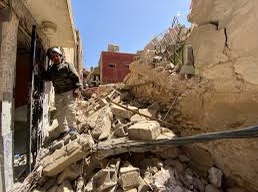
Rescuers were digging through rubble in remote mountainous areas of Morocco on Saturday after more than 1,300 people were killed in the deadliest earthquake to strike the country in decades.
The 6.8-magnitude earthquake shook Morocco’s High Atlas mountain range shortly after 11 p.m. local time on Friday (6 p.m. ET) at the relatively shallow depth of 18.5 kilometers (11.4 miles), the United States Geological Survey (USGS) said. The epicenter was located about 72 kilometers (44.7 miles) southwest of Marrakech, a city of some 840,000 people and a popular tourist destination.
At least 1,305 people were killed and 1,220 others in a critical condition, Morocco’s state TV Al Aoula said, citing the interior ministry. null
Emergency services were deployed to quake-stricken regions, as King Mohammed VI of Morocco ordered that a relief commission be set up to distribute aid to survivors.
Eyewitnesses described scenes of destruction in the Atlas Mountains foothills following the earthquake, amid a rapidly increasing death toll revealing the human cost. View this interactive content on CNN.com
Fatima, 50, told CNN her house in the mountain village of Asni – near the earthquake’s epicenter – had been destroyed. “I barely got the chance to grab the kids and run out before I saw my house collapsing in front of my eyes. The neighbor’s house has also collapsed and there are two dead people under the rubble,” she said.
Mohammed, 50, from the nearby town of Ouirgane, lost four family members in the quake. “I managed to get out safely with my two children but lost the rest. My house is gone,” he said.
Rescue operations there are ongoing. “We are out in the streets with authorities as they try to pull the dead from the rubble. Many many people were transported to hospital in front of me. We are hoping for miracles from the rubble,” he said.
Not since 2004 has the country seen a comparable disaster, when a 6.3-magnitude earthquake struck the port city of Al Hoceima, claiming around 630 lives. Morocco’s worst earthquake of modern times was in 1960 near the western city of Agadir which killed at least 12,000 people.
Many Moroccans spent Friday night on the streets fearful of aftershocks. Health authorities also called on people to donate blood to help victims.

Fadel Senna/AFP/Getty Images
People mourn earthquake victims in Moulay Brahim, Morocco, on Saturday, September 9.

Fadel Senna/AFP/Getty Images
A resident navigates through the rubble in Marrakech, Morocco on September 9.

Said Echarif/Anadolu Agency/Getty Images
A damaged building is seen in Marrakech, Morocco on September 9.
Abdelhak Balhaki/Reuters
Rescue workers search through rubble in Amizmiz, Morocco, on September 9.
Fadel Senna/AFP/Getty Images
A woman stands in front of her earthquake-damaged house in Marrakech, Morocco on September 9.
Mosa’ab Elshamy/AP
People inspect damaged homes in Moulay Brahim, Morocco, on September 9.
Fadel Senna/AFP/Getty Images
Rescue workers search for survivors in a collapsed house in Al Haouz province, Morocco on September 9.
Fadel Senna/AFP/Getty Images
A woman looks at the rubble of a building in Marrakech, Morocco on September 9.
Abdelhak Balhaki/Reuters
A damaged vehicle sits in a street in Marrakech, Morocco on September 9.

Fadel Senna/AFP/Getty Images
Residents take shelter outside following the earthquake in Marrakech, Morocco on September 9.
Most deaths occurred in mountain areas close to the epicenter that were hard to reach, authorities said, and rescue teams were having difficulty accessing the worst affected areas after roads were damaged, Al Aoula reported.
The Royal Moroccan Armed Forces warned residents to pay close attention to follow-up tremors.
“We remind you of the need to exercise caution and take safety measures due to the risk of aftershocks,” the military wrote on X, formerly known as Twitter.null
The USGS said Friday night’s quake was unusually strong for that part of Morocco.
“Earthquakes of this size in the region are uncommon, but not unexpected. Since 1900, there have been no earthquakes M6 (magnitude 6) and larger within 500 km of this earthquake, and only 9 M5 (magnitude 5) and larger earthquakes,” USGS said.
The US body predicted that “significant damage is likely and the disaster is potentially widespread,” noting that many people in the area reside in structures that are “highly vulnerable to earthquake shaking.”
Al Aoula on Saturday broadcast video of multiple collapsed buildings near the quake’s epicenter and reported that thousands of people had fled their homes after the country’s National Institute of Geophysics warned of aftershocks.

Abdelhak Balhaki/Reuters
A damaged vehicle is pictured in the historic city of Marrakech on Saturday.
Fadel Senna/AFP/Getty Images
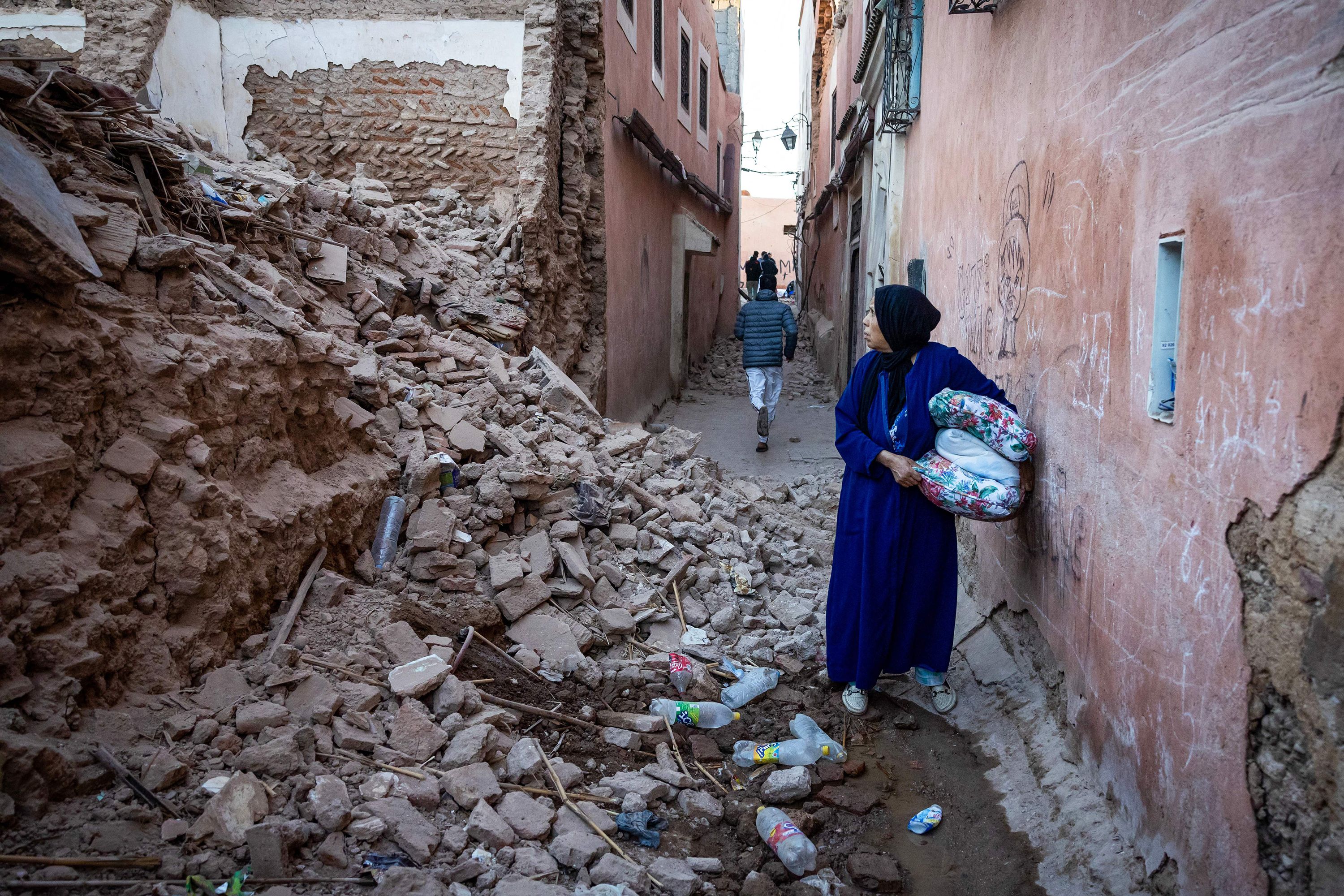
A woman stands among the rubble of a building in the earthquake-damaged old city of Marrakech.
Historic town damaged
In the old city of Marrakech, a UNESCO World Heritage site, some residents were injured as buildings and city walls were damaged and partially collapsed, according to CNN’s Benjamin Brown who is on the ground.
Brown, who was at the rooftop of his hotel when the ground started shaking, said it took a few seconds for everyone to realize what was going on.
People initially remained calm as they made their way out of the narrow alleyways to find a safe place outdoors, many in their pajamas, according to Brown.
“It kicked in a couple of minutes later, screaming began… when the extent of the injuries became apparent, that’s really when the panic kicked in,” he said.
“I saw many people brought out of their homes in stretchers or wrapped in carpets … some of them with what appeared to be quite serious head injuries with lots of blood.”
At least one ambulance had to turn away an injured woman because it was already full with injured people, Brown said.

