——————————————————————
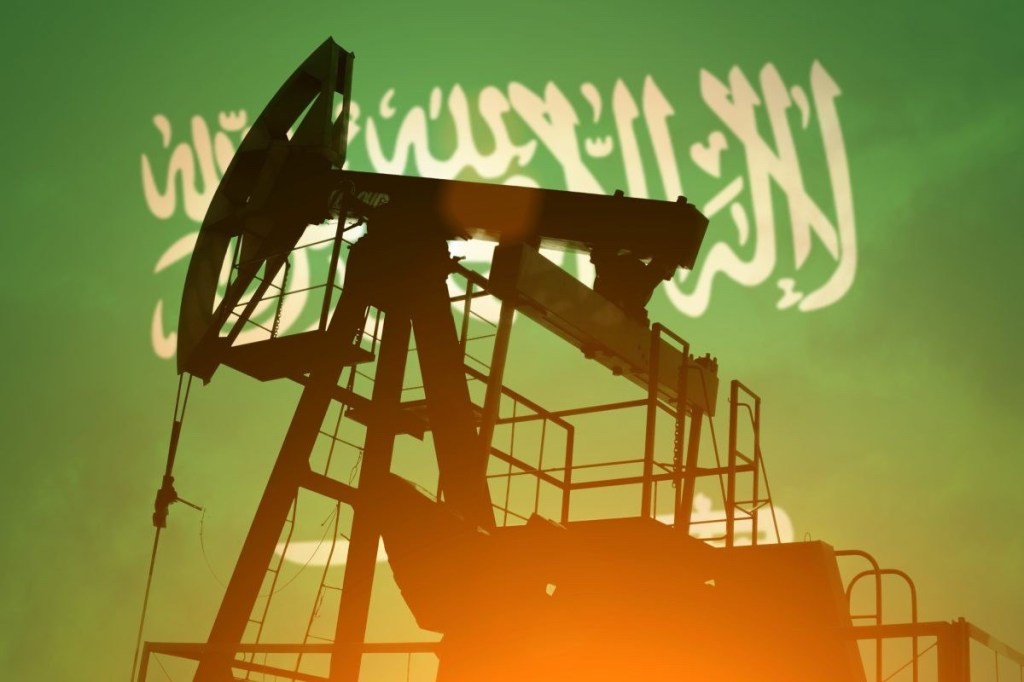
Editor’s Note: The article below lists some very important points for if/when Saudi oil payments use a payment platform other than the US dollar.
However, this discussion does not include how all currencies will be/are affected by all using gold as a valuation tool. In this regard, any value assigned to the Saudi current, the riyal, will not fluctuate in regard to the US dollar, but rather… the price of gold!
😎🇸🇦⚡️ Done Deal.
The BRICS alliance inducted six new countries into the bloc at the 15th summit in Johannesburg last month. Out of the six countries, five are oil-producing nations that export millions of barrels across the globe every year. The six countries joining BRICS are Saudi Arabia, the UAE, Egypt, Iran, and Ethiopia, while Argentina is the only non-oil-producing country. There’s a high risk that Saudi Arabia and the UAE might start accepting local currencies for oil and ditch the U.S. dollar.
Also Read: BRICS Discussing ‘Unified Settlements’ as Alternate to the US Dollar
The new mission of BRICS is to end reliance on the U.S. dollar and promote local currencies for global trade. Therefore, chances are high that Saudi Arabia might consider accepting local currencies as payment for oil to reduce its dependency on the U.S. dollar. BRICS is looking to control the oil markets, and inducting Saudi Arabia was the best choice. In this article, we will highlight what could happen to the U.S. dollar if Saudi Arabia accepts local currencies to settle oil and gas payments.
First and foremost, the weakening of the U.S. dollar would begin if Saudi Arabia accepted local currencies for oil trade. If Saudi Arabia demands that other countries pay in local currencies only, then demand for the U.S. dollar would dip drastically. The move could lead to the dollar facing a depreciation in the international forex and currency markets. A weak dollar would make imported goods more expensive in the United States and potentially impact the overall U.S. economy.
Also Read: BRICS: U.S. Dollar ‘Global Reserves’ Drop Below 60%
Secondly, other nations will begin to diversify their reserves and accumulate other currencies apart from the U.S. dollar. The development would increase demand for other local currencies and put them in direct competition with the dollar. Central Banks around the world will keep reserves of all currencies and commodities like gold, making the USD dip.
Thirdly, and in conclusion, Saudi Arabia might not make such a decision as their currency, the Riyal, is pegged to the U.S. dollar. Therefore, if the dollar dips, the Saudi economy could face implications that could hamper the kingdom’s wealth and local currency.
——————————————————————-

