___________________________________________________________________________________________________________
Fri, February 10, 2023, 7:39 AM PST·4 min read

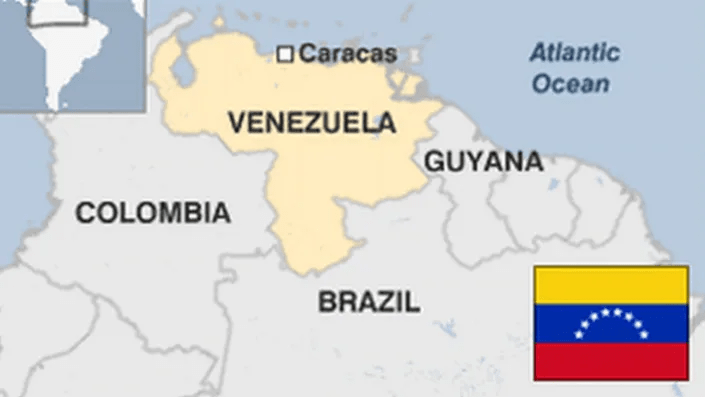
Venezuela is a country of striking natural beauty, and one of the most highly-urbanised in Latin America.
It has some of the world’s largest proven oil deposits as well as huge quantities of coal, iron ore, bauxite and gold. Yet many Venezuelans live in poverty, often in shanty towns, some of which sprawl over the hills around the capital Caracas.
Former president Hugo Chavez, who died in 2013, styled himself a champion of the poor during his 14 years in office, pouring billions of dollars of Venezuela’s oil wealth into social programmes.
But the government of his successor, Nicolas Maduro, has had to struggle with plummeting oil prices and an economic and political crisis that has left Venezuela in a state of near-collapse.
– ADVERTISEMENT –
https://s.yimg.com/rq/darla/4-10-1/html/r-sf-flx.html
- Read more country profiles – Profiles by BBC Monitoring
BOLIVARIAN REPUBLIC OF VENEZUELA: FACTS
- Capital: Caracas
- Area: 916,445 sq km
- Population: 29.7 million
- Languages: Spanish, plus regional languages
- Life expectancy: 67 years (men) 76 years (women)
LEADERS
President: Nicolas Maduro

President Nicolas Maduro has governed since March 2013, following the death of his mentor Hugo Chavez.
He was re-elected president for a second six-year term in May 2018, in a poll marred by an opposition boycott and claims of vote-rigging.
At the time, Venezuela was in the throes of a deep economic crisis, with rampant inflation and lack of basic necessities, despite boasting the world’s biggest oil reserves.
Mr Maduro failed to undertake any significant reforms of the state-run economy, and established a Constituent Assembly to bypass the National Assembly and strengthen his grip on power.
MEDIA

Venezuela’s political polarisation is mirrored in the media.
State TV coverage routinely ignores the opposition. Critical and exile media operate online.
Many journalists have fled because of threats and physical dangers, says Reporters Without Borders.
The government and its opponents use social media as a battleground.
- Read full media profile
TIMELINE

Some key dates in Venezuela’s history:
1498-99 – Christopher Columbus and Alonso de Ojeda visit Venezuela, which is inhabited by Carib, Arawak and Chibcha peoples.
1521 – Spanish colonisation begins.
1749 – First rebellion against Spanish colonial rule.
1810 – Venezuelans take advantage of Napoleon’s invasion of Spain to declare independence.
1829-30 – Venezuela secedes from Gran Colombia.
1870-88 – Ruler Antonio Guzman Blanco attracts foreign investment, modernises infrastructure and develops agriculture and education.
1908-35 – Under dictator Juan Vicente Gomez, Venezuela becomes world’s largest oil exporter.
1945 – Coup establishes civilian government after decades of military rule.
1948 – President Romulo Gallegos, Venezuela’s first democratically-elected leader, overthrown within eight months in military coup led by Marcos Perez Jimenez.
1958 – Admiral Wolfgang Larrazabal ousts Marcos Perez Jimenez; leftist Romulo Betancourt of the Democratic Action Party (AD) wins presidential election.
1964 – Venezuela’s first presidential handover from one civilian to another takes place when Raul Leoni is elected president.
1973 – Venezuela benefits from oil boom and its currency peaks against the US dollar; oil and steel industries nationalised.
1989 – Carlos Andres Perez elected president amid economic depression, launches austerity programme with IMF loan. Riots, martial law and general strike follow, with hundreds killed in street violence.
1992 – Colonel Hugo Chavez and supporters make two coup attempts. Some 120 people killed in suppression of coups, Col Chavez jailed for two years before being pardoned.
1998 – Hugo Chavez elected president amid disenchantment with established parties, launches ‘Bolivarian Revolution’ that brings in new constitution, socialist and populist economic and social policies funded by high oil prices, and increasingly vocal anti-US foreign policy.
2005 President Chavez signs decree on land reform to eliminate Venezuela’s large estates and benefit rural poor. Ranchers say move is attack on private property.
2006 – President Chavez signs a $3bn arms deal with Russia, marking a re-orientation away from US arms supplies.
Chavez wins a third term in presidential elections with 63% of the vote, the largest margin since the 1947 election.
2012 – Government extends price controls on basic goods in the battle against inflation and threatens to expropriate firms refusing to comply.
Venezuela becomes a full member of regional trading bloc Mercosur.
President Chavez wins a fourth term in office.
2013 – Chavez dies at age 58 after a battle with cancer. Nicolas Maduro, his chosen successor, is elected president by a narrow margin, and presides over an imploding economy and divided nation.
2018 – UN says two million Venezuelans have fled to neighbouring countries since 2014.
2019 – Opposition leader Juan Guaidó declares himself interim president, and asks military to oust President Maduro saying the 2018 election was rigged.
European Union, United States, and most Latin American countries recognise Mr Guaidó.
2020 – Opposition boycotts legislative elections, which are duly won by President Maduro’s party and allies.

 Rose Rambles...