________________________________________________________________________________________________________
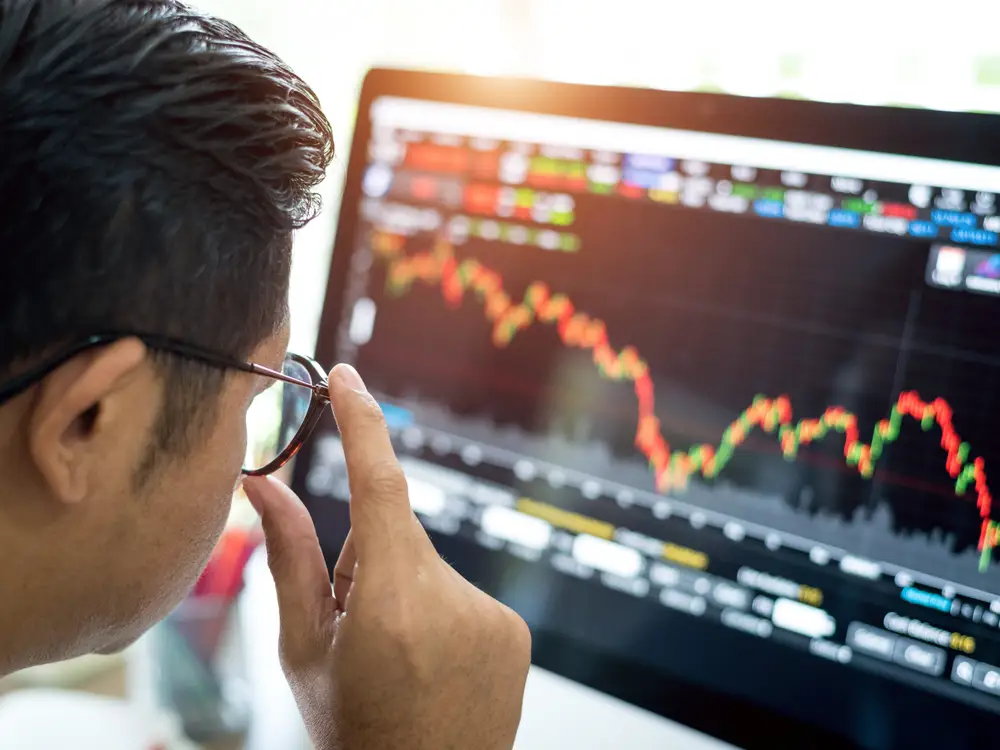
- The global economy has entered a period of elevated volatility, and previous investing approaches won’t work anymore, BlackRock said.
- A recession is imminent but central banks won’t be able to support markets this time by loosening policy, according to the money manager.
- “Recession is foretold as central banks race to try to tame inflation. It’s the opposite of past recessions,” BlackRock strategists said.
A worldwide recession is just around the corner as central banks boost borrowing costs aggressively to tame inflation — and this time, it will ignite more market turbulence than ever before, according to BlackRock.
The global economy has already exited a four-decade era of stable growth and inflation to enter a period of heightened instability — and the new regime of increased unpredictability is here to stay, according to the world’s biggest asset manager.
That means policymakers will no longer be able to support markets as much as they did during past recessions, a team of BlackRock strategists led by vice chairman Philipp Hildebrand wrote in a report titled 2023 Global Outlook.
“Recession is foretold as central banks race to try to tame inflation. It’s the opposite of past recessions,” they said. “Central bankers won’t ride to the rescue when growth slows in this new regime, contrary to what investors have come to expect. Equity valuations don’t yet reflect the damage ahead.”
The prospect of limited policy support means investors need more dynamic methods — involving more frequent portfolio changes and taking a more “granular view on sectors, regions and sub-asset classes” — to navigate the volatility ahead, according to BlackRock.
`Regime of greater macro volatility’
“What worked in the past won’t work now,” the strategists said. “The old playbook of simply ‘buying the dip’ doesn’t apply in this regime of sharper trade-offs and greater macro volatility. We don’t see a return to conditions that will sustain a joint bull market in stocks and bonds of the kind we experienced in the prior decade.”
Wall Street banks from Morgan Stanley and Bank of America to Deutsche Bank have warned that US stocks could plunge by more than 20% in 2023 due to an economic downturn and liquidity risks fueled by the Federal Reserve’s interest-rate increases. Goldman Sachs CEO David Solomon sees just a 35% chance that the US economy avoids a recession.
A slowdown in the housing market, delays in corporate investment plans, a decline in consumers’ savings and deteriorating CEO confidence are early signs of the oncoming economic slump, according to BlackRock.
Still, the stock market hasn’t yet factored in the potential magnitude of the impending economic downturn, the strategists said.
“We don’t think equities are fully priced for recession,” they added. “Corporate earnings expectations have yet to fully reflect even a modest recession. This keeps us tactically underweight developed market equities.”
The S&P 500 index of large-cap US stocks is up more that 12% from a 23-month low reached in October, spurred mainly by expectations that the Federal Reserve will slow the pace of its interest-rate increases after a recent retreat in inflation.
~~~~~~~~~~~~~~~~~~~~~~~~~~~~~~~~~~~~~~~~~~~~~~~~~~~~~~~~~~~~~~
Here’s why BlackRock is forecasting a brutal global recession
Good morning, readers. I’m Phil Rosen, reporting from New York.

1 of 6 Photos in Gallery©Reuters
Warren Buffett, Michael Burry, and other elite investors just revealed major changes to their stock portfolios. Here are 5 key trades they made.
- Warren Buffett, Michael Burry of “The Big Short,” and others shared portfolio updates this week.
- Ray Dalio, Jim Simons, and Stanley Druckenmiller also disclosed their stock holdings as of March 31.
- Key trades included a big bet on Chevron, a wager against Apple, and several meme-stock purchases.
Warren Buffett, Michael Burry of “The Big Short” fame, and other top-flight investors made significant changes to their stock portfolios in the first quarter of this year, ranging from a huge wager on Chevron to a bet against Apple.
Ray Dalio, Jim Simons, and Stanley Druckenmiller’s funds all made notable tweaks to their holdings. The first two bought or sold two of the best-known meme stocks, GameStop and AMC, while the third bet big on energy stocks and made a surprising wager against the S&P 500.
Here are 5 of the most striking trades in the first quarter:
Good morning, readers. I’m Phil Rosen, reporting from New York.
1 of 6 Photos in Gallery©Reuters
Warren Buffett, Michael Burry, and other elite investors just revealed major changes to their stock portfolios. Here are 5 key trades they made.
- Warren Buffett, Michael Burry of “The Big Short,” and others shared portfolio updates this week.
- Ray Dalio, Jim Simons, and Stanley Druckenmiller also disclosed their stock holdings as of March 31.
- Key trades included a big bet on Chevron, a wager against Apple, and several meme-stock purchases.
Warren Buffett, Michael Burry of “The Big Short” fame, and other top-flight investors made significant changes to their stock portfolios in the first quarter of this year, ranging from a huge wager on Chevron to a bet against Apple.
Ray Dalio, Jim Simons, and Stanley Druckenmiller’s funds all made notable tweaks to their holdings. The first two bought or sold two of the best-known meme stocks, GameStop and AMC, while the third bet big on energy stocks and made a surprising wager against the S&P 500.
Here are 5 of the most striking trades in the first quarter:
Some good news: We’re on the brink of the weekend.
Even better news: Tomorrow you’ll receive a special weekend edition of the Opening Bell newsletter, featuring my conversation with one of Wall Street’s most sought-after strategists.
But today we’re talking macro. The global economy this year has faced more obstacles than a Tough Mudder, but far less optimism about coming out of it for the better.
Stubborn inflation, steep rate hikes from central banks, and geopolitical tensions have pushed the world’s largest asset manager to share an altogether frosty prognosis for what’s to come in 2023.

