A solar superstorm could cause a global internet collapse comparable to an apocalyptic event that could last for weeks, according to a study based on modeling experiments from the University of California, Irvine (UCI).
Key findings: Solar storms, also known as coronal mass ejections (CMEs), can destabilize the Earth’s magnetic field and cause events that affect space and ground technology. Among them is the production of geomagnetically induced currents (GIC), which may enter and damage long-distance undersea cables that run the internet.
- CMEs are composed of highly magnetized particles. While the Earth’s magnetic field naturally deflects solar activity — including solar flares, which are outbursts of radiation seen as bright areas on the sun — a powerful CME in a direct path to the planet poses a greater risk of damage.
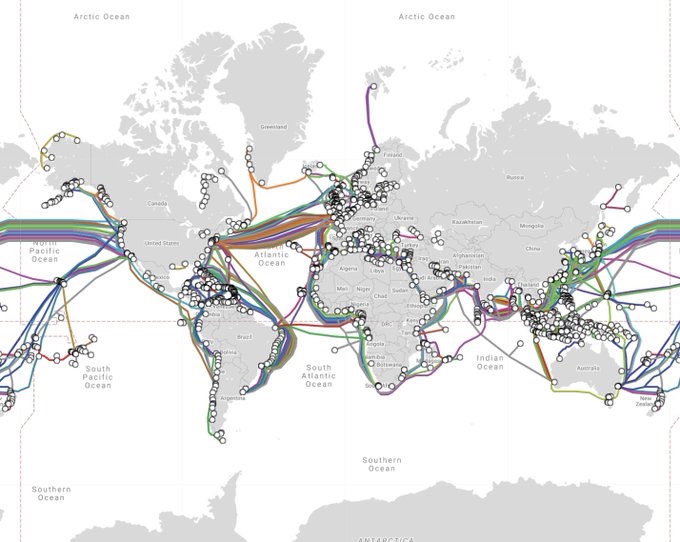
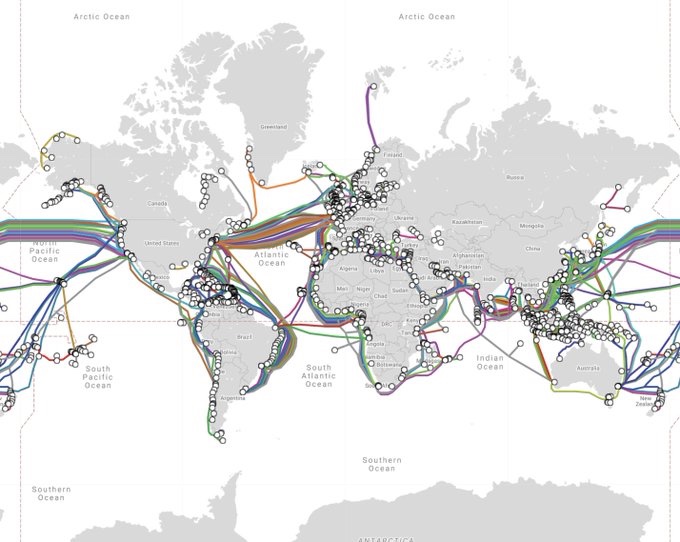
- In her research “Solar Superstorms: Planning for an Internet Apocalypse,” Dr. Sangeetha Abdu Jyothi, who leads UCI’s Network, Systems and AI Lab (NetSAIL), found that submarine cables have the highest risk of damage, primarily because they are longer. While the optical fiber in cables is immune to GIC, “repeaters,” which boost optical signals in long-distance cables, are not.
- The study also found that impact will be felt differently across regions. The U.S., for instance, will be highly susceptible to disconnection from Europe. And while Europe is in a vulnerable location — since CMEs pose greater impact at higher altitudes — it will be more resilient due to its shorter cables. Parts of Asia appear to be the most resilient of all, with Singapore serving as a central hub with shorter connections to multiple countries.