Experts conclude that children aren’t threatened by COVID-19.
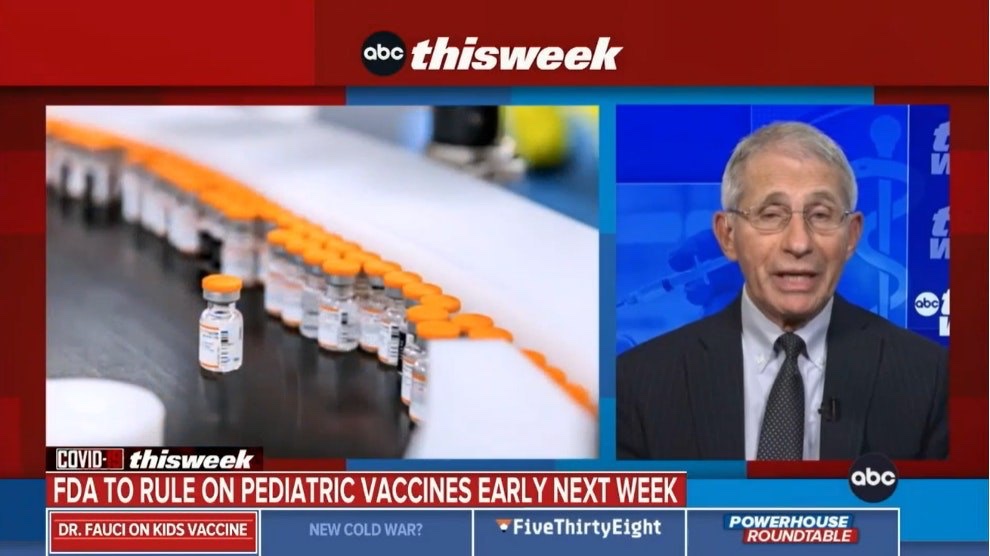
So why is the FDA about to approve Pfizer’s emergency use authorization to vaccinate kids ages 5-11?
Especially when the long-term risks are unknown?
On Tuesday, October 26, 2021, the FDA is meeting “to discuss a request to amend Pfizer-BioNTech’s Emergency Use Authorization (EUA) for administration of their COVID-19 mRNA vaccine to children 5 through 11 years of age.”
In anticipation of this meeting (and to illuminate the real reason why Pfizer is seeking the EUA), we offer a rare point of agreement in our polarized world. One that damns both the FDA and Pfizer: healthy children aren’t threatened by COVID-19.
As compared to adults, children are less prone to get COVID, they are less prone to be hospitalized by COVID, and they are far less likely to die from COVID.
This is supported by CDC data (quoted by Pfizer), which shows that for children aged 5-11 years-old, there have been 1.8 million COVID-19 cases and only 138 deaths. By comparison, approximately double that amount of children have died of pneumonia during this same time period. For those children hospitalized with COVID-19, the vast majority had more than one underlying condition (chronic lung disease, obesity, or neurologic disorders).
According to NY Magazine, “among children the mortality risk from COVID-19 is actually lower than from the flu. The risk of severe disease or hospitalization is about the same.”
One study published in Nature estimated “that the infection fatality ration [of COVID-19] is lowest among 5–9-year-old children.” That same publication has noted that children just aren’t safe from serious COVID-19 infection. Children “aren’t driving viral spread” and they don’t get infected or spread the infection like adults. For example, studies of some schools in Nebraska showed “were open the whole year with over 20,000 students and staff, and there were only 2 transmission events during that entire study period.”
The CDC concedes that “children are less likely to develop severe illness or die from COVID-19.” It notes that “findings from several studies suggest that SARS-CoV-2 transmission among students is relatively rare, particularly when prevention strategies are in place.” It reluctantly admits “several contact tracing studies have found limited student-to-student transmission in schools.”
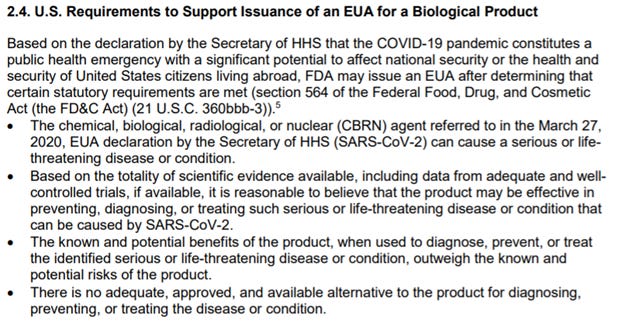
These facts would seem to contradict the the legal and factual justifications necessary for giving the vaccine an EUA for kids aged 5-11. For review, the FDA’s issuance of an EUA is governed by 21 U.S.C. 360bbb-3. In its original issuance of the EUA for the Pfizer vaccine back in 2020, the FDA concluded: