Iran to Join the BRICS Alliance ~ December 8, 2023


______________________________________________________________________________________________

On August 24, Iran and five other countries – Argentina, Egypt, Ethiopia, Saudi Arabia, and the United Arab Emirates – were invited to join the BRICS bloc of emerging economies. The announcement was a diplomatic win for Iran, which has been isolated for its crackdown on protesters, nuclear advances and support for Russia’s war against Ukraine. BRICS includes Brazil, Russia, India, China, and South Africa.

At the BRICS summit in South Africa, President Ebrahim Raisi heralded the expansion of the alliance. “The world needs convergence to build a just system based on collective interests, and BRICS is considered a symbol of such change and evolution in global relations,” he said at the 15th BRICS summit in Johannesburg, South Africa. Iran was eager to support the bloc’s efforts to move away from using the U.S. dollar for trade, he said. Raisi’s deputy chief of staff for political affairs, Mohammad Jamshidi, touted Iran’s membership as a “strategic success” and “historical development.”

Since taking office in 2021, Ebrahim Raisi has prioritized improving relations with Iran’s neighbors as well as Asian powers. BRICS membership was a “political feather in the cap of the Raisi administration, which has made the argument that Iran can thrive without focusing on nuclear diplomacy by expanding ties with Asia and the region,” Henry Rome of the Washington Institute for Near East Policy told The Iran Primer. The invitation to join the BRICS bloc coincided with a U.S. and European effort to isolate Tehran until it reengages on its advancing nuclear program. “Indeed, the membership invitation underscores the erosion of Western efforts to isolate Iran, which in turn will probably make future endeavors at nuclear diplomacy even more challenging.”

Under Raisi, Tehran has sought new economic partners—from Venezuela to Indonesia —to offset the impact of U.S. economic sanctions reimposed after President Donald Trump withdrew from the Iran nuclear deal in 2018. Iran’s invitation to join BRICS followed its admission to the Shanghai Cooperation Organization (SCO) in July 2023. The SCO was a security and economic organization led by China and Russia that also included India, Pakistan, Kazakhstan, the Kyrgyz Republic, Tajikistan, and Uzbekistan. 

“Much like Iran’s accession to the SCO, becoming a member of BRICS is at best a political win for Tehran. Iranian leaders can claim that Western governments are failing to isolate the country,” Esfandyar Batmanghelidj, CEO of the Bourse & Bazaar Foundation, told The Iran Primer. “Iran’s trade relationships with other BRICS members, including China, continue to languish under US secondary sanctions. That’s not going to change.”

Raisi is a hardliner, yet he has also reversed years of hostile relations with Saudi Arabia. In March 2023, Tehran restored diplomatic ties with Riyadh seven years after Saudi Arabia cut ties. The addition of Iran, Saudi Arabia, and the UAE “suggests that the regional diplomacy underway in the Persian Gulf is mutually reinforcing with the kind of multilateralism that the founding BRICS members want to foster,” Batmanghelidj said. “In that way, membership in bodies like the SCO and BRICS might create some useful guardrails for the regional rivalries between the UAE, Saudi Arabia, and Iran.”

Chinese President Xi Jinping said that the BRICS expansion was “historic” and promised to “further strengthen the force for world peace and development.” Russian President Vladimir Putin, who did not attend the summit in-person, pledged to continue “expanding the influence of BRICS in the world.” BRICS is increasingly visible both in international diplomacy and economics. It brings together some of the world’s largest oil and gas importers and exporters.

The United States downplayed the implications of BRICS expanding. The Biden administration did not consider BRICS “as evolving into some kind geopolitical rival to the United States or anyone else,” White House National Security Advisor Jake Sullivan told reporters on Aug. 22, 2023. He noted that diverse countries had disparate views of the war in Ukraine and other global flashpoints. “We will continue to work on the strong positive relationships we have with Brazil, India, and South Africa; we will continue to manage our relationship with China; and we will continue to push back on Russia’s aggression.”

Nearly two dozen countries applied for BRICS membership before the 2023 summit in Johannesburg. Tehran had applied in June 2022. Iran and the other five countries are due to become members on Jan. 1, 2024.

Brazil, Russia, India, and China formed the first iteration of the group (BRIC) in 2009 and then added South Africa in 2010. Together, the five nations represented approximately a quarter of the world’s economy and more than 40 percent of the world’s population on four continents. The group sought to give more voice to developing countries in international financial institutions, such as the World Bank. BRICS members have long sought to create a common currency to facilitate trade. The following are President Raisi’s remarks on joining BRICS. 

President Ebrahim Raisi on Aug. 24, 2023: “Without a doubt, the decision of the BRICS members to expand the group is a commendable step that paves the way for global development on the basis of justice. Surely, the benefits of the membership of the Islamic Republic of Iran in the BRICS group will make history and mark a new chapter and a stronger step in terms of justice, fairness, ethics and sustainable peace on the international stage.”

“Dominance, injustice, discrimination and moral crisis have put the world in a complicated and troubled situation. The emergence and spread of problems such as hunger, climate change, limited energy resources, lack of access to health and medical facilities, along with cyber insecurity as well as cultural, value and identity threats, are only a part of these challenges that require everyone’s efforts and convergence to deepen the discourse of justice and the foundation of a fair system based on collective interests.

“BRICS is a symbol of such a change in global relations that can help solve the problems of the world community; Especially since the global confidence in the effectiveness of BRICS is increasing. The expansion of BRICS to other developing world powers will make this vision more coherent and global.

“The Islamic Republic of Iran has significant political and economic cooperation with all five members of the BRICS, and in the recent period, we have clearly witnessed the leap and deepening of this cooperation.

“Various strategic cooperations between Iran and BRICS members, including in the fields of transit, energy and trade, in the BRICS global agenda support this point of view and bring sustainable economic benefits to our nations and the world. The Islamic Republic of Iran firmly supports the successful efforts of BRICS in the direction of de-dollarization of economic relations between members, as well as the use of national currencies and the strengthening of BRICS mechanisms for payment and financial settlement.

“The Islamic Republic of Iran has unique capacities and is ready to participate in all three main areas of BRICS activities, i.e., political-security, economic-financial and social fields. Maximizing interaction and strengthening multilateral cooperation mechanisms, especially with developing independent countries, is at the center of the foreign policy of the Islamic Republic of Iran. In this regard, due to its special transit position and having extensive energy resources as well as high scientific and engineering power in various fields, including industrial production, technology, nano and medicine, we announce our readiness for any cooperation, joint economic action, and investment with the countries.”

Newsletter Sign Up

Recent Articles

Nobel Prize: Profile of Narges Mohammadi

Notable Women Detained in Iran

Iran 2024: Political Challenges

U.S. on Iran Threats Since Gaza War

U.S. and Britain Sanction Hamas and PIJ Leaders

U.S.-Iran Tensions Soar During Israel-Hamas War

Raisi in Saudi Arabia on Gaza War

Nasrallah, the Hezbollah leader, on the Gaza War

Biden Renews State of Emergency with Iran

Blinken in Middle East Amid Gaza War

Iran Commemorates U.S. Embassy Seizure

Iran and the Palestinians in Gaza

Israel-Hamas War: Iran’s Role and Comments

Iran Says U.S. Will “Not Be Spared From This Fire”

Hamas: Chronology of U.S. Sanctions 1995 to 2023

Israel-Hamas War: U.S. and Europe on Iran Role

Joe Biden on Iran

Timeline: Iran and Hezbollah

Profile: Lebanon’s Hezbollah

Doctrine of Hamas

Doctrine of Hezbollah

U.S. Sanctions Hamas Operatives and Financiers

U.S. Sanctions Networks Supporting Iran’s Missile & Drone Programs

Explainer: Timing of Key Sunsets in Nuclear Deal

Israel-Hamas War: Quotes from Iran’s Allies

History of Iran-Israel Tensions

History of Iran, Hamas & Islamic Jihad Ties

Israel-Hamas War: Comments by Hamas & PIJ

News Digest: Week of October 9

Nobel Prize: World Reaction

Nobel Prize: Writings of Narges Mohammadi

News Digest: Week of September 25

Timeline: U.S.-Iran Naval Encounters

U.S. Sanctions Network Supporting Drone Program

Parliament Passes New “Hijab and Chastity” Bill

News Digest: Week of September 18

Iran-US Prisoner Swap: Detailed Fact Sheet

Timeline of Iran-Saudi Relations
Raisi Blasts U.S. & West at U.N.

Iran-US Prisoner Swap: World Reaction

Iran Commemorates U.S. Embassy Seizure

Iran and the Palestinians in Gaza

Israel-Hamas War: Iran’s Role and Comments

Iran Says U.S. Will “Not Be Spared From This Fire”

Hamas: Chronology of U.S. Sanctions 1995 to 2023

Israel-Hamas War: U.S. and Europe on Iran Role

Joe Biden on Iran

Timeline: Iran and Hezbollah

Profile: Lebanon’s Hezbollah

Doctrine of Hamas

Doctrine of Hezbollah

U.S. Sanctions Hamas Operatives and Financiers

U.S. Sanctions Networks Supporting Iran’s Missile & Drone Programs

Explainer: Timing of Key Sunsets in Nuclear Deal

Israel-Hamas War: Quotes from Iran’s Allies

History of Iran-Israel Tensions

History of Iran, Hamas & Islamic Jihad Ties

Israel-Hamas War: Comments by Hamas & PIJ

News Digest: Week of October 9

Nobel Prize: World Reaction

Nobel Prize: Writings of Narges Mohammadi

News Digest: Week of September 25

Timeline: U.S.-Iran Naval Encounters

U.S. Sanctions Network Supporting Drone Program

Parliament Passes New “Hijab and Chastity” Bill

News Digest: Week of September 18

Iran-US Prisoner Swap: Detailed Fact Sheet

Timeline of Iran-Saudi Relations

Raisi Blasts U.S. & West at U.N.

Iran-US Prisoner Swap: World Reaction

The Global Financial/Economic Landscape Transforming for a RESET – Here’s Why ~ December 8, 2023


______________________________________________________________________________________________

Russia’s Historic State Visit to the UAE and Saudi Arabia Signals a Massive Geopolitical and Economic Shift is Accelerating

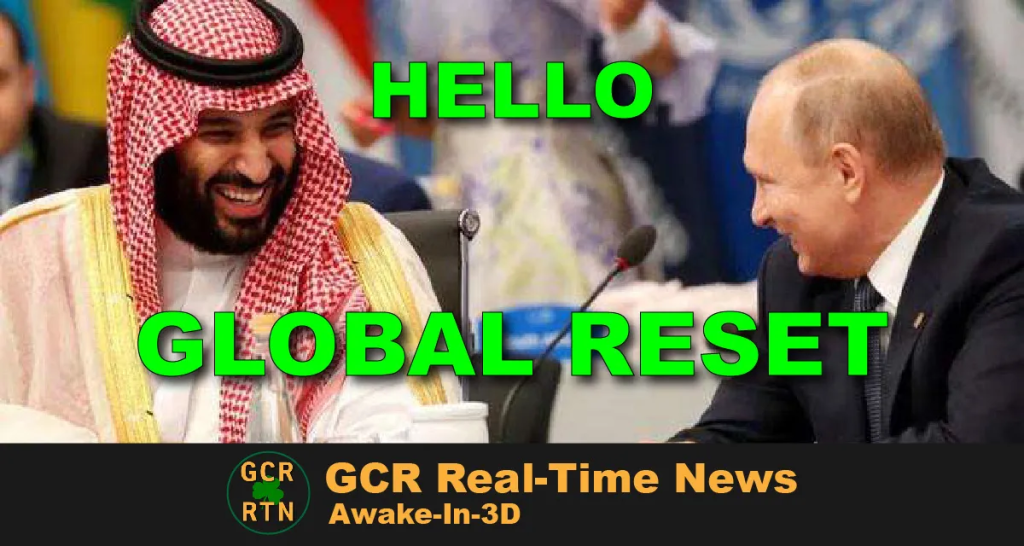
Right on the heels of China’s historic visit to Saudi Arabia, today’s landmark state Power Visit by Russian President Vladimir Putin is charting a new course in geopolitics, converging the strategic interests of BRICS with the Middle East.

The primary focus becomes obvious and lies in challenging the dominance of the US Dollar in the international financial system and forging an independent economic trading alliance.

The Agenda is Clear: Nothing Short of De-dollarization and a Financial System Reset

The key agenda items for the meetings in the UAE and Saudi Arabia during Russian President Vladimir Putin’s historic visit include:

  • Solidification of strategic alliances between Russia, BRICS, and Middle Eastern nations.
  • Showcasing a commitment to forging an independent economic trading alliance to challenge the dominance of the US Dollar in international transactions.
  • Exploration of common ground in Head of States relations, Foreign Policy, Non-Dollar currency and Financial Policy, Industrial Policy, Nuclear Cooperation, Artificial Intelligence (AI), Space Development, and International Direct Investments.
  • Coordination among Russia, Saudi Arabia, and the UAE to maintain stability in the global oil market.
  • Emphasis on trade, economic, and investment fields to strengthen economic ties.
BRICS and Middle East Strategic Alliance

Putin’s visit to the UAE and Saudi Arabia marks a pivotal moment as BRICS and the Middle East solidify a strategic alliance.

Beyond traditional visits of diplomacy, the power collaboration extends to Head of States relations, Foreign Policy, Non-Dollar currency and Financial Policy, Industrial Policy, Nuclear Cooperation, Artificial Intelligence (AI), Space Development, and International Direct Investments.

Breaking Away from the US Dollar

One of the key facets of this alliance is a shared ambition to challenge the hegemony of the US Dollar. Russia, alongside its Middle Eastern partners, is exploring avenues to conduct trade and financial transactions independent of the conventional fiat currency system dominated by the US Dollar.

The visit underscores their commitment to diversify and break away from the economic influence of the United States.

Putin Visits United Arab Emirates (UAE) . Photo: AFP
Intellectual Speculation on New Asset-Backed Trading Currency

Intellectual speculation suggests that BRICS and the Middle East could pioneer a new asset-backed trading currency.

This move aims to establish financial independence from the fiat currency debt system propagated by the United States and its western allies.

The potential creation of a new currency would signify a transformative shift in the global economic landscape, challenging the status quo and providing an alternative to the existing financial order.

Energy Cooperation and Economic Partnerships

A significant aspect of Putin’s visit involves discussions on energy cooperation, particularly within the OPEC+ framework.

Russia, Saudi Arabia, and the UAE, all major players in the energy sector, are exploring ways to maintain a stable and predictable global oil market.

This collaboration not only solidifies economic ties but also positions these nations as influential players in shaping global energy dynamics.

Bilateral Trade Growth and Economic Resilience

Putin highlighted a nearly 68% increase in the turnover of goods between Russia and the UAE in 2022, showcasing the growing economic resilience of this alliance.

The visit to Saudi Arabia further emphasizes bilateral cooperation in trade, economic, and investment fields, reinforcing the economic strength of this emerging alliance.

Putin arrives in Saudi Arabia. Photo: AFP

As the world watches Putin’s historic visit to the UAE and Saudi Arabia unfold, it is evident that a seismic shift is underway.

The convergence of BRICS and the Middle East signifies a challenge to the existing financial order, with the potential creation of a new asset-backed trading currency.

The collaboration not only promises economic resilience but also reshapes the geopolitical landscape, creating a formidable alliance that seeks independence from the US Dollar-dominated fiat financial system.

The List of Key Strategic Attendees from Russia Says it All

The list of key individuals attending the strategic meetings during Russian President Vladimir Putin’s historic visit to the UAE and Saudi Arabia includes:

  1. Vladimir Putin – President of Russia
  2. Sheikh Mohamed bin Zayed Al Nahyan – Ruler of the United Arab Emirates (UAE)
  3. Crown Prince Mohammed bin Salman Al Saud – Crown Prince of Saudi Arabia
  4. Yuri Ushakov – Presidential Aide to Vladimir Putin
  5. Dmitry Peskov – Press Secretary to Vladimir Putin
  6. Sergei Lavrov – Foreign Minister of Russia
  7. Andrei Belousov – First Deputy Prime Minister of Russia
  8. Denis Manturov – Minister of Industry and Trade of Russia
  9. Alexander Novak – Deputy Prime Minister of Russia
  10. Elvira Nabiullina – Chairman of the Central Bank of Russia
  11. Yuri Borisov – Head of Roscosmos (Russian Federal Space Agency)
  12. Alexey Likhachev – Chief of Rosatom (State Atomic Energy Corporation of Russia)
  13. Kirill Dmitriev – Chairman of the Russian Direct Investment Fund (RDIF)
  14. Igor Levitin – Assistant to Vladimir Putin
  15. Maxim Oreshkin – Assistant to Vladimir Putin
  16. Representatives of Russian Energy Companies – Executives from significant Russian energy companies participating in the talks.

Insurrection Act of 1807 ~ December 8, 2023


_____________________________________________________________________________________________

Copied for your opinion from Wikipedia:

The Insurrection Act of 1807 is a United States federal law[1] that empowers the president of the United States to deploy U.S. military and federalized National Guard troops within the United States in particular circumstances, such as to suppress civil disorder, insurrection, or rebellion.

The act provides a “statutory exception” to the Posse Comitatus Act of 1878, which limits the use of military personnel under federal command for law enforcement purposes within the United States.[2][3]

Before invoking the powers under the Act, 10 U.S.C. § 254 requires the President to first publish a proclamation ordering the insurgents to disperse. As part of the Posse Comitatus Act of 1878, these provisions have since been amended.

There are Constitutional exceptions to Posse Comitatus restrictions rooted in the president’s own constitutional authority. Defense Department guidelines describe “homeland defense” as a “constitutional exception” to Posse Comitatus restriction, meaning that measures necessary to guarantee National Security from external threats are not subject to the same limitations.

Purpose and content

The Act empowers the U.S. president to call into service the U.S. Armed Forces and the National Guard:

  • when requested by a state’s legislature, or governor if the legislature cannot be convened, to address an insurrection against that state (§ 251),
  • to address an insurrection, in any state, which makes it impracticable to enforce the law (§ 252), or
  • to address an insurrection, domestic violence, unlawful combination or conspiracy, in any state, which results in the deprivation of constitutionally secured rights, and where the state is unable, fails, or refuses to protect said rights (§ 253).

The 1807 Act replaced the earlier Calling Forth Act of 1792, which had allowed for federalization of state militias, with similar language that allowed either for federalization of state militias or use of the regular armed forces in the case of rebellion against a state government.[4]: 60  The Act did not provide a criminal penalty for insurrection, which was instead introduced by the Confiscation Act of 1862.

The 1807 Act has been modified twice. In 1861, a new section was added allowing the federal government to use the National Guard and armed forces against the will of the state government in the case of “rebellion against the authority of the government of the United States,” in anticipation of continued unrest after the Civil War.[5] In 1871, the Third Enforcement Act revised this section (§ 253) to protect Black Americans from attacks by the Ku Klux Klan. The language added at that time allows the federal government to use the act to enforce the Equal Protection Clause of the Fourteenth Amendment to the United States Constitution.[4]: 63–64  This section of the act was invoked during the Reconstruction era, and again during desegregation fights during the Civil Rights Era.[6]

The chief clause of the Insurrection Act, in its original 1807 wording (since updated to modern legal English), reads:[7]

An Act authorizing the employment of the land and naval forces of the United States, in cases of insurrections
Be it enacted by the Senate and House of Representatives of the United States of America in Congress assembled, That in all cases of insurrection, or obstruction to the laws, either of the United States, or of any individual state or territory, where it is lawful for the President of the United States to call forth the militia for the purpose of suppressing such insurrection, or of causing the laws to be duly executed, it shall be lawful for him to employ, for the same purposes, such part of the land or naval force of the United States, as shall be judged necessary, having first observed all the pre-requisites of the law in that respect.[8][9]

In 2016, Public Law 114-328 was amended to include Guam and the US Virgin Islands under Ch. 13 jurisdiction. §252: “Use of militia and armed forces to enforce Federal authority” currently reads:

Whenever the President considers that unlawful obstructions, combinations, or assemblages, or rebellion against the authority of the United States, make it impracticable to enforce the laws of the United States in any State by the ordinary course of judicial proceedings, he may call into Federal service such of the militia of any State, and use such of the armed forces, as he considers necessary to enforce those laws or to suppress the rebellion.[10][7]

______________________________________________________________________________________________

The GESARA blockchain election takes place in 120 days (April 1st)! Everything will be ready by January 30th ~ December 8, 2023


______________________________________________________________________________________________

Officially, a major cleanup in Japanese politics has begun!

And from “Zen” information

POTUS kept saying April 1st!

There are 120 days left to move forward to the GESARA blockchain elections worldwide!

Stellar public network preparation date until January 30th

That’s why you have to be ready!

That is…

In other words

The GESARA blockchain election will be held on April 1st in 120 days!

Everything will be ready by January 30th! That is…

Everything will be ready in December and January…

I’m looking forward to it (^^♪

Let’s believe in the plan today as well.

I would like to spend my time with a positive attitude while praying for the safety and good health of everyone in the “Army of Angels” (^^)

I hope this is useful to you (#^^#)

Please watch until the end

Thank you very much (_ _)

New Roseanne: Live from the Bedroom! The Roseanne Barr Podcast ~ December 8, 2023


__________________________________________________________________________________________

______________________________________________________________________________________________