China and Russia test ‘hack-proof’ quantum communication link for Brics countries ~ January 1, 2024


_____________________________________________________________________________________________________

  • Scientists in Russia and China establish quantum communication encrypted with the help of secure keys transmitted by Mozi satellite
  • ‘All countries that are interested in technological leadership know that without quantum technology they won’t succeed’: quantum researcher

Scientists in Russia and China have established quantum communication encrypted with the help of secure keys transmitted by China’s quantum satellite, showing that a Brics quantum communication network may be technically feasible.

The scientists were able to span 3,800km (2,360 miles) between a ground station close to Moscow and another near Urumqi in China’s western Xinjiang region to send two encoded images secured by quantum keys.

The first “full cycle” quantum communication test between the two countries was successfully conducted last year, said Alexey Fedorov, of Russia’s National University of Science and Technology (MISIS) and the Russian Quantum Centre (RQC), Russia’s leading institution in charge of creating a quantum computer, on December 14.

Bridging the vast distance is possible with the help of China’s quantum satellite Mozi, which has opened pathways to develop national and international quantum communication networks.

With the advent of advanced supercomputers and quantum computing, there were now more avenues for information systems to be attacked, the researchers at RQC, Moscow-based QSpace Technologies and MISIS University wrote in a paper published on the open-access online archive arxiv.org in October.

Quantum communication – a form of quantum physics-based information transfer that uses cryptography to encode data in single photons – offers a way to transfer information that hackers cannot eavesdrop on, according to the paper.

Encrypted data is transferred in the form of ones and zeros along with a quantum key that is used to decrypt the data.

Quantum keys, or strings of random bits, “are secret parameters that we use to encode useful information”, making it inaccessible to unauthorised individuals, Fedorov said.

_______________________________________________________________________________________________________


Whiplash Tonight – January 1, 2024


——————————————————————-

✏️✏️✏️✏️✏️ ✏️✏️✏️ ✏️✏️✏️✏️

🔠🔠🔠1️⃣🟰🔠🔠🔠2️⃣0️⃣

🔤🔤🔤🅰️🔤

t.me/GTelegraph/3902

t.me/GTelegraph/3903

t.me/GTelegraph/3904

t.me/GTelegraph/3909

Agnico-Eagle

t.me/WW3INFO/31152

The Gerald R. Ford-class aircraft carrier will leave the Middle East in the coming days

✏️✏️✏️✏️ ✏️✏️✏️✏️✏️

t.me/Intelsky/9750

RAGANRÖK REVOLTE – 🔥🔥 France: The 17th century castle caught fire this morning.

t.me/Intelsky/9724

Satanic 9th Circuit Danish Queen Abdicated Unexpectedly t.me/Whiplash347/189386

Photo of them here.

t.me/qthestormrider777/19325

Another post from Storm Rider on

MICROSOFT Collapse, i can see this coming through WUHAN LABS – They say imminent then it has to be CHINA TAIWAN – 3rd Red Castle. This also means APACHE, GHIDRA, LOG4J to be released.. t.me/Whiplash347/8548

– x.com/RealJFK2024/status/1734247064043745369?s=20

– http://www.dailymail.co.uk/news/article-12914965/Bill-Clinton-Jeffrey-Epstein-associates-court-filings.html

Because of the New Year’s Day holiday, the documents are expected to be released beginning on January 2.

——————————————————————

——————————————————————

——————————————————————-

How the Saudi crown prince used oil and political cunning to overturn his pariah status ~ January 1, 2024


_______________________________________________________________________________________________________
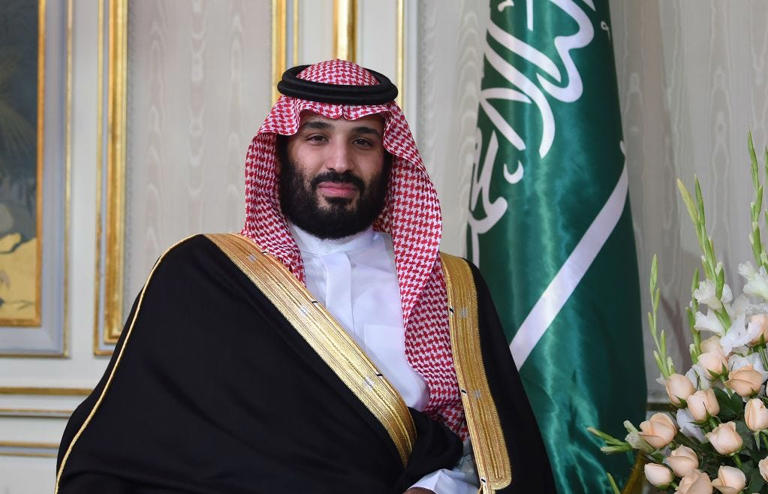
  • Saudi Arabia’s ruler Mohammed bin Salman is seeking to expand his influence.  
  • Joe Biden threatened to make him a global “pariah” after the assassination of a dissident.
  • But he’s exploited global turmoil and his control over oil markets to expand his power. 

In November, thousands of Saudis gathered in the streets of Riyadh to celebrate an audacious triumph by their ruler, Mohammed bin Salman.

Saudi Arabia, beating off Italy and South Korea, had just been named host of the 2030 World Expo, a global exhibition that will attract billions in investment and thousands of visitors to the desert kingdom.

The decision was a coup for the crown prince in his bid to reshape the global image of Saudi Arabia as part of his signature Vision 2030 Project, which will see Saudi Arabia move away from its reliance on fossil fuels to become a global center for technology and innovation.

But only six years ago, it was a very different story and Crown Prince Mohammed’s authoritarian brutality, rather than his image as a reformer, was the center of global focus.

The crown prince faced global isolation in the wake of the brutal murder and dismemberment of dissident Jamal Khashoggi in a crime the CIA said was likely committed on his direct orders.

Joe Biden on the 2020 campaign trail said that he would make Crown Prince Mohammed a “pariah” over the killing, while Republican Sen. Lindsay Graham branded him an “unhinged murderer.”

_______________________________________________________________________________________________________
California becomes first state to offer health insurance to all undocumented immigrants ~ January 1, 2024


_______________________________________________________________________________________________________

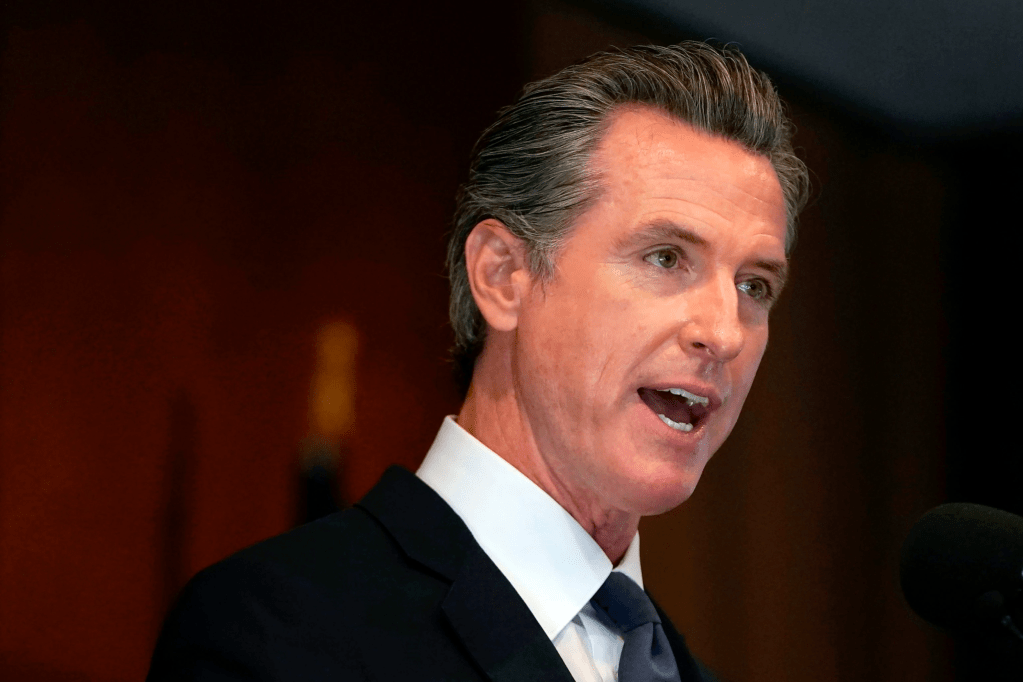
California will welcome the new year by becoming the first state to offer health insurance for all undocumented immigrants.

Starting Jan. 1, all undocumented immigrants, regardless of age, will qualify for Medi-Cal, California’s version of the federal Medicaid program for people with low incomes.

Previously, undocumented immigrants were not qualified to receive comprehensive health insurance but were allowed to receive emergency and pregnancy-related services under Medi-Cal as long as they met eligibility requirements, including income limits and California residency in 2014.

In 2015, undocumented children were able to join Medi-Cal under a bill signed by then-Gov. Jerry Brown. In 2019, Gov. Gavin Newsom signed into law an expansion of full-scope Medi-Cal access for young adults ages 19 through 25, regardless of citizenship or immigration status. Access was then further expanded to allow older adults aged 50 and older to receive full benefits, also regardless of immigration status.

The final expansion going into effect Jan. 1 will make approximately 700,000 undocumented residents between ages 26 and 49 eligible for full coverage, according to California State Sen. María Elena Durazo.

“This historic investment speaks to California’s commitment to health care as a human right,” Durazo said in a statement in May.

“In California, we believe everyone deserves access to quality, affordable health care coverage – regardless of income or immigration status,” Gov. Newsom’s office said in response to an ABC News request for comment. “Through this expansion, we’re making sure families and communities across California are healthier, stronger, and able to get the care they need when they need it.”

California’s plan to expand coverage has not been without its detractors. The California Senate Republican Caucus criticized the move in an analysis of the 2022-23 governor’s budget.

“Medi-Cal is already strained by serving 14.6 million Californians – more than a third of the state’s population. Adding 764,000 more individuals to the system will certainly exacerbate current provider access problems,” the caucus wrote last year.

However, studies have shown that undocumented immigrants use fewer healthcare resources than do non-immigrants.

About 50% of undocumented immigrant adults in America report being uninsured, compared to just 8% of U.S.-born citizens, according to the health policy research nonprofit KFF, due to undocumented adults being more likely work jobs that don’t provide health benefits, as well as facing eligibility restrictions for federal programs.

Additionally, undocumented immigrants who are eligible may face other barriers, including confusion about eligibility, language challenges and fear, KFF said.

This is despite low-income undocumented immigrants in California being about as likely as those currently enrolled in Medi-Cal to have at least one chronic condition, according to research conducted by the Public Policy Institute of California (PPIC), a nonprofit research institution.

Undocumented immigrants are also about as likely to receive preventive services, such as the flu shot, and older undocumented immigrants are about as likely to receive age-appropriate health services such as cancer screenings and the shingles vaccine, at rates similar to Medi-Cal patients, the PPIC found.

The California Health and Human Services Agency has committed $835.6 million in 2023-24 and $2.6 billion annually thereafter to expand full-scope Medi-Cal eligibility to all income-eligible adults, regardless of immigration status.

When California expanded health care coverage in 2019 to include undocumented young adults, then-President Donald Trump blasted the plan, calling it “very unfair to our citizens.”

“If you look at what they’re doing in California, how they’re treating people, they don’t treat their people as well as they treat illegal immigrants,” Trump told reporters at the time. “So, at what point does it stop? It’s crazy what they’re doing. It’s crazy. And it’s mean, and it’s very unfair to our citizens.”