Editors note: What is the glory of God/Source? To be… human!
Why are ET’s super interested in earth? Because humans possess something they do not… Emotions!
It is the human ability to conquer wayward emotions, learning to use these to become… The glory of God/Source!
———————————————————
Rev. Kat Carroll
“What if we’ve underestimated what it means to be fully human?”
That question has quietly followed me for years.
It began with meditation, consciousness studies, ancient wisdom traditions, and conversations with people from every walk of life. Along the way, I discovered that many of the world’s great spiritual teachings, despite their cultural differences, point toward a remarkably similar idea: there is far more to us than we have been conditioned to believe.
We are not simply biological machines struggling to survive. Nor are we merely observers drifting through life without purpose.
Perhaps we are consciousness expressed through a human experience, here to learn, to love, to create, and ultimately to remember — who we truly are.
Recently I listened to Gregg Braden revisit ideas from The God Code, discussing his research into DNA and the symbolic message he believes it contains. Whether one accepts his conclusions literally, sees them as a spiritual metaphor, or simply finds them thought-provoking, they lead to a profound question.
What if our greatest frontier is not the deepest parts of the sea or space, or artificial intelligence… but human consciousness?
For generations we’ve looked outward and toward technology for the next breakthrough.
Faster computers.
Smarter machines.
More powerful technologies.
Longer, healthier lives.
Yet the next great discovery may not be outside of us at all. It may have been quietly waiting within us all along.
The Hindu traditions speak of the siddhis—extraordinary capacities of consciousness and abilities that may emerge through deep spiritual development. Interestingly, the ancient Gurus (which means dispeller of darkness), Lamas, Rishis, and Swamis, and even the teachings of Jesus, rarely presented these abilities as the goal. They were described as natural by-products of inner transformation.
“Very truly I tell you, whoever believes in me will do the works I have been doing, and they will do even greater things than these, because I am going to the Father”(John 14:12, NIV)
That distinction is important.
Wisdom comes before power. Compassion before influence. Discernment before responsibility.
Imagine giving a box of matches to a curious child in a dry field.
The matches themselves are neither good nor evil. But tools in the hands of those without wisdom to use them properly could ‘spark’ disaster.
Nuclear energy is not evil – until it’s weaponized.
Autonomous or computerized vehicles are helpful, unless hacked.
The outcome of technology depends entirely upon the maturity of the one wielding it.
The same is true of consciousness as well.
The abilities we seek can only be entrusted to those who have learned to rise above fear, greed, jealousy, anger, and the desire to control and dominate others.
Special abilities should be entrusted to those whose desire is to be of service to others.
Only then can gifts of greater capacity become instruments of healing rather than control.
David Wilcock, Carla Rueckert, and the Law of One material all emphasize that service to others is the orientation associated with positive spiritual evolution. In the Law of One, a soul is said to become harvestable to fourth density by polarizing more than 51% toward service to others. Wilcock has frequently discussed that concept in his own presentations.
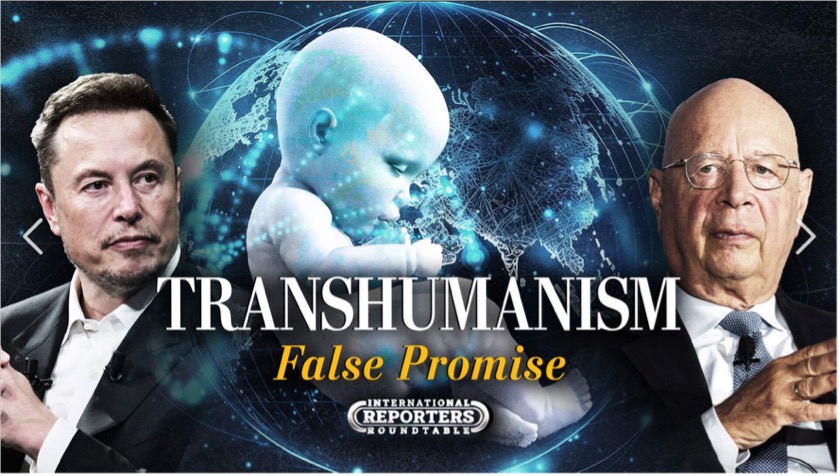
This has led me to reflect upon our rapidly advancing relationship with artificial intelligence and transhuman ideologies.
Technology is a remarkable tool. But we’ve witnessed the worst possible outcome of advanced technology when used without wisdom, or compassion.
Technology should work alongside us, enhancing our humanity rather than replacing it.
If humanity someday reached a point where enough people chose to abandon their bodies, in favor of purely virtual existence or artificial forms of consciousness, what would become of the uniquely human experience?
The loss of you five natural physical senses:
Touch, taste, smell, sight, hearing – Can artificiality replace them?
What about family and growth. Love and wonder.
Would you be able to create and raise living children? Would it effect the population in a negative way?
And what of the lessons that can only be learned while living within these remarkable biological bodies?
Perhaps those experiences—both joyful and painful—are part of the curriculum in humanity’s great university. Ancient traditions have often suggested that the soul enters physical life not only for the experience itself, but also to share those experiences with our Creator.
To laugh.
To grieve.
To overcome.
To forgive.
To discover.
To become.
If that is true, then our humanity is not something to transcend by merging with machine and leaving it behind. It is something to embody, embrace, and fulfill.
Over the past few years, I’ve written often about sovereignty—not merely political sovereignty, but sovereignty of heart, mind, and spirit.
True freedom is not simply the ability to do whatever we desire—especially when our choices harm others or violate their free will.
It is the wisdom to choose love over fear.
Truth over illusion.
Service over control.
Perhaps that is what divinity has always meant.
Not becoming something other than human.
But becoming fullyhuman.
I’ve often spoken of embracing our divinity. The word “divine” need not imply superiority by becoming “god like”. It might also be the source of: Sanskrit deva “god” (literally “shining one”). Where have you heard that before?
In biblical contexts, Shining Ones generally refers to angels or celestial beings associated with divine light, glory, and purity, serving as messengers or intermediaries between God and humanity.
To me it suggests the highest expression of what we can become when we remember our connection with the Source of life itself.
If extraordinary abilities eventually unfold, let them arise naturally through love, humility, and service—not through ego or the pursuit of power.
Those become the fruit of the journey, rather than the destination.
So, I leave you with the same invitation I have been exploring for years.
Embrace your true and eternal nature.
Question your assumptions.
Remain curious.
Continue learning.
Honor this extraordinary human experience.
And never stop discovering what may already lie within you.
Because the greatest mystery in the universe has never been somewhere among the stars. It has been quietly waiting…within you.
If anyone destroys God’s temple, God will destroy him; for God’s temple is holy, and you are that temple.” – 1 Corinthians 3:16
———————————————————
Share this: Send the word out using these buttons!
Special edition roundup of higher-ed news. Connecting the dots reveals an astonishing picture of massive conservative winning that corporate media is trying to sweep under the news cycle rug.
Good morning, C&C, it’s Thursday! Today brings a C&C Special Higher Ed Edition, connecting dots to assemble another “impossible” victory by the Trump Administration, with profound implications for young Americans and the future of the Republic. And once again, we find an exclusive story that corporate media refuses to recognize.
⛑️ C&C ARMY BRIEFING⛑️
Had I known that forcing myself to compile a long list of Trump 2.0 achievements would generate a top-ten post with over 1,500 likes and more than 1,000 comments, I’d have done it sooner. Probably. A better question is, why do we have to do this?
Yesterday, legions of critics began quibbling about the list and tried to “debunk it.” So far, the list holds. What most of them failed to understand (or maybe didn’t want to understand) is that the list was written for conservatives using partisan language. So if I said, “Trump crushed DEI,” then fact-checkers complained that DEI isn’t completely gone and awarded a FALSE. But conservatives understood what I meant just fine. If necessary, I’ll draft a bulletproof, non-partisan version. They really won’t like that one.
Beyond that, social media palpably began turning yesterday, with increasing numbers of commendable tweets shooting down ‘conservative’ doomposting like the ones I exposed yesterday. For instance:
Okay, Jan. Hilariously, another commenter exposed that the original complainer, who claims to be a “Conservative Republican” who would “never vote for JD Vance,” apparently lives in Romania. How they could be voting in a US election is an open question.
Smells like election interference! I don’t know for certain and I’m not accusing anyone of anything, but I like the trend. We need more folks pushing back on these fake narratives, and yesterday seemed to deliver them. It was encouraging.
🌍🇺🇸 ESSENTIAL NEWS AND COMMENTARY 🇺🇸🌍
📕📕📕
Today is dot-connecting day again! Something profound is happening in American higher education, and you’d never know how profound. Over a two-month period, a series of seemingly disconnected events —the return of standardized testing, the sudden panic over grade inflation, plunging business trust, and a relentless crackdown by the Trump administration— are, in fact, tightly connected. They represent the Great Unwinding of a core ideological project that systematically dismantled academic standards to achieve woke demographic outcomes. Three days ago, the Chronicle of Higher Education reported, “Janet Napolitano Helped Kill the SAT. She’s Reconsidering.”
If her name sounds familiar, it’s probably because Janet Napolitano was Obama’s DHS Secretary from 2009 to 2013, during which tenure she implemented DACA and the Transportation Safety Administration (TSA). After leaving DHS, she immediately became president of one of the nation’s largest progressive public university systems— the University of California.
Back in May 2020, the UC Board of Regents —then strongly backed by Napolitano as UC’s president— voted unanimously to stop using SAT and ACT scores in admissions, a move that killed the tests in one of the country’s most influential university systems. Unsurprisingly, this terrible idea grew like cocaine-fueled kudzu all over the Ivory Tower.
Because UC’s policies often set the tone for top public universities nationwide, UC’s push to drop standardized test scores was a major victory for woke progressives, who’d long argued that standardized tests were de facto racist.
In 2020, Napolitano explained, “We are removing the ACT/SAT requirement and developing a new test that more closely aligns with what we expect incoming students to know to demonstrate their preparedness for UC.” Race-hustler Ibram X. Kendi called standardized tests “the most effective racist weapon ever devised” to “objectively degrade Black and Brown minds and legally exclude their bodies from prestigious schools.”
Fast forward six short years and eighteen months of Trump 2.0.
Now, in 2026, UC President Napolitano has evolved, right back to the Cretaceous age. Not that she made any kind of mistake. “You make the best decision you can when you make it,” she explained. “Things happen, things evolve, and then you have to be willing to continually reassess and reevaluate.”
After reviling them for years as racist artifacts of a regrettable patriarchal period, now she thinks SAT/ACT scores are “a valid data point.” Circular evolution.
“We do a student no good by admitting them if they’re not really ready,” Napolitano said, a plain truth that, had she said it out loud a year ago, would have ended her career faster than a frog in a blender. But now, it’s about trust. “Declining trust in institutions is not limited to higher ed,” Napolitano generously said. “That’s a struggle we’re having as a society right now.”
Indeed. Wait till you see whose trust she was referring to.
It’s not just about scores. She’s also ready to chuck woke, communist-style loyalty oaths. “I’ll say this for the record: I don’t like the idea of faculty diversity statements,” Napolitano insisted. “Never did. I didn’t think they contributed in a meaningful manner.”
In short, she’s backing off the entire DEI project. Sorry, she’s evolving. Like in that movie Species with Natasha Henstridge.
Anyway, Napolitano blamed the need for correction on covid. The pandemic made us do it. But that wasn’t their justification at the time. Then, it was all about equity, ‘fairness,’ and making the student body ‘look more like the communities we serve.’
Regardless. Napolitano and UC were patient zero, the proverbial wellspring for DEI’s greatest gains in education.
But something —or someone— has changed.
🔥 Progressives had a straightforward argument. Relaxed SAT requirements and “everyone’s a winner” grading were not just experiments in educational theory. They were the load-bearing pillars of DEI in higher education. Measurable statistics like test scores and grades threatened to expose that student bodies were admitted to meet ideological objectives rather than reach meritocratic standards.
So measurable statistics had to be destroyed.
To protect the DEI project, progressives intentionally scrambled the signal and injected noise. Universities (and later, even high schools) simply stopped creating any data, such as objective grades, that could reflect badly on their admissions decisions. They stopped tracking SATs and, along with the price of eggs, they started inflating grades.
Unsurprisingly, a 2026 UC San Diego report found that 12% of incoming students required remedial math, a thirtyfold increaseover five years that is still growing— all since the UC ditched standardized scores.
Strikingly, 25% of the remedial students got a 4.0 GPA in high school math.
Harvard’s data showed 60% of undergrads were getting A’s, with a median GPA of 3.83. But Harvard’s report also found that undergraduates “struggle with readings that students completed with ease just ten years ago.” Uh-oh. Time for “reform.”
“A’s will no longer mean average at Harvard,” one pundit quipped. Yale is also now considering a proposal to require that net grades given to students must conform to a curve averaging to 3.0.
Weird. One wonders what could have changed recently.
🔥 Let’s look more closely at how we got grade inflation. The big problem DEI architects faced was that, once they started admitting kids with low SAT scores into programs built for smarter or better-prepared kids, they were shocked by the totally predictable result: The DEI kids got bad grades.
This was intolerable. But they couldn’t admit their project didn’t work. So they doubled down. They blamed grades. Grades— which have existed as long as institutional education.
Thus, in addition to standardized scoring, grades themselves also became racist. You simply couldn’t keep your cushy professor job if you gave DEI kids the grades they’d actually earned. Even tenure couldn’t protect you.
Asao B. Inoue —if that’s his real name— is a rhetoric professor at Arizona State University. Over the last six years, he has become the most-cited and most influential academic in the “antiracist grading movement.” Asao —who, by all appearances, is white— says “white teachers are a problem.”
Asao’s antiracist-grading framework was quickly adopted in teacher training programs nationwide. It seems to have launched from his blog in June 2021— the year after UC dropped SAT’s and ACTs:
“The practice of grading literacy performances by a single standard,” Asao wrote, “is racist and White supremacist.” Wow. Rank, KKK-style racism was right there in front of our faces the whole time, and we never noticed. It was right on the report card.
🔥 But now, for some reason, progressives are abandoning the whole sordid mess in droves. They’re evacuating. Heading for the lifeboats. Streaming down the ropes like rats. A week after the Times published its “Harvard reforms grades” headline, the progressive City Journal demanded even more DEI dismantling:
“It’s impossible for one university by itself to overcome the forces that encourage grade inflation,” City Journal wrote. “More coordinated action —including from actorsoutside the university environment— is necessary for substantial change.” They went further, calling for “external actors” to push “more universities” along the reform path:
External actors like … who? Maybe somebody orange-colored? Never mind.
Ironically, ubiquitous grade inflation itself now justifies the return to using ‘structurally racist’ standardized test scores. “Some object that Harvard students merit high grades because they’re already high achievers,” the story explained. But “that assumption is complicated by K–12 grade inflation and declining academic standards.”
Evolution can be confusing. If standardized scores and traditional grades were racist in 2021, is returning to those practices racist? Never mind, again.
So what happened?
🔥 The answer is: a progressive polycrisis. First, demographics.
Higher education is facing a severe crisis of confidence. A 2025 Gallup poll showed public trust in universities hovering near historic lows. Meaning that potential customers don’t trust universities. Simultaneously, universities are bracing for a “demographic cliff,” with a projected -15% decline in college-age students by 2029. International enrollment plunged by -20% in the spring of 2026 amid President Trump’s visa crackdowns.
That’s bad enough. Public trust has cratered, and there are fewer students. But even worse, employers are starting to catch on to the grift. Recognizing that college transcripts are increasingly unreliable measurements of competence, 81% of employers now prioritize skills over degrees, leading to a surge in “skills-based hiring” and the dropping of degree requirements by major corporations.
That’s pretty bad news for the academy. Unsurprisingly, none of this has been well-covered in corporate media. But the dotsare there if you look for it. Headline from Business Insider, also in April, framed as good news:
All these dots connect to form a troubling picture of an industry that overplayed its hand, cheapened its core product, and is now scrambling to knit the shreds of its credibility back together.
That’s only part one. The polycrisis deepens.
🔥 Next, the legal and political landscape is shifting like Mexico City during a big earthquake.
In 2023, the Supreme Court struck down race-based affirmative action in admissions in its landmark decision, Students for Fair Admissions. By outlawing explicit racial preferences, the Court forced universities to either find increasingly legally perilous workarounds or abandon the project.
Post-SFFA admissions data showed immediate drops in black and Hispanic enrollment at top universities, exposing the extent to which the previous system had relied on illegal racial engineering.
From Day One, President Trump shoved his foot on the gas pedal, accelerating the academic unwinding into a full-scale rout. Trump issued executive orders banning DEI programs among federal contractors and launched aggressive Title VI investigations into universities.
The administration showed it was willing to use the power of the purse, freezing $2.2 billion in federal grants to Harvard and cutting $400 million from Columbia over issues ranging from antisemitism to DEI compliance. Faced with lost federal funding, most universities capitulated.
Even the American Bar Association voted to eliminate its DEI accreditation requirements for law schools under pressure.
Then the President switched off the bigmoney spigot.
🔥 In February 2025, the Trump administration announced it would cap all NIH indirect cost reimbursements at a flat 15%— down from negotiated rates averaging 27–28% and effective rates around 40%.
The policy was immediately blocked by a federal court injunction, but the threat was real, and they got the message. NIH awards were already down -29% in 2025, and NSF awards dropped -50%. By June 2025, over 2,300 NIH grants totaling $3.8 billion had been flat terminated. Poof. Gone.
In response, Harvard desperately committed $250 million from its own endowment funds as a stopgap — a “Band-Aid solution,” as one analyst put it, “that is unsustainable long-term.”
At the very same time, the Trump administration also moved against the universities’ other major non-tuition revenue stream: patent licensing income under the Bayh-Dole Act— an on-the-books law, never previously enforced, requiring universities to share revenues with the government on all patents supported by federal grants.
So Commerce Secretary Howard Lutnick proposed a 50% “innovation tax” on revenues universities earn from licensing their federally funded discoveries to the private sector. The AAU called it an existential threat to technology transfer. Universities are also required by law to reinvest licensing revenues back into research and education— but this revenue had been quietly subsidizing broader institutional operations, like payroll.
The Bayh-Dole threat compounds the NIH problem. Together, they represented a coordinated squeeze on the two subsidized revenue streams that allowed elite research universities like Harvard to operate as if tuition were an afterthought.
The Trump administration’s simultaneous pressure on NIH indirect costs, Bayh-Dole licensing revenue, endowment excise taxes (raised to 4–8% for the wealthiest institutions under the One Big Beautiful Bill), and federal grant freezes has snatched away the financial cushion that allowed universities to pursue goofy ideological projects at the expense of traditional academic rigor.
Moody’s, Fitch, and S&P all gave negative scores to the higher education sector as of 2025. Universities that cannot demonstrate the value of their product face not just reputational decline— but genuine insolvency. Headline from Higher-Ed Dive, December:
Half of the roughly 2,000 private nonprofit colleges and universities in the United States are expected to go out of business and disappear within five years.
In short: it’s the brutal reality of capitalism. Universities and colleges suddenly need students —customers— again. Goodstudents. American students, since the administration has also cracked down on International student visas. Which means they must once again compete over a shrinking pool of American kids.
But the media doesn’t want to admit that President Trump is winning another unwinnable battle. Which is why you won’t see this story fully explained. In fact, corporate media isn’t talking about universities much at all anymore.
Students with 4.0 GPAs who can’t do eighth-grade math are not just an ideological embarrassment. They are a balance sheet liability — evidence of a product that has been systematically adulterated, and whose adulteration is now threatening the entire enterprise.
🔥 If the current abandonment of academic standards is recognized as harmful today —leading to remedial math classes for “straight-A” students, grade inflation reforms, and a collapse of employer trust— then it was also undeniably harmful when it was first implemented in 2020.
The harm happened on three levels. First, it harmed the institutions themselves by degrading their primary function: the pursuit and certification of excellence. When Harvard Dean of Undergraduate Education Amanda Claybaugh noted that students today “struggle with readings that students completed with ease just ten years ago,” she described an institution that has lowered its intellectual ceiling into the basement.
Second, it harmed society, by destroying the signaling value of a degree. Grade inflation presents a collective action problem. When everyone gets an A, the grade ceases to measure mastery and instead measures mere attendance. This forces employers to implement on bare egalitarian metrics, like skills tests, and worst of all for the academy: discarding degree requirements.
Third, and perhaps most tragically, it harmed the very students it purported to help.
Admitting students to demanding academic environments without the necessary preparation —a phenomenon academics euphemistically call “mismatch”— guarantees their disappointment. UC San Diego’s report explicitly conceded this: “Admitting large numbers of students who are profoundly underprepared risks harming the very students we hope to support, by setting them up for failure.”
By masking academic shortcomings with inflated grades and test-blind admissions, universities prioritized the optics of diversity over the reality of student success.
🔥 For years, activists have argued that the SAT is merely a proxy for wealth and privilege, “baked into it from its origins as an early IQ test to keep out the riffraff.” However, the data ultimately proved otherwise. Studies showed that standardized tests are far better predictors of college success than high school GPAs, which have been wildly distorted and made completely unreliable by rampant grade inflation.
By reinstating test scores, and trying, however feebly to make grades more meaningful, universities are surrendering. They are conceding that meritocracy, while imperfect, requires objective measurement, and that simply discarding the yardstick cannot change reality, however ‘noble’ their intentions.
In other words, the Great Unwinding of the DEI project in higher education is the story of a system that tried to engineer social outcomes by breaking its own thermometer. (It was the opposite of science, by the way, which requires objective measurements. But never mind.) By inflating grades and eliminating standardized tests, universities tried to craft an impossible reality where merit and diversity could be perfectly aligned. It didn’t work.
The 2026 reversal —driven by the Supreme Court, the Trump Administration’s heroic “mission impossible,” and the undeniable failure of underprepared students—is a painful but necessary correction. It forces higher education to confront a difficult truth: you cannot build a culture of excellence on a foundation of obscured data and the soft bigotry of low expectations.
Have a terrific Thursday! Coffee & Covid will return tomorrow morning with a full roundup of essential news and caffeinated commentary, including a full analysis of whatever President Trump announces in his potpourri speech tonight.
———————————————————
Share this: Send the word out using these buttons!







 Rose Rambles...