The Global Financial/Economic Landscape Transforming for a RESET – Here’s Why ~ December 8, 2023


______________________________________________________________________________________________

Russia’s Historic State Visit to the UAE and Saudi Arabia Signals a Massive Geopolitical and Economic Shift is Accelerating

Right on the heels of China’s historic visit to Saudi Arabia, today’s landmark state Power Visit by Russian President Vladimir Putin is charting a new course in geopolitics, converging the strategic interests of BRICS with the Middle East.

The primary focus becomes obvious and lies in challenging the dominance of the US Dollar in the international financial system and forging an independent economic trading alliance.

The Agenda is Clear: Nothing Short of De-dollarization and a Financial System Reset

The key agenda items for the meetings in the UAE and Saudi Arabia during Russian President Vladimir Putin’s historic visit include:

  • Solidification of strategic alliances between Russia, BRICS, and Middle Eastern nations.
  • Showcasing a commitment to forging an independent economic trading alliance to challenge the dominance of the US Dollar in international transactions.
  • Exploration of common ground in Head of States relations, Foreign Policy, Non-Dollar currency and Financial Policy, Industrial Policy, Nuclear Cooperation, Artificial Intelligence (AI), Space Development, and International Direct Investments.
  • Coordination among Russia, Saudi Arabia, and the UAE to maintain stability in the global oil market.
  • Emphasis on trade, economic, and investment fields to strengthen economic ties.
BRICS and Middle East Strategic Alliance

Putin’s visit to the UAE and Saudi Arabia marks a pivotal moment as BRICS and the Middle East solidify a strategic alliance.

Beyond traditional visits of diplomacy, the power collaboration extends to Head of States relations, Foreign Policy, Non-Dollar currency and Financial Policy, Industrial Policy, Nuclear Cooperation, Artificial Intelligence (AI), Space Development, and International Direct Investments.

Breaking Away from the US Dollar

One of the key facets of this alliance is a shared ambition to challenge the hegemony of the US Dollar. Russia, alongside its Middle Eastern partners, is exploring avenues to conduct trade and financial transactions independent of the conventional fiat currency system dominated by the US Dollar.

The visit underscores their commitment to diversify and break away from the economic influence of the United States.

Putin Visits United Arab Emirates (UAE) . Photo: AFP
Intellectual Speculation on New Asset-Backed Trading Currency

Intellectual speculation suggests that BRICS and the Middle East could pioneer a new asset-backed trading currency.

This move aims to establish financial independence from the fiat currency debt system propagated by the United States and its western allies.

The potential creation of a new currency would signify a transformative shift in the global economic landscape, challenging the status quo and providing an alternative to the existing financial order.

Energy Cooperation and Economic Partnerships

A significant aspect of Putin’s visit involves discussions on energy cooperation, particularly within the OPEC+ framework.

Russia, Saudi Arabia, and the UAE, all major players in the energy sector, are exploring ways to maintain a stable and predictable global oil market.

This collaboration not only solidifies economic ties but also positions these nations as influential players in shaping global energy dynamics.

Bilateral Trade Growth and Economic Resilience

Putin highlighted a nearly 68% increase in the turnover of goods between Russia and the UAE in 2022, showcasing the growing economic resilience of this alliance.

The visit to Saudi Arabia further emphasizes bilateral cooperation in trade, economic, and investment fields, reinforcing the economic strength of this emerging alliance.

Putin arrives in Saudi Arabia. Photo: AFP

As the world watches Putin’s historic visit to the UAE and Saudi Arabia unfold, it is evident that a seismic shift is underway.

The convergence of BRICS and the Middle East signifies a challenge to the existing financial order, with the potential creation of a new asset-backed trading currency.

The collaboration not only promises economic resilience but also reshapes the geopolitical landscape, creating a formidable alliance that seeks independence from the US Dollar-dominated fiat financial system.

The List of Key Strategic Attendees from Russia Says it All

The list of key individuals attending the strategic meetings during Russian President Vladimir Putin’s historic visit to the UAE and Saudi Arabia includes:

  1. Vladimir Putin – President of Russia
  2. Sheikh Mohamed bin Zayed Al Nahyan – Ruler of the United Arab Emirates (UAE)
  3. Crown Prince Mohammed bin Salman Al Saud – Crown Prince of Saudi Arabia
  4. Yuri Ushakov – Presidential Aide to Vladimir Putin
  5. Dmitry Peskov – Press Secretary to Vladimir Putin
  6. Sergei Lavrov – Foreign Minister of Russia
  7. Andrei Belousov – First Deputy Prime Minister of Russia
  8. Denis Manturov – Minister of Industry and Trade of Russia
  9. Alexander Novak – Deputy Prime Minister of Russia
  10. Elvira Nabiullina – Chairman of the Central Bank of Russia
  11. Yuri Borisov – Head of Roscosmos (Russian Federal Space Agency)
  12. Alexey Likhachev – Chief of Rosatom (State Atomic Energy Corporation of Russia)
  13. Kirill Dmitriev – Chairman of the Russian Direct Investment Fund (RDIF)
  14. Igor Levitin – Assistant to Vladimir Putin
  15. Maxim Oreshkin – Assistant to Vladimir Putin
  16. Representatives of Russian Energy Companies – Executives from significant Russian energy companies participating in the talks.

Insurrection Act of 1807 ~ December 8, 2023


_____________________________________________________________________________________________

Copied for your opinion from Wikipedia:

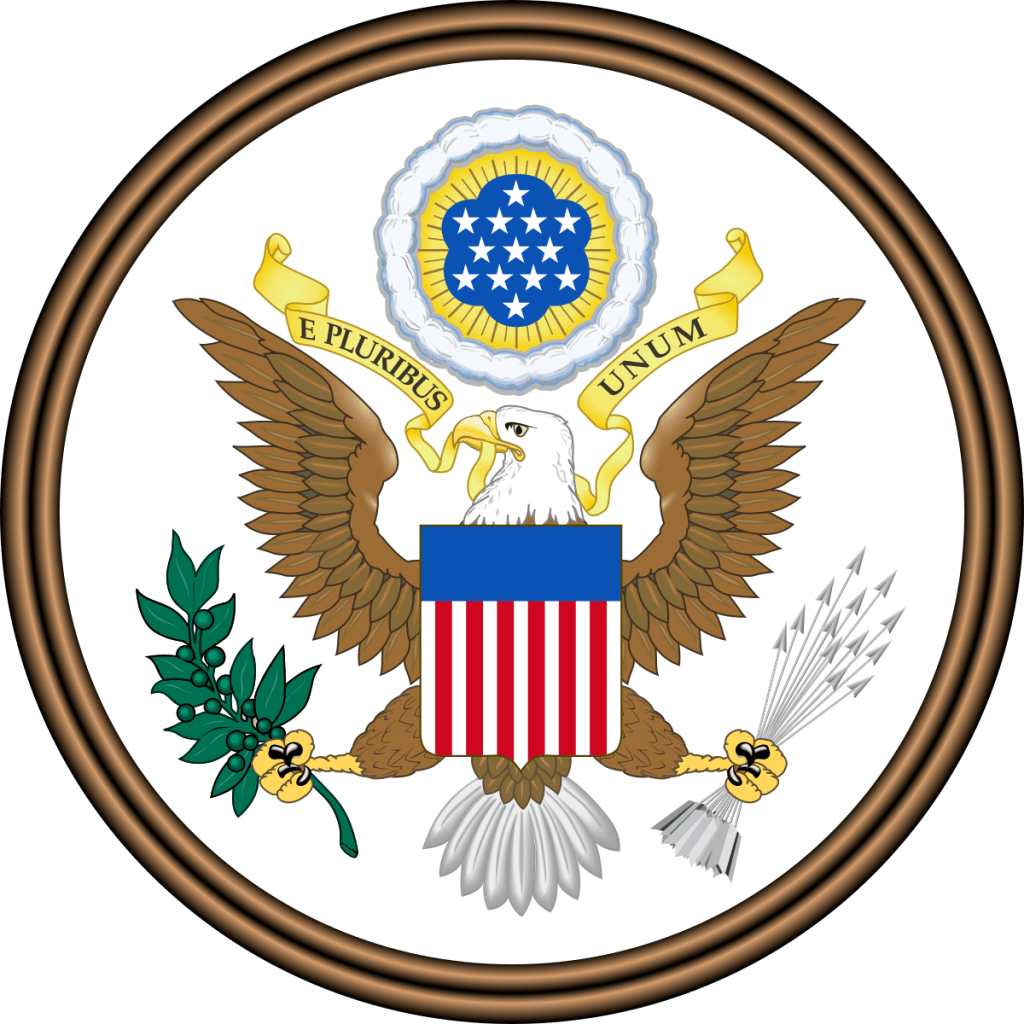
The Insurrection Act of 1807 is a United States federal law[1] that empowers the president of the United States to deploy U.S. military and federalized National Guard troops within the United States in particular circumstances, such as to suppress civil disorder, insurrection, or rebellion.

The act provides a “statutory exception” to the Posse Comitatus Act of 1878, which limits the use of military personnel under federal command for law enforcement purposes within the United States.[2][3]

Before invoking the powers under the Act, 10 U.S.C. § 254 requires the President to first publish a proclamation ordering the insurgents to disperse. As part of the Posse Comitatus Act of 1878, these provisions have since been amended.

There are Constitutional exceptions to Posse Comitatus restrictions rooted in the president’s own constitutional authority. Defense Department guidelines describe “homeland defense” as a “constitutional exception” to Posse Comitatus restriction, meaning that measures necessary to guarantee National Security from external threats are not subject to the same limitations.

Purpose and content

The Act empowers the U.S. president to call into service the U.S. Armed Forces and the National Guard:

  • when requested by a state’s legislature, or governor if the legislature cannot be convened, to address an insurrection against that state (§ 251),
  • to address an insurrection, in any state, which makes it impracticable to enforce the law (§ 252), or
  • to address an insurrection, domestic violence, unlawful combination or conspiracy, in any state, which results in the deprivation of constitutionally secured rights, and where the state is unable, fails, or refuses to protect said rights (§ 253).

The 1807 Act replaced the earlier Calling Forth Act of 1792, which had allowed for federalization of state militias, with similar language that allowed either for federalization of state militias or use of the regular armed forces in the case of rebellion against a state government.[4]: 60  The Act did not provide a criminal penalty for insurrection, which was instead introduced by the Confiscation Act of 1862.

The 1807 Act has been modified twice. In 1861, a new section was added allowing the federal government to use the National Guard and armed forces against the will of the state government in the case of “rebellion against the authority of the government of the United States,” in anticipation of continued unrest after the Civil War.[5] In 1871, the Third Enforcement Act revised this section (§ 253) to protect Black Americans from attacks by the Ku Klux Klan. The language added at that time allows the federal government to use the act to enforce the Equal Protection Clause of the Fourteenth Amendment to the United States Constitution.[4]: 63–64  This section of the act was invoked during the Reconstruction era, and again during desegregation fights during the Civil Rights Era.[6]

The chief clause of the Insurrection Act, in its original 1807 wording (since updated to modern legal English), reads:[7]

An Act authorizing the employment of the land and naval forces of the United States, in cases of insurrections
Be it enacted by the Senate and House of Representatives of the United States of America in Congress assembled, That in all cases of insurrection, or obstruction to the laws, either of the United States, or of any individual state or territory, where it is lawful for the President of the United States to call forth the militia for the purpose of suppressing such insurrection, or of causing the laws to be duly executed, it shall be lawful for him to employ, for the same purposes, such part of the land or naval force of the United States, as shall be judged necessary, having first observed all the pre-requisites of the law in that respect.[8][9]

In 2016, Public Law 114-328 was amended to include Guam and the US Virgin Islands under Ch. 13 jurisdiction. §252: “Use of militia and armed forces to enforce Federal authority” currently reads:

Whenever the President considers that unlawful obstructions, combinations, or assemblages, or rebellion against the authority of the United States, make it impracticable to enforce the laws of the United States in any State by the ordinary course of judicial proceedings, he may call into Federal service such of the militia of any State, and use such of the armed forces, as he considers necessary to enforce those laws or to suppress the rebellion.[10][7]

______________________________________________________________________________________________

The GESARA blockchain election takes place in 120 days (April 1st)! Everything will be ready by January 30th ~ December 8, 2023


______________________________________________________________________________________________

Officially, a major cleanup in Japanese politics has begun!

And from “Zen” information

POTUS kept saying April 1st!

There are 120 days left to move forward to the GESARA blockchain elections worldwide!

Stellar public network preparation date until January 30th

That’s why you have to be ready!

That is…

In other words

The GESARA blockchain election will be held on April 1st in 120 days!

Everything will be ready by January 30th! That is…

Everything will be ready in December and January…

I’m looking forward to it (^^♪

Let’s believe in the plan today as well.

I would like to spend my time with a positive attitude while praying for the safety and good health of everyone in the “Army of Angels” (^^)

I hope this is useful to you (#^^#)

Please watch until the end

Thank you very much (_ _)

New Roseanne: Live from the Bedroom! The Roseanne Barr Podcast ~ December 8, 2023


__________________________________________________________________________________________

______________________________________________________________________________________________

Dr. Peter McCullough: Everything We’ve Learned About The COVID Vaccine Is Horriffic! ~ December 8, 2023


______________________________________________________________________________________________

______________________________________________________________________________________________